





 Portuguese
  English
  Spanish
  5 min of reading
  4 comments


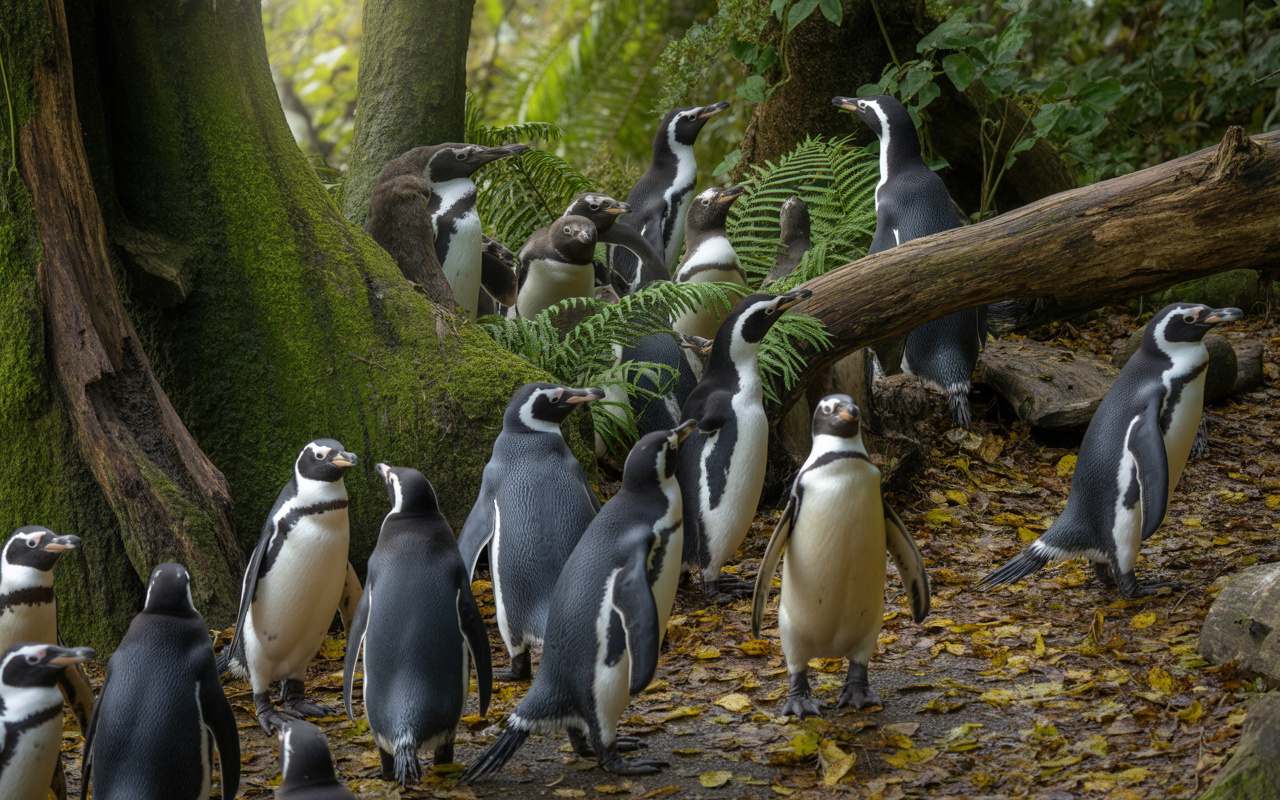


Penguins Outside Antarctica Colonize Temperate Forests, Face Heat and Terrestrial Predators, and Reveal an Unexpected Adaptation of the Group.
When it comes to penguins, most people imagine icy landscapes, icebergs, and snowstorms. This image has become so ingrained in the collective imagination that it is surprising to discover that only a quarter of the species lives directly in Antarctic areas. The rest inhabit temperate coastal zones, subtropical archipelagos, and even warm environments with dense vegetation. One of the most emblematic cases involves species like the Magellanic Penguin (Spheniscus magellanicus) and the Little Blue Penguin (Eudyptula minor), which have colonized temperate forests, wooded beaches, and rocky bays in Chile, Argentina, Australia, and New Zealand.
These populations coexist with heat, humidity, lack of ice, and the presence of terrestrial predators — a total contrast to the Antarctic scenario. The adaptation of this group intrigues ecologists and climatologists as it helps reveal how different lineages of penguins have evolved to survive in habitats that defy common sense.
An Evolutionary History That Does Not Begin in Ice
Although Antarctic penguins, such as the Emperor and the Adélie, are the most well-known to the public, the history of the group suggests that the original pattern was not ice, but rather temperate coastal environments. Fossil records found in Peru and New Zealand indicate that the first penguins emerged in regions without permanent ice more than 60 million years ago, shortly after the extinction of the dinosaurs.
-
With a cost per shot close to zero, the DragonFire laser could change naval warfare in 2027 and provide British ships with nearly unlimited defense against drones.

-
A British startup creates tires that generate electricity in electric vehicles when passing over potholes, speed bumps, and cracks.

-
Scientists have created robots made with living cells that have their own nervous system, swim on their own, explore the environment, and self-organize without any genetic engineering, and now they want to do the same with human cells.

-
Students create a solar-powered ambulance that operates without a plug, without fuel, and still keeps medical equipment running in remote areas.



Antarctica, at that time, did not have the current ice cap and was covered with mild-climate forests. Ice only established itself much later, due to tectonic changes and the formation of the Antarctic Circumpolar Current. When the ice advanced, some lineages adapted to the low temperatures, while others remained distributed in areas without snow.
This evolutionary context explains why modern penguins can live in Australia, Chile, and Argentina without needing ice to hunt, reproduce, or thermoregulate.
Forests, Heat, and the Surprise of Burrows in the Shade
If Antarctica offers shelter from terrestrial predators due to continuous ice, the temperate environment presents a different challenge: heat. On summer days in Patagonia or southern Australia, temperatures can exceed 30 °C, and birds with dense plumage and high metabolism need to find ways to dissipate heat.
The penguins adapted to these regions do this in various ways:
- seeking shade under trees, branches, and bushes,
- digging burrows in sandy soil or under roots,
- reducing activity during the hottest hours,
- using coastal wind and cold water for cooling.
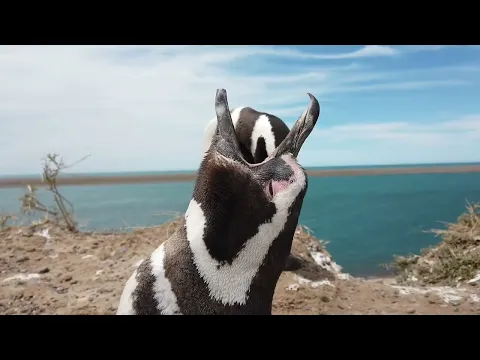
The Australian Little Blue Penguin is an emblematic example: it spends most of the day hidden in burrows in the dunes, going out to sea at dusk to feed. The Magellanic Penguin digs burrows in the forests and scrublands of Patagonia, often kilometers from the sea. This behavior is not rare: some colonies travel pathways to their burrows and then return to the ocean to fish — a pattern more similar to coastal birds than to the traditional Antarctic image.
Life Among Terrestrial Predators
Another significant difference between temperate forest penguins and their Antarctic relatives is the presence of terrestrial predators. In Antarctica, the absence of terrestrial predators for eggs allowed species like the Emperor Penguin to develop incubation strategies in open fields. In Patagonia, Australia, and New Zealand, the risks are greater.
Among the predators that can attack eggs or chicks are:
- foxes,
- domestic dogs and cats,
- birds of prey,
- coatis and other opportunistic mammals.
This has led to a curious behavior: many penguins hide eggs in cavities, and the colony may spread under dense vegetation. Some coastal regions in Australia have established protected areas prohibiting the entry of dogs and cats to protect the Little Blue Penguin, whose small size makes it vulnerable.
These conflicts also have a recent origin: the presence of predators introduced by humans has altered the ecological dynamics. In isolated islands, where penguins lived for thousands of years without terrestrial pressure, the introduction of domestic cats was enough to generate severe impacts on reproduction.
The Sea as a Constant: Hunting, Navigation, and Feeding Ecology
As vegetation, climate, and landscape change, the sea remains the common denominator. All the species mentioned depend on the ocean for food, and the temperate coastal area offers schools of:
- anchovies,
- sardines,
- lanternfish,
- cephalopods,
- crustaceans.
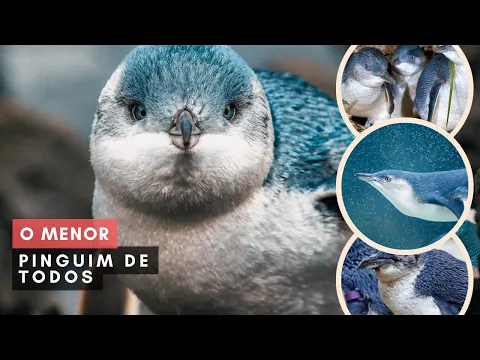
The Little Blue Penguin performs short dives, usually below 30 meters, while the Magellanic Penguin can reach depths greater than 100 meters. Hunting occurs at dusk and at night, when schools rise in the water column.
One aspect that catches the attention of ecologists is the navigation ability. Even traveling tens of kilometers out to sea, penguins can return precisely to their burrows. Researchers are still investigating whether they use:
- magnetic fields,
- astronomical reference,
- marine odors,
- visual memory,
- or a combination of these factors.
There is no definitive consensus, but studies with geolocation sensors indicate that magnetic navigation likely plays an important role.
Climate, Currents, and Biological Uncertainties
When penguins leave the poles and occupy diverse environments, climate becomes a critical factor for survival. The Magellanic Penguin, for example, is associated with the Falkland Current, which is cold and rich in nutrients. If this current changes — due to ocean variability or global warming — schools may shift, forcing birds to travel greater distances in search of food.
This process has already been documented in years of El Niño, when warm waters reduce prey availability and increase chick mortality. For the Little Blue Penguin, the situation is different: depending on the region, the problem is extreme heat, which can lead to hyperthermia. In some Australian summers, volunteers have cooled dehydrated birds to prevent mass deaths. This has sparked debates on how to manage wild populations under extreme climate events.
There is still no consensus among climatologists about long-term impacts, but the combination of warming, storms, changes in salinity, and alterations in the food chain presents real challenges.
When the Exception Busts the Myth
Seeing penguins walking among trees, entering burrows under bushes, or crossing coastal trails may seem like a scene from a fictional documentary. But this is the daily life of various species that have never set foot on Antarctic ice and yet thrive in challenging environments.
The existence of these penguins outside the ice is a powerful reminder that animals do not abide by the limits we create in our imagination. Ice may be a cultural icon, but it does not biologically define the group.
The question that remains is simple yet important: if penguins can live in temperate forests and even face heat, how many other species are we underestimating because of images we deem “natural”?
Answering this question may be crucial for understanding not only the evolution of penguins but also how biodiversity responds to a changing planet.







Tenía conocimiento de algunos pingüinos terrestres, pero la la de los pingüinos que viven cerca a los polos son vulnerables a las temperaturas tibias y no sobreviven.
QUE TERRIBLE POR NUESTRA CULPA LA NATURALEZA ESTÁ SUFRIENDO CAMBIOS TERRIBLES Y LOS ANIMALES SON LOS MAS AFECTADOS
Esse artigo é muito interessante!
Los pingüinos son impresionantes en su diversidad y como se adaptan en los entornos. Ojalá se puedan preservar todas las especies. Muy bien artículo. Saludos