





 Portuguese
  English
  Spanish
  6 min of reading
  0 comments


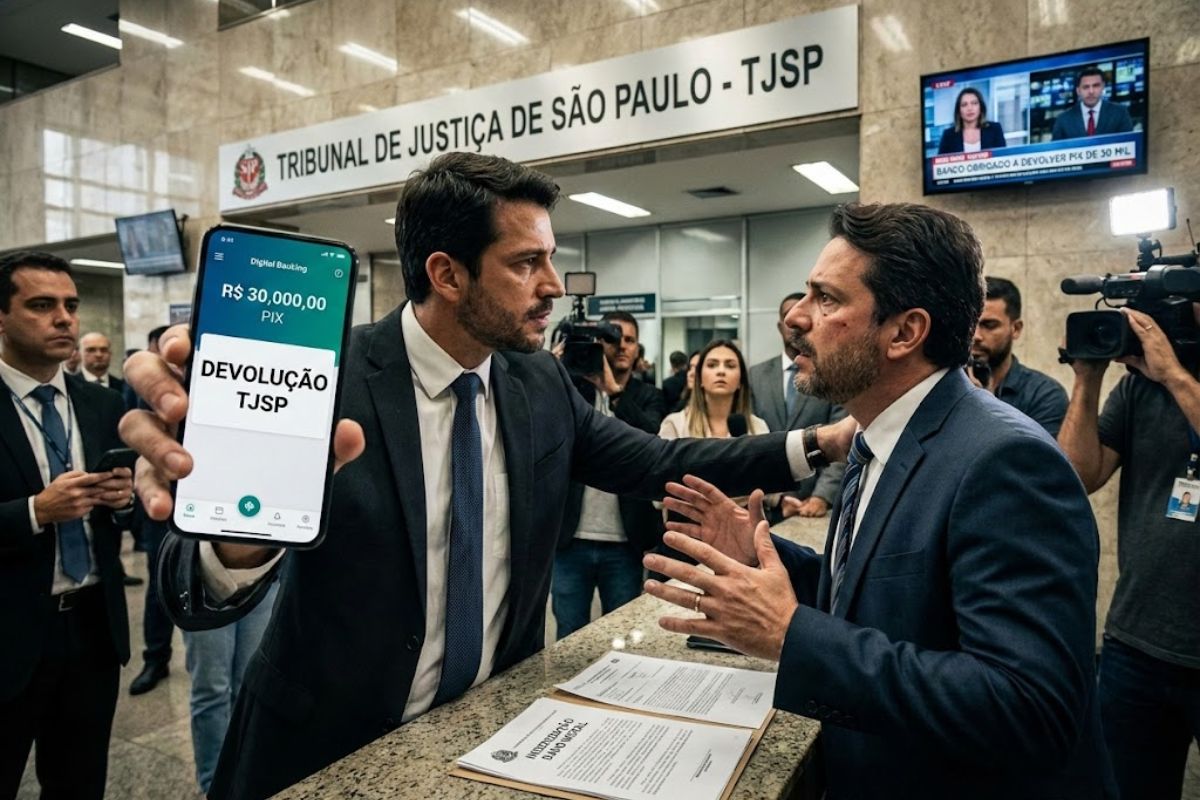
Transfer Made by Pix by Mistake Entered the Account of a Customer with Debts and Was Automatically Used by the Bank to Offset the Debt. The Customer Claimed the Amount Was from Third Parties, Requested a Refund, and Received a Denial. In the 2nd Instance, the São Paulo Justice Determined the Refund and Compensation.
The Pix entered the account as an unexpected credit of R$ 30,000 and, instead of just being a problem to be resolved with a refund, it sparked a legal dispute: the financial institution automatically retains the amount to settle outstanding debts, without notice and without specific authorization for that deposit.
The reaction came because, according to the client, the money did not belong to her and had been sent by mistake. After seeking an administrative solution to return the Pix to the original sender and receiving a denial, she took the case to court. The São Paulo Court of Justice deemed the retention abusive, ordered the full refund of the amount, and imposed compensation for moral damages.
How an Incorrect Pix Became a Larger Problem Than the Transferred Amount
The starting point was simple and common: someone made a mistake while entering the details and sent a Pix to the wrong account. From there, the scenario changed because the customer who received the credit had outstanding balance and saw the amount “disappear” almost immediately, absorbed by the bank to amortize the debt.
-
Banco do Brasil sues famous influencer for million-dollar debt and intensifies debate on delinquency, risks of seizure, and direct impact on Gkay’s credibility.

-
The Senate approves a bill that criminalizes misogyny, hatred, or aversion towards women, and includes the crime in the Racism Law with a penalty of up to 5 years.

-
Chamber Approves Bill That Allows Pepper Spray for Women Over 16 and Imposes Strict Rules for Purchase, Possession, and Use as Self-Defense

-
Chamber Approves Law to Combat Leucaena, Fast-Growing Plant That Dominates Land and Threatens Native Species in Various Regions of the Country


The detail that changes everything is the practical consequence of this retention. When the bank takes the Pix for itself, it prevents correcting the error while the situation is still reversible, increasing the risk of pressure from the true owner of the money, direct collection, and even legal wear and tear for someone who received it without having requested it.
Why the Bank Retains the Amount and Where the Conflict Begins
The automatic retention occurred as a way to settle outstanding debts from the account, as if any incoming funds could be used to cover the outstanding balance. In terms of banking routine, this usually appears as an automatic “compensation” of amounts that enter the account.
The problem is that, in this case, the origin of the deposit was uncertain, and there were clear signs of error in the transaction. The conflict arises exactly at the point where an internal logic of collection tries to impose itself on a credit that may not belong to the account holder, and that entered via Pix without the person having control over the sending.
What the TJ-SP Saw as Abuse in the Retention of the Pix
In the second-instance decision, the understanding was that the bank could not appropriate the amount without specific authorization, even in the face of previous debts.
The logic is straightforward: having debts does not give the financial institution a “free pass” to confiscate any amount that appears, especially when there is evidence that the Pix arrived by mistake.
The court accepted the argument that retaining funds of unknown nature violates objective good faith. In everyday language, this means that the expected conduct would be caution and cooperation to correct the error, not the immediate taking of the amount.
The Pix is instant, but that does not turn a human error into a mandate for compulsory amortization, when there is no express consent from the holder for that specific deposit.
Refund of the Money and Moral Damages: Why It Was Not Just About the Refund
The determination was for the full refund of R$ 30,000, with monetary corrections, and payment of R$ 10,000 for moral damages.
Moral damages in such cases are usually recognized when the act goes beyond mere annoyance and causes real consequences: insecurity, embarrassment, exposure to risk, and concrete difficulty in resolving the problem with the person who sent the Pix.
Here, the reasoning is especially sensitive: the client claimed to be going through financial difficulties and stated that the money was from third parties.
By retaining the amount and denying the refund, the bank put her in a difficult position, as she was prevented from returning the Pix to the original owner, creating space for pressure, suspicion, and potential legal fallout.
It’s not just about “being without the money”: it’s about being without the chance to correct the mistake and prove good faith, while the situation worsens.
Why the Origin of the Pix Matters and How This Changes the Responsibility of Each Party
When a Pix is received by mistake, there is an important difference between “receiving and spending” and “receiving and trying to return.”
The case itself highlights this boundary: the client sought a refund to return it to the sender, which reinforces the narrative that she did not treat the amount as her own income.
This difference usually weighs because the Pix system is instant, but the error does not disappear by itself. The origin of the deposit serves as a legal and moral signal: if the money did not belong to the person, the expected conduct is to return it, and the banking system should facilitate that return, not block the path by absorbing the amount to settle an old debt.
What to Do If You Receive an Incorrect Pix and How to Document Everything Correctly
If an undue Pix enters the account, the recommendation is to contact the bank immediately and formalize the refund request, keeping everything documented. Formalization is important because it avoids contradictory versions later and creates an objective history: credit date, amount, attempted contact, and bank response.
There is also the MED, a special mechanism for refund within the Pix system, mentioned as a resource aimed at returns. In practice, the safest course of action is to act quickly, document the request, and avoid any movement of the amount, precisely to not create the appearance of having the intention to appropriate the money.
When the Bank Tries to Offset Debt with an Incorrect Pix, Why the Justice Tends to React
The case reinforces an understanding that frequently appears in discussions about retentions and attachments: not all money that enters the account can be treated as “free” for automatic confiscation, especially when the origin is unknown or when there are signs of error in the transaction.
Moreover, the decision highlights a limit: even if there is a debt, the financial institution does not have unrestricted authorization to retain any incoming amount.
The central point is consent and the purpose of the deposit. A Pix sent by mistake does not arise as a “payment of the debt,” and transforming that credit into compulsory amortization, without specific authorization, is the type of shortcut that the Judiciary tends to block.
What This Case Signals for Indebted Families and for Those Who Use Pix Daily
For those in debt, the episode exposes a common fear: any incoming funds can “disappear” to cover debts. However, the decision puts a brake on this perception when the money has an uncertain nature and arrives by mistake.
The practical message is that debt does not authorize the automatic appropriation of amounts that do not belong to the holder, especially when there is a formal request for a refund.
For those who use Pix daily, the alert is twofold. First, extra caution when entering data to avoid sending to the wrong account. Second, if it happens, act quickly to document the error and attempt the refund. The sooner the error is treated as an error, the lower the risk of the problem turning into a dispute and generating consequences for someone who received it accidentally.
A Pix of R$ 30,000 that entered by mistake could have ended as a simple refund, but it became a legal case because the bank automatically retained the amount to cover the debt without specific authorization and denied the return. The TJ-SP understood the conduct as abusive, ordered full restitution, and imposed compensation for moral damages, making it clear that instant deposit is not a free pass for automatic confiscation when the source of the money is uncertain.









Seja o primeiro a reagir!