





 Portuguese
  English
  Spanish
  6 min of reading
  1 comment





With Version 2.0 of The PIX Refund Mechanism, It Becomes Possible to Track The Path of Money in Cases of Fraud and Operational Failure. The Dispute Is Within The App and The Identification of Accounts Used in Scams Is Shared, Increasing The Chances of Refund After Transfers From The Scammer.
The PIX enters a new phase of security starting this Monday (2), with banks and financial institutions required to follow rules that change the logic of how money from a scam can be recovered. The central idea is simple to understand and heavy to execute: instead of only looking at the account that initiated the fraud, the system now tracks the money as it is spread across other accounts.
In practice, this affects those who have already fallen victim to fraud, those who fear falling, and also the day-to-day operations of the banks themselves. The PIX Refund Mechanism (MED) reaches version 2.0 with a promise of more accuracy in tracking, more agility in the dispute and more coordination among system participants to identify accounts used in scams and prevent them from operating again as a “pass-through point.”
What Changes When The PIX Starts to “Follow The Money” From The Scam
So far, the refund had a limitation that favored the criminal: it could only initiate from the account used in the fraud. However, the most common scam dynamic is precisely speed: the scammer quickly withdraws or transfers the amount to other accounts, breaking the trail and reducing the chances of blocking and recovery.
-
The largest food company on the planet, JBS, has just opened a 4,000 square meter laboratory in Florianópolis to develop customized proteins that modulate muscle mass gain, immune response, and metabolic performance.

-
After nearly 30 bids and competition among industry giants, a Spanish company purchases one of the largest airports in Brazil for almost R$ 3 billion and takes over the management of Galeão in a concession that will last until 2039.

-
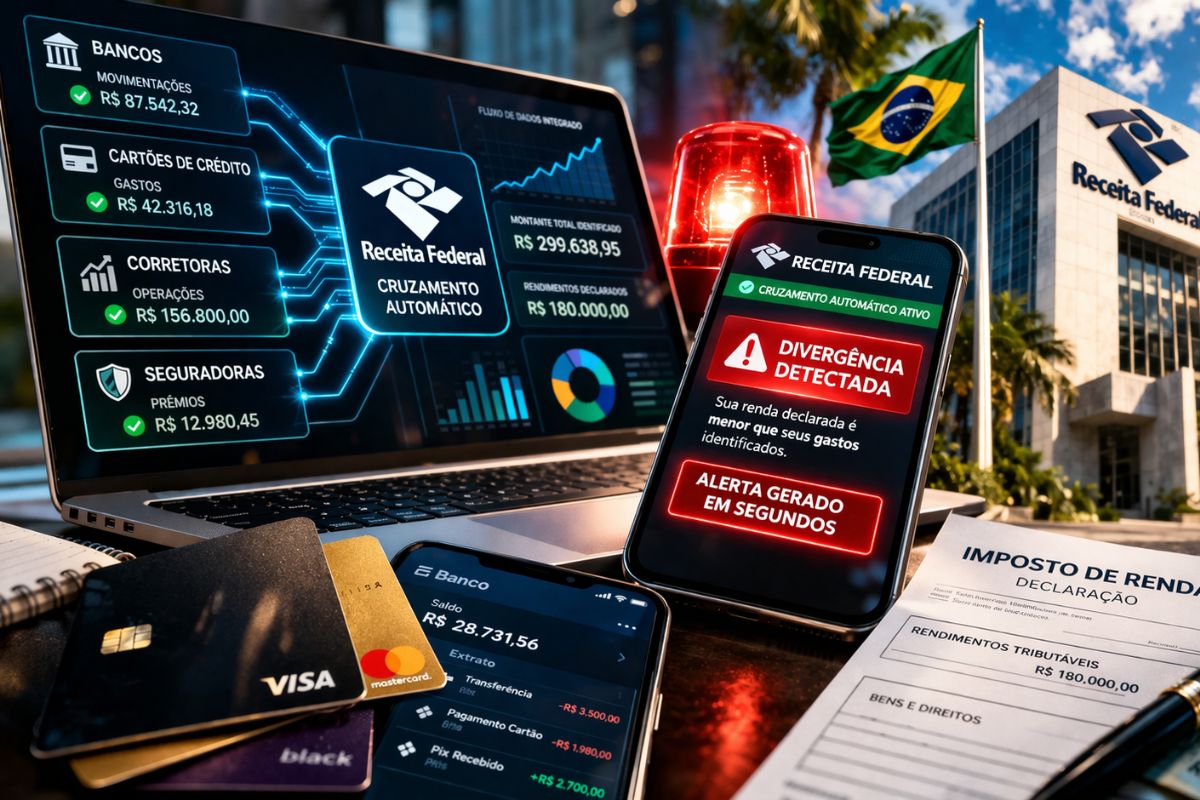
The Federal Revenue Service now automatically cross-references everything you declare with data from banks, credit cards, brokerage firms, and insurance companies, and any discrepancy between your income and your expenses triggers an alert in seconds.
-
Amid global tensions, Brazil blocks the United States’ proposal at the WTO and paves the way for a trade crisis and possible retaliations.


With the new rules, the PIX refund mechanism now tracks the path of money more accurately. The goal is to allow diverted amounts to be recovered even after they have left the original account of the scammer, which alters the “game” in two ways: it increases the chances of finding the money still circulating and discourages repeated use of the same accounts as a fraud conveyor.
This tracking is not presented as magic nor as a guarantee of full return. It is an attempt to gain time and information in a scenario where the speed of the scam has always been the competitive advantage of the criminal.
Why The PIX Refund Mechanism Becomes Central to Security
The Central Bank works with the expectation that the measure will increase the identification of accounts used in scams and the refund of amounts, helping to discourage this type of crime.
In parallel, there is a second layer: the sharing of identification of suspicious accounts with the participants involved in the transactions, which tends to make it difficult for the same account to continue receiving funds from new victims.
Here lies the most relevant technical point: security does not only depend on “discovering the scam,” but on circulating information among those who can act. If an account is used as a link in a fraud, the gain comes from reducing the time between “someone noticed” and “the entire system became aware enough to react.”
In the described framework, the PIX refund mechanism ceases to be merely a reactive tool and also becomes an operational intelligence tool: it serves not only to try to refund but to map patterns of fraudulent use and feed prevention actions.
Dispute In The App and The Deadline That Changes The Logic of The Request
Since October 1st, banks and financial institutions have begun to provide, within the PIX environment of their applications, a functionality for easily disputing a transaction without the need for human interaction.
This changes the first minute of the post-scam, when the victim is under stress and each “manual” step usually means delay.
The Central Bank described this self-service feature of the refund mechanism (MED) as the channel through which the user should request the return of amounts extracted by fraud.
The rationale is straightforward: more agility in dispute increases the chance that there are still resources in the fraudster’s account and, with more robust tracking, in the trail of accounts through which the amount has circulated.
Additionally, the BC noted that this identification will be shared with the participants involved in the transactions and will allow refunds within 11 days after the dispute.
It is a deadline that places a temporal framework on the process: it does not eliminate the anxiety of those who lost money, but gives an objective reference of what to expect after formalizing the dispute through PIX.
What Banks Are Required To Do When A Scam Occurs
The new workflow imposes clear obligations on the financial system: to track money transferred via scams through PIX and to handle refunds based on a trail of resources, not just a “point of origin.” This requires coordination among institutions and the ability to operate with speed, as the same amount can pass through multiple accounts in a short time.
In practice, this also tends to increase the responsibility of banks at the frontend: if the mechanism depends on quick disputes and shared identification, the experience in the app, clarity of the path to dispute, and standardized treatment of requests become part of the “security system,” not just customer service.
Another possible effect is the strengthening of barriers against recurrence. By expanding the identification of accounts used in fraud and sharing this signal with PIX participants, the logic is to reduce the “lifespan” of a fraudulent account. The scam does not rely solely on narrative; it depends on infrastructure to receive and spread money.
What Changes For The Victim and Where There Is Still a Limit
For those who are victims, the main change is the real chance of recovery even when the money is no longer in the original account used in the fraud. This is relevant because it attacks the most frequent tactic of the criminal: scattering the amount to make tracking useless.
At the same time, it is important to understand the implicit limit in the Central Bank’s own argument: agility increases the chance of still having resources. In plain English, this means that time continues to be a critical factor.
The PIX now tracks better, but money can leave the reach quickly if the dispute takes too long, and the system does not promise that there will always be funds available at some point along the trail.
There is also a conceptual limit: the rule improves processes and coordination but does not replace individual prevention. Scams change script, but almost always begin with haste, emotion, and induced inattention. The update of the refund mechanism helps with the “after,” but does not eliminate the “before.”
How To Prepare Without Paranoia and Without Falling Into New Traps
In everyday life, the most useful way to react to these changes is to adjust habits and responses. First, it is worth knowing where the dispute function is located in your bank’s app, within the PIX environment.
In moments of stress, searching through menus leads to delays. Familiarity with the path is a practical advantage.
Second, in case of perceived fraud, acting quickly becomes even more important, precisely because the refund mechanism works with the chance that resources may still exist and tracks the path of the money.
Formalizing the dispute through the app channel, as described by the Central Bank, is what triggers the MED flow.
Third, staying alert to classic signs remains necessary: messages demanding urgency, requests for immediate transfer, pressure to “resolve now,” and instructions not to talk to anyone. Scammers rely on isolation and speed; the system relies on disputes and tracking.
This opposition summarizes the change: on one side, the criminal accelerates; on the other, the rule attempts to speed up the response.
The update of the PIX refund mechanism to version 2.0 puts tracking at the center of the response to fraud: the refund is no longer held hostage by the first account and instead follows the path of the money, with more accessible disputes in the app and a reference deadline of up to 11 days after the request.
It is a change with a direct impact on the functioning of banks and the expectations of those who have already been victims.
Now, a question that truly separates theory from practice: if you have ever needed to dispute a PIX, how was the service and the response speed at your bank? And, looking at this new stage of tracking and refunds, do you think this will discourage scams, or will criminals just change their strategy?








Então se eu vendo um objeto qualquer e de fato entreguei o mesmo ao comprador e esse usando de má fé, contesta o PIX que eu recebi dele sem me devolver o produto, estarei de fato protegido? Para mim essa questão não ficou clara