





 English
  Francês
  Alemão
  Italiano
  Japonês
  Norueguês
  Portuguese
  Spanish
 4 min of reading
  0 comments


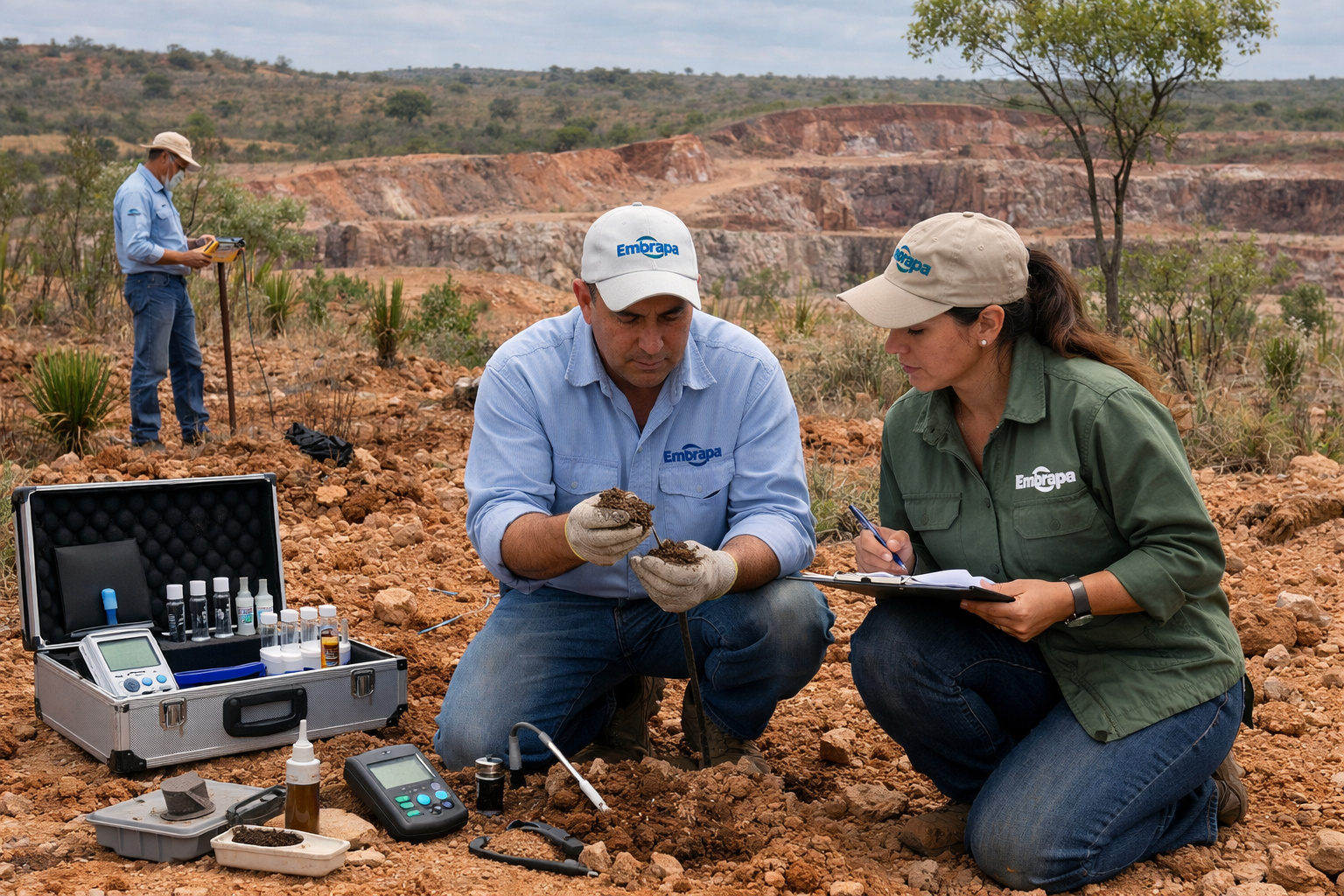
Study Conducted in Paracatu Bets on Native Species of the Cerrado to Restore Slopes with Tailings and Develop a Replicable Protocol Nationwide
Brazilian Researchers Are Transforming Degraded Areas by gold mining into true environmental restoration laboratories. An initiative coordinated by the Brazilian Agricultural Research Corporation (Embrapa) has been practically demonstrating the potential of native Cerrado plants in reforesting areas impacted by mining activities. This information was disclosed by Correio Braziliense, based on technical data presented by Embrapa itself, detailing the progress of the study conducted at the Morro do Ouro mine in Paracatu (MG).
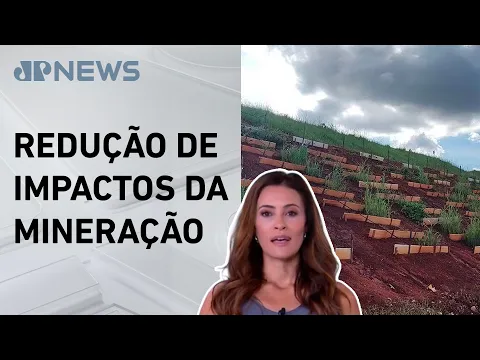
The project, published this Tuesday (23/9), led to the reforestation of slopes—inclined structures with the presence of tailings—in a dam of the Kinross Gold Corporation. However, the objective goes beyond point recovery. According to lead researcher Leide Andrade, the central goal is to develop a revegetation protocol that can be replicated in other mining areas.
“Our goal is to develop a reforestation protocol that works under these conditions so that it can also be adopted in other locations,” explains Andrade.
-
A $3.5 billion megaproject in Latin America pumps desalinated seawater at 1,050 liters per second over 194 km to keep a copper supermine in the Andes operational for another 20 years.
-
A hidden mine in the Andes valued at nearly R$ 1 trillion is starting to attract global attention, containing copper, gold, and silver, and raises an intriguing question: why do Argentina and Chile need to act together to exploit this gigantic wealth?
-
A silent discovery in the interior of Bahia could change the future of energy in Brazil: a uranium reserve in Lagoa Real has an estimated capacity to produce 400 tons per year and is already attracting the attention of energy sector specialists.
-
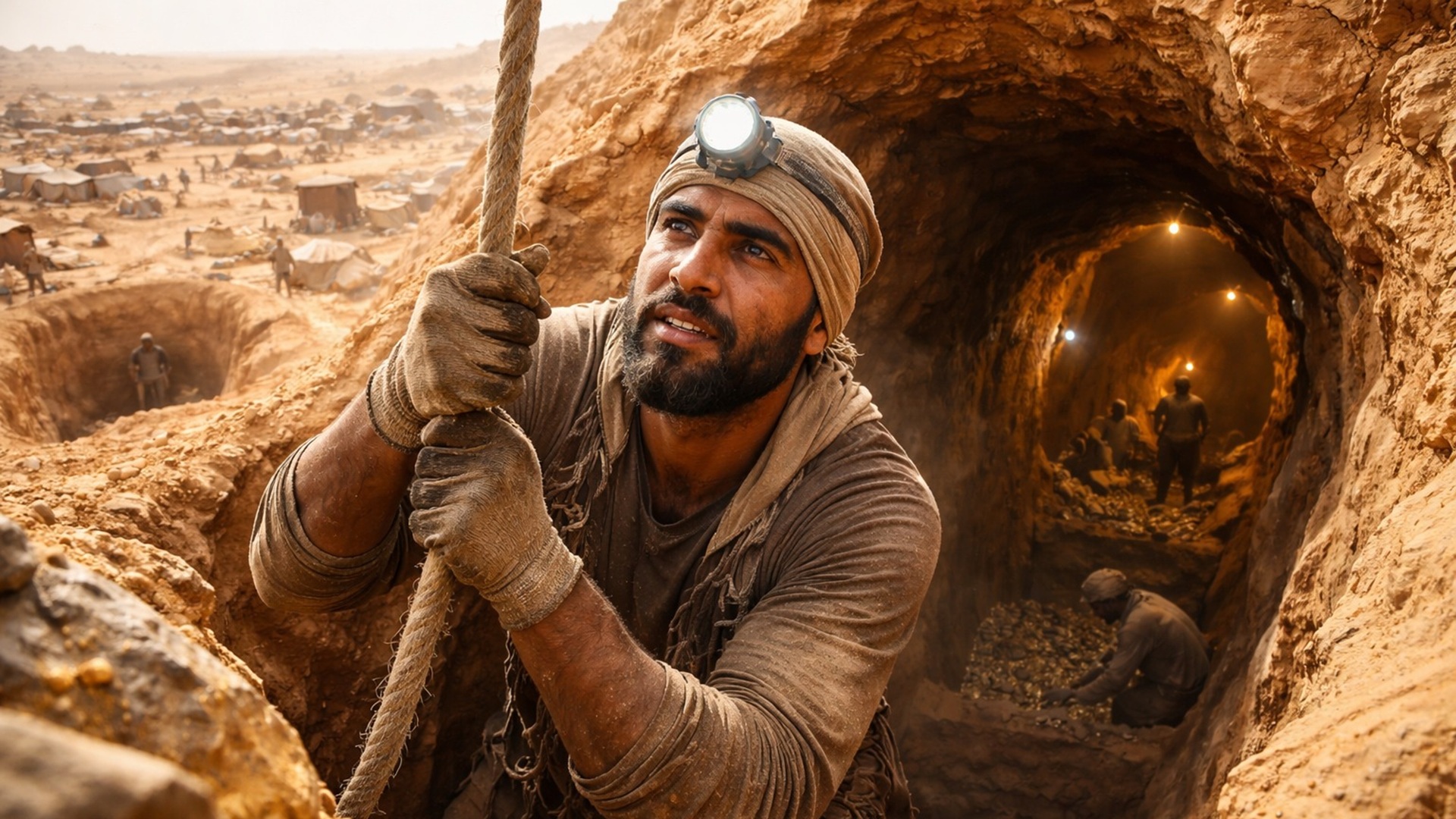
Gold Miners Descend Into Narrow Holes Up to 48 Meters Deep in the Mauritanian Desert and Spend Up to Two Days Living Inside Tunnels in an Underground City with Over a Thousand Mines

Why Use Plants from the Cerrado in the Recovery of Mined Areas?
The choice of native species from the Cerrado was not made by chance. As the study coordinator highlights, importing ready-made solutions from other biomes does not solve local challenges. On the contrary, technology needs to emerge from the very territory.
“There’s no point in importing solutions that work in other biomes. Technology needs to be born here, in the field, with our soils, our climate, and our species,” emphasizes Leide Andrade.
According to Brazilian environmental legislation, mining companies are required to maintain the soil with vegetation cover. However, this requirement imposes strict criteria, significantly reducing the number of suitable species for planting.
Researcher Fabiana Aquino, a member of the project, explains that reforestation on slopes with tailings presents specific limitations. The plants used cannot have deep roots, precisely to avoid damaging the soil structure. Additionally, they need to be smaller species, facilitating the technical monitoring of the dam.
“In agriculture, we always seek to produce more. There, we have to cover the soil and aim to produce as little as possible,” comments Aquino.
In other words, while traditional agriculture prioritizes productivity, reforestation in mined areas prioritizes stability and environmental safety.
Soil Challenges After Gold Mining

Before starting the tests, researchers conducted a detailed soil analysis. The diagnosis revealed an extremely adverse scenario: acidic, compacted soils with low fertility, poor in organic matter, and with low microbiological activity. Additionally, there was the presence of toxic metals, which further complicates the establishment of vegetation.
Given this outlook, the choice of species became a decisive stage.
The research, still in the execution phase, tested combinations of native Cerrado plants and exotic species adapted to the biome, characterized by areas of dense shrubland and typical cerrado. However, some species previously used by the mining company itself showed low adaptability.
According to Andrade, there were cases where certain plants did not develop adequately or did not survive on the slopes at all.
Moreover, when there is high biomass production—such as leaves, stems, and fruits—another operational problem arises. Excess vegetation hampers the observation of the dam’s soil, forcing the company to perform annual low-cutting.
“When there is high biomass production, it becomes difficult to observe the dam’s soil and the company is obliged to perform low cutting of everything that was planted,” explains Andrade. “Every year they sow these seeds, and we rarely observe the presence of some of them on the slopes.”
Therefore, the balance between vegetation cover and technical control becomes essential.
Tested Species and Promising Results
After analyzing the soil and existing vegetation, the Embrapa team started the experimental phase. In the first stage, researchers focused on species adapted to local conditions, such as Pensacola grass and Brachiaria humidicola, known as needle grass.
Additionally, they included legumes such as the sleepy plant (Mimosa somnians), a native species of the Cerrado. However, one of the identified challenges was the low availability of seeds in the market, which could limit the expansion of the technique on a large scale.
Another relevant point involves the use of crops widely employed in regional agriculture. Millet, for example, although adapted to the local climate, showed inadequate performance in the context of reforestation of mined slopes. According to the tests, this species can delay the development of other plants used for vegetation cover.
Despite the difficulties, initial results are considered promising. The project demonstrates that mining transforms the territory, but also opens space for innovative models of environmental restoration.
“Mining transforms the territory, but the way we restore these areas can also be transformative. We want to create models that respect local biodiversity,” defends Leide Andrade.
Thus, the use of native plants from the Cerrado in the recovery of areas degraded by gold mining could become a national reference.
And you, do you believe that Brazilian science can transform devastated areas into new models of environmental balance?










-

-

-

-

-

18 pessoas reagiram a isso.