





 Portuguese
  English
  Spanish
  4 min of reading
  3 comments


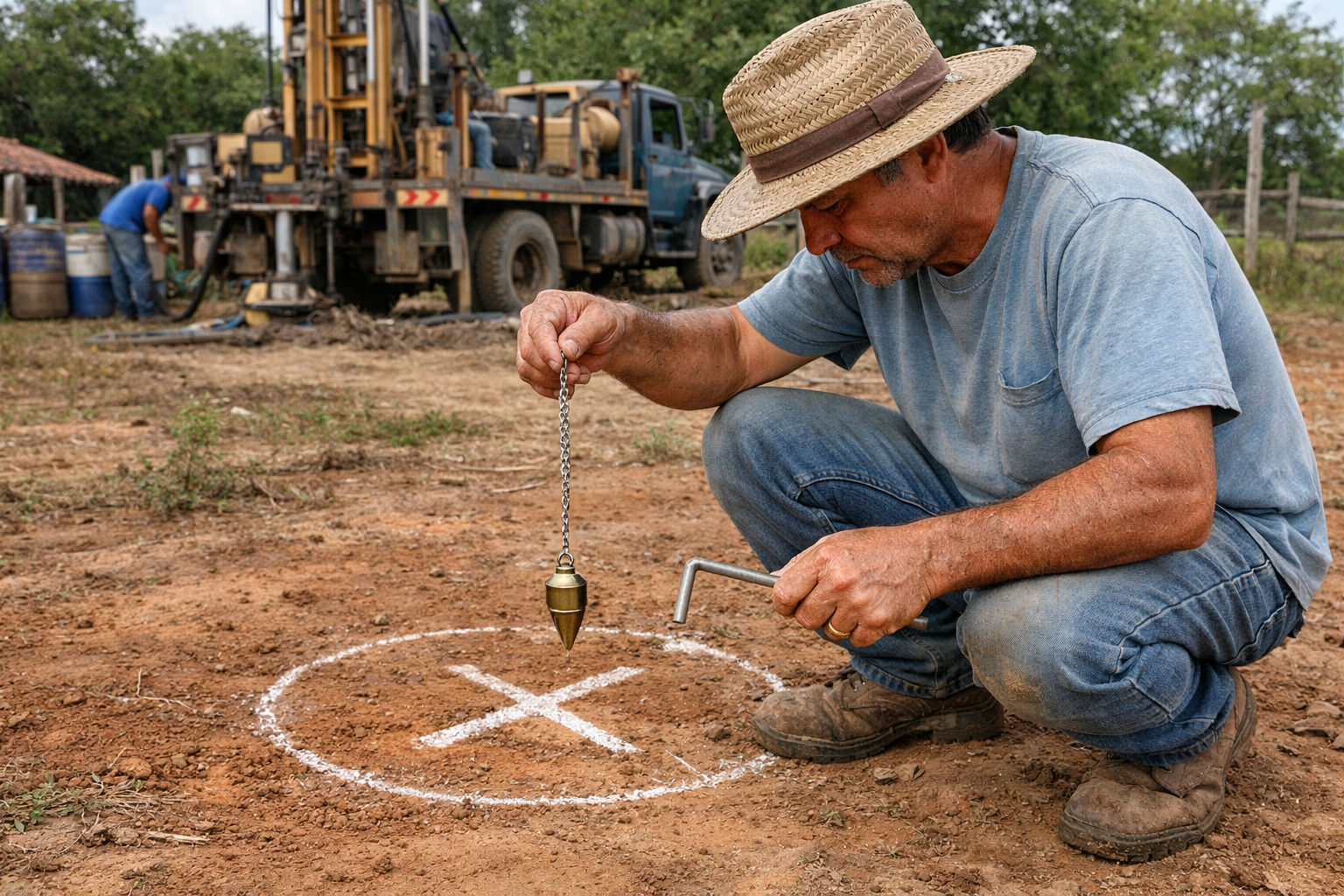


Practical Method Combines Remote Marking, On-Site Confirmation, and Fracture Reading to Define the Exact Drilling Point
The marking of a artesian well done remotely, followed by precise centralization on-site and drilling on the same day, draws attention for the methodology applied and the results presented. The process involves technical observation, fracture reading in the soil, identification of water veins, and detailed depth measurements even before the machine enters. Throughout the procedure, each stage is recorded and explained, allowing the owner to follow from start to finish how the drilling point is determined.
The information was disclosed by the channel Luiz Alves Well Marker, which practically documents how remote marking, on-site validation, and the choice of the exact location for drilling work. According to the marker, the well had already been identified at home the previous night, requiring only on-site confirmation to ensure correct centralization and alignment.
From the start, the method is based on repetition of tests, cross-referencing readings, and confirmation with different tools, reducing errors and increasing the chances of finding sufficient water.
-
The Argentine government celebrates the lowest poverty rate in 7 years, but experts warn that the methodology has changed, real wages have fallen, unemployment has risen, and the number of people on the streets of Buenos Aires has increased by 57% since Milei took office.

-
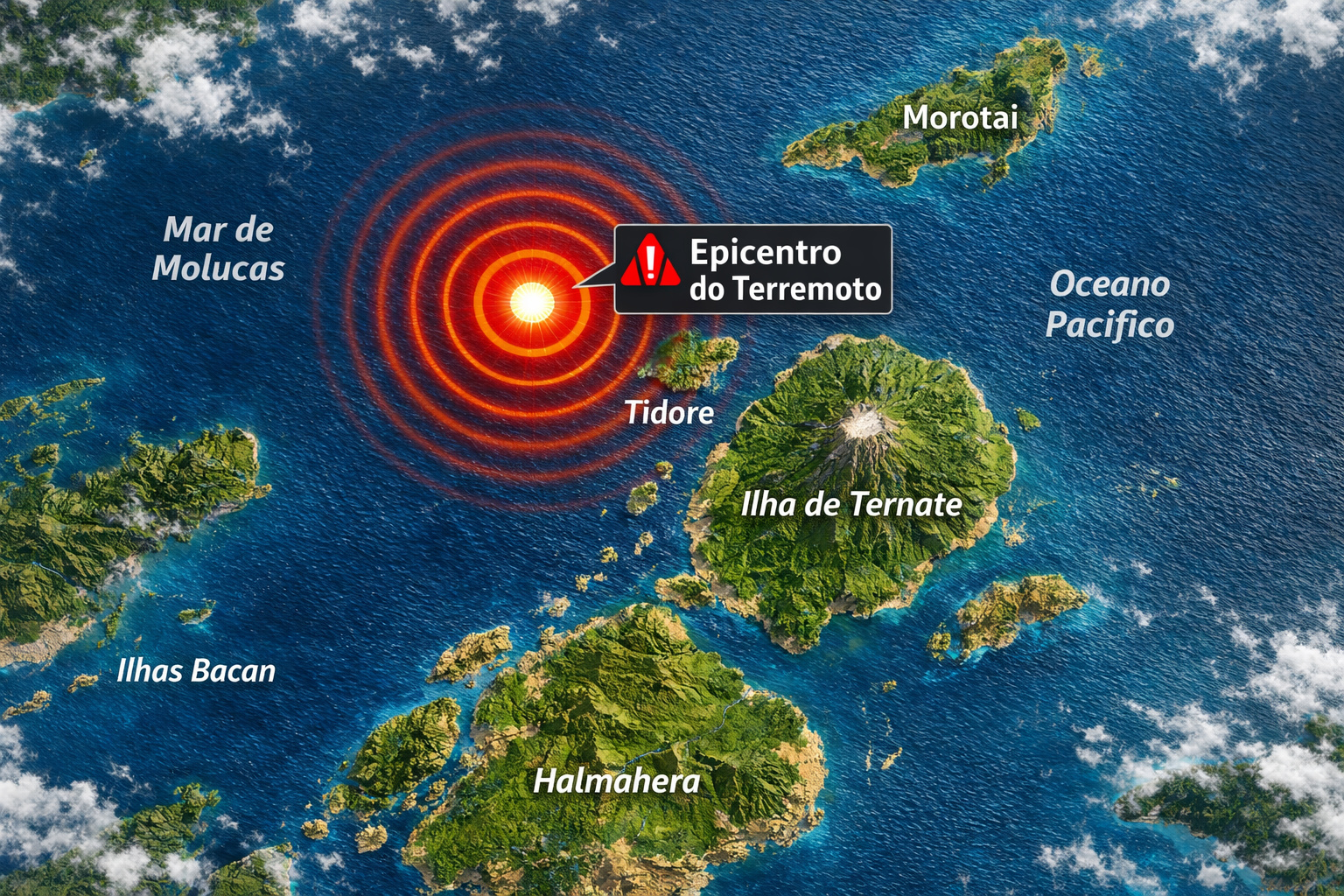
7.8 magnitude earthquake in Indonesia frightens the population, triggers tsunami alert, and hits an island with over 200,000 inhabitants this Thursday.
-
Google will finally let you change that embarrassing Gmail address you created in your teenage years without losing any accounts, logins, or old emails: the feature is already available in the United States.

-
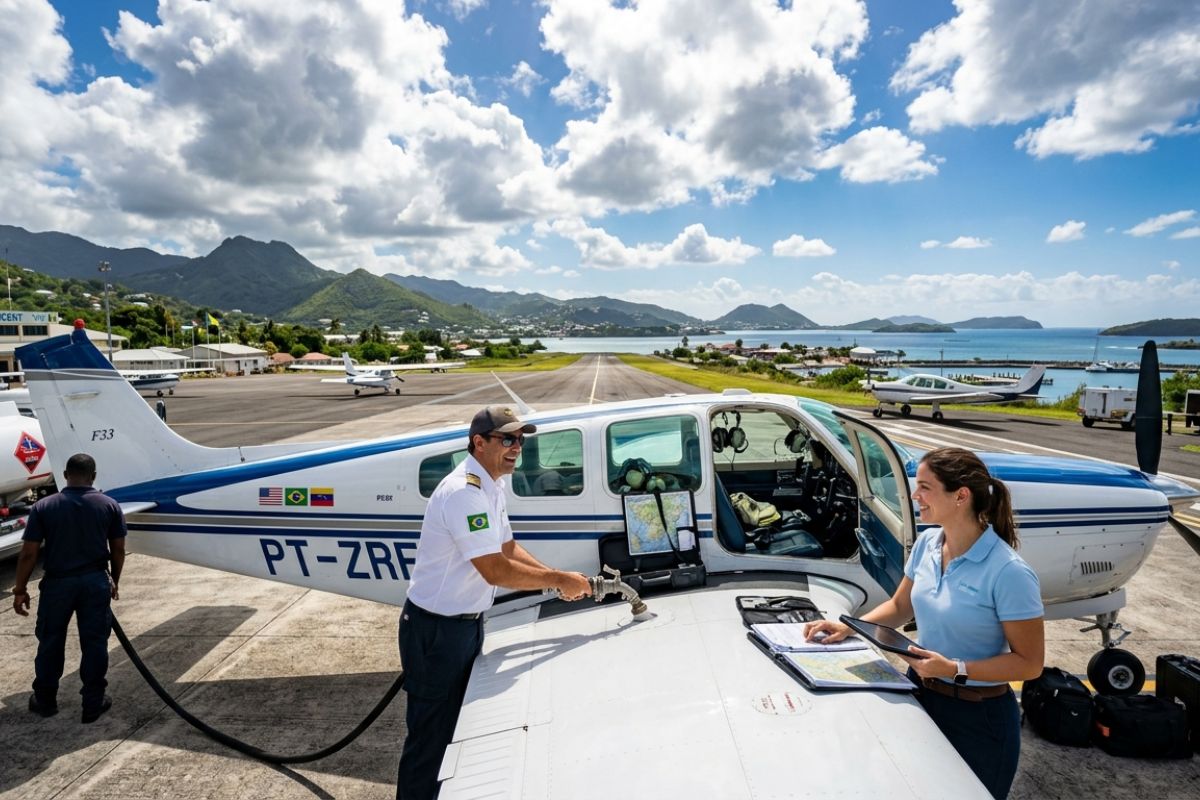
Heading to Brazil in a Bonanza F33 single-engine aircraft: a couple departs from Florida on a visual flight, makes technical stops in the Caribbean to refuel and organize paperwork, and begins the staged crossing until they reach the country.

Identification of Fractures, Active Veins, and Depths Defines the Well’s Real Potential

Upon arriving at the site, the first step is to exactly locate the point marked remotely. To do this, the marker lifts the hook and requests the center of the pre-defined well. When the hook responds, the local confirmation begins. Although not stated with 100% certainty, the professional himself highlights that the accuracy reaches 99.9%, indicating a high degree of reliability in the method.
Next, the process enters the more technical phase: verification of soil fractures. The marker stays precisely on the indicated point and begins to identify whether the well is fractured or merely crossed. Fractures are essential as they indicate natural paths through which water circulates. Dry fissures, though present, do not ensure a productive future for the well.
During the analysis, three fractures with the presence of water are identified, along with a dry fracture, which is considered neutral and discarded for drilling purposes. This detail is crucial as it prevents the well from being drilled in a location without sufficient flow. As explained, a fractured well that is dry does not offer practical returns.
Subsequently, depth measurements are taken. The first fracture indicates a depth close to 28 meters, the second reads around 49 meters, while the deepest fracture points to values between 80 and 82 meters, with a final estimated projection of up to 90 meters for better water capture. The marker himself emphasizes that every study has a margin of error, usually 2 meters more or less, which is considered normal in this type of analysis.

Final Centralization, Cross-Checking, and Start of Drilling Ensure Precision in Results
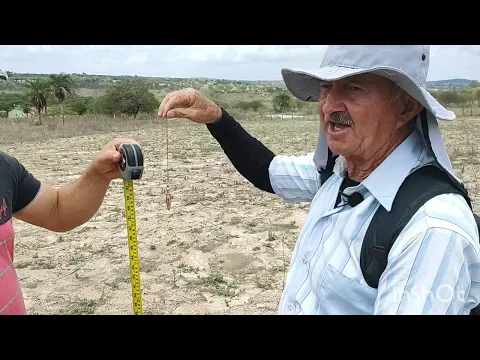
After identifying the fractures and measuring their depths, the decisive phase begins: drilling starts with care. At this moment, the marker uses the pendulum and performs the so-called “proof of the four cardinal points.” The logic is simple yet rigorous: if the pendulum spins and always returns to the same location, regardless of position, the point is correctly centralized.
This procedure is repeated multiple times, coming from different directions. Whenever the pendulum returns to the same center, confidence in the point grows. According to the presented method, correct centralization is as important as the actual reading of fractures, as any misalignment can compromise the entire drilling.
With the point defined, exactly 20 centimeters are measured for the initial opening of the hole. Next, the site is prepared to receive the machine. The leveling of the tower is another critical factor highlighted in the process, as an unlevel tower can cause the hole to start incorrectly and remain misaligned to great depths.
Drilling is initiated with care, using a casing to prevent the collapse of the surface soil. As the machine advances, new measurements confirm progress, initially reaching 16 meters, with expectations of reaching the previously identified deeper fractures. The ultimate goal is to reach the main vein, considered the most promising, even if it requires a greater investment.
Upon concluding the marking process, the marker emphasizes that, despite all the techniques involved, there are no absolute guarantees, as the final result depends on the natural conditions of the soil. Still, the methodology presented shows a high level of precision, repetition of tests, and in-depth technical reading, significantly increasing the chances of success.
In times of technology and easy promises, do you trust more in “root” methods, done on the ground, with experience, repetition, and trained eye, or in quick solutions without land study?








Matéria para turma da Terra Plana e anti-vacina.
Sem base científica alguma.
Como misturar astrônomo com astrólogo