





 Portuguese
  English
  Spanish
  3 min of reading
  60 comments


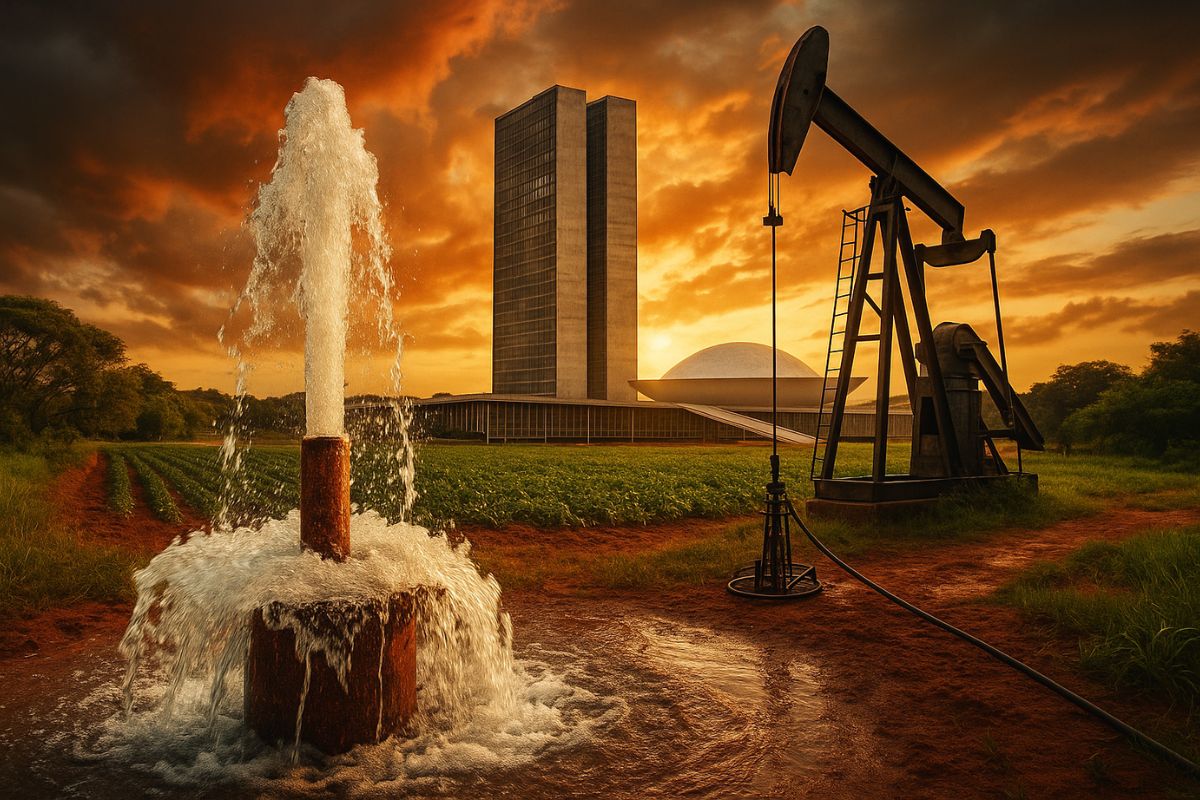


Even In Areas Without Public Network, Artesian Wells Require Authorization, Technical Reports, And Even Payment Of Sewage Fee
In Brazil, having an artesian well in your own yard is not a guarantee of unrestricted use of groundwater. Since the 1988 Constitution, this type of natural resource has been considered a public domain asset, subject to regulations that involve usage permits, environmental licensing, and state oversight, even when the well is the only source of supply for the home.
The legislation aims to prevent overexploitation of aquifers and ensure water quality. However, the complexity of the regulations, the high costs of regularization, and the conflicts between the state and municipalities make it so that approximately 88% of wells in Brazil operate illegally, even when serving families in need.
The Water On Your Land Is Not Yours: What Does The Law Say?
Before the 1988 Constitution, anyone who owned land also owned the groundwater beneath it. That has changed. Today, any use of groundwater requires state authorization through a permit, a formal process involving technical studies and environmental licenses.
-
Residents of Australia woke up to a sky completely red like blood before the arrival of Cyclone Narelle, which hit the coast with winds of 250 km/h, tearing off roofs and lifting iron dust in a scene they described as apocalyptic.

-
New 100% clean fuel produced in Brazil could retire diesel.

-
Plastered walls become a trend and end up being the perfect choice for finishing; the secret of the 2 coats that prevent waste in painting.

-
With 333 meters and equivalent to a 20-story building: China launches a supertanker that transports 2 million barrels, has 540,000 m² of area, and saves $5 million per year.


The Water Law (9.433/1997) is the legal basis for this requirement. In cases of low consumption, such as up to 15,000 liters per day (in São Paulo), the use may be considered insignificant and exempt from a permit — but still requires registration in the state system.
Even so, the practical reality is different: keeping a regularized well in Brazil is expensive, time-consuming, and requires specialists. Therefore, most people simply ignore the law — not out of bad faith, but due to feasibility.
Why Is It So Difficult To Regularize A Well?
Regularizing an artesian well requires:
- Drilling License
- Hydrogeological Study
- Water Quality Reports
- Usage Permit
- Registration In State Systems
- Installation Of A Water Meter
- Periodic License Renewal
Furthermore, the authorization is always state-level, even if the local government has a better understanding of the local reality. And Law 11.445/2007 prohibits the use of well water in properties connected to the public network — that is, if your house is connected to the utility, you cannot use a well at the same time.
Even If Regularized, The Well Can Be Blocked
In Santa Maria (RS), a municipal law tried to allow the use of water from wells in residences, provided that there were quality analyses. But Corsan, the state-owned company that supplies water in the region, reacted based on federal legislation, arguing that only the state can legislate on water resources.
This type of conflict has become common. Courts have already prohibited the use of wells even when regularized, arguing that the public network must have priority for public health and environmental preservation reasons.
And In Rural Areas?
Even in areas without a public network, the well must be authorized. The technical justification is that aquifers are interconnected and may dry up if used without control. There is also the risk of water contamination from pesticides, cesspools, or industrial waste, requiring continuous monitoring.
States like São Paulo require hydrogeological studies, chemical analysis of the water, and periodic renewals every five years, even on rural properties.
When The System Creates The Problem
Despite the technical logic behind regulation, the current model proves inefficient: 9 out of 10 wells operate outside the law. The average citizen does not have the financial or structural conditions to follow such a bureaucratic process — even when there is a real need for access to water.
The dispute between environmental preservation, state revenue, and local autonomy turns the simple act of drilling a well into a legal and economic battle, where those who need it most usually end up losing.
Do you think it’s fair that the water beneath your own land cannot be used without paying or asking for permission? Have you ever been in a similar situation or know someone who has? Share your story in the comments — your experience can help expand this debate.







Daqui uns dias vamos pagar pelo ar que respiramos, corrupção come solto
Acho injusto, quem cavou o poço é pra ser dono da água, até mesmo porque todos os serviços públicos deixam muito a desejar, o serviço não é bom e muitos só querem arrecadar, fora as privatizações que só beneficiam os empresários, tanto do Brasil quanto de estrangeiros e o povo, as vezes, é considerado lixo.
A água que nos é servida não serve nem.pra cozinhar, é imunda carregada de cloro , flúor etc e isso é veneno.