





 Portuguese
  English
  Spanish
 6 min of reading
  0 comments


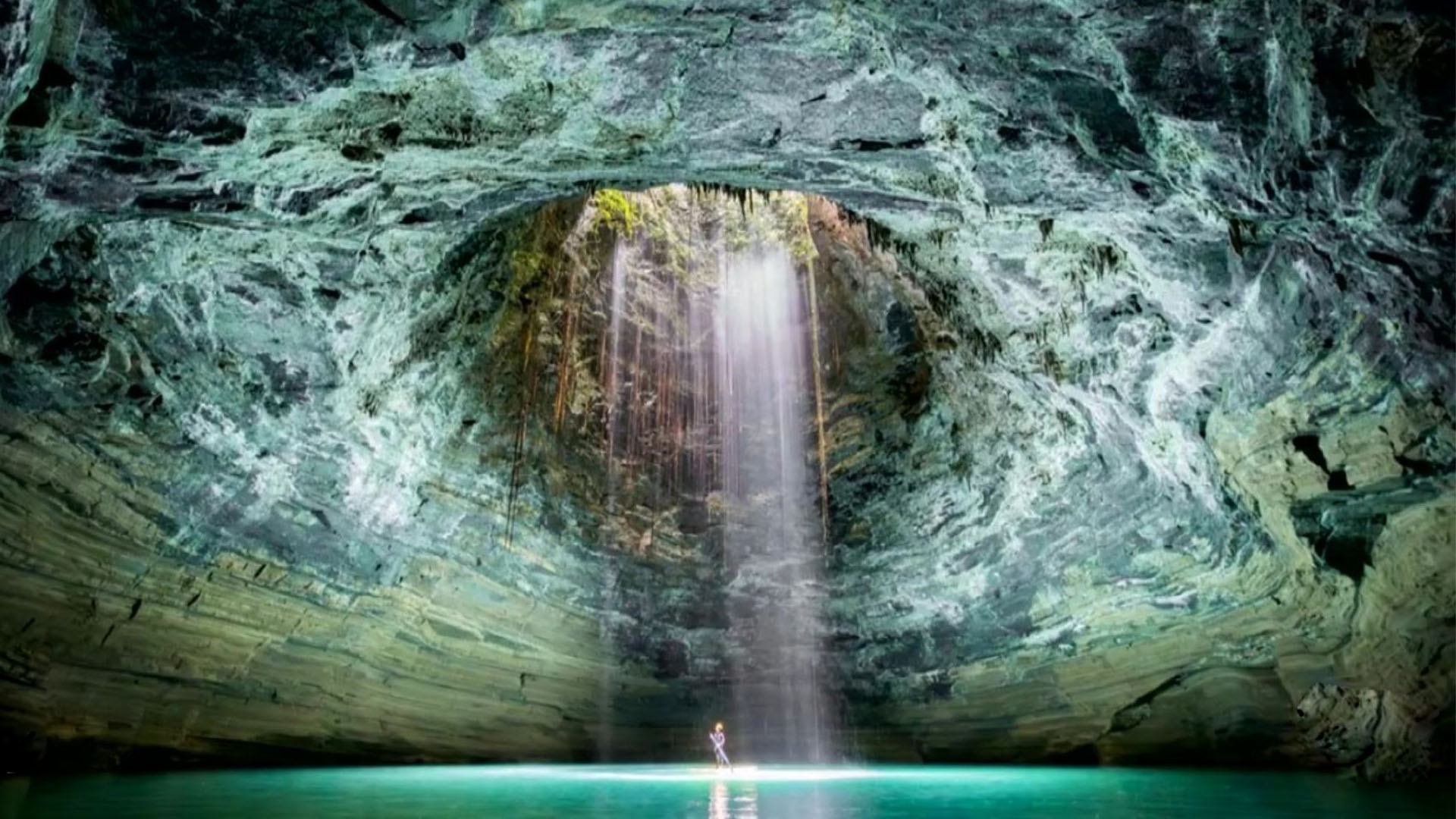
90-Meter Depth Mystery with Turquoise Waters Intrigues Explorers and Keeps Alive Story of Missing Cowboy in Divinópolis de Goiás
In the heart of the speleological complex of Terra Ronca, in Divinópolis de Goiás, there exists a geological phenomenon that has challenged explorers and fueled popular imagination for decades: the Camisa Well. With waters ranging from turquoise blue to emerald green, this natural formation has been explored to depths of up to 90 meters, but its true bottom remains a mystery that intrigues scientists and technical divers.
Located in northwestern Goiás, the well stands out as one of Brazil’s most enigmatic locations, attracting the attention of international speleologists since the 1990s. The structure impresses not only with the beauty of its crystalline waters but also with the technical challenge it poses to those who venture into its unexplored depths.
Access to the site, located on private property 14 kilometers from the São João nucleus of the Terra Ronca State Park, requires prior authorization and specialized supervision. Despite its proximity to the conservation unit, the well is not officially part of the state park, leading to discussions about its preservation and proper management.
-
These living root bridges and ladders are over 700 years old and help indigenous people survive in one of the rainiest regions in the world.

-
From sertanejo star to international investor: Ana Castela invests millions in a mansion in the USA, creates a themed accommodation in Orlando, and shows that the “boiadeira” also wants to grow away from the stage.

-
The 10 most stunning motorhomes in the world: a $3 million trailer with a rooftop nightclub and garage for a Ferrari, “palaces on wheels” with Italian marble, private cinema, and five-star hotel luxury for billionaires.

-
Trump wanted to spend $400 million on the White House, but the courts prohibited the million-dollar construction.


Rare Geological Phenomenon Impresses Experts

What makes the Camisa Well particularly intriguing is its unique geological formation. It is a collapse doline, formed by the roof of a cave falling in, a phenomenon characteristic of limestone terrain known as karst topography. This process, which took millions of years to form, created a natural crater with vertical walls that drop 30 meters to reach the water surface.
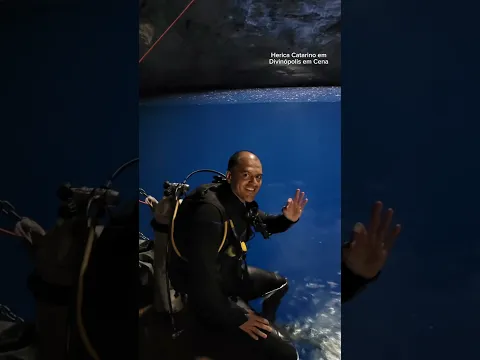
According to speleologist and speleophotographer Alexandre Lobo, who has participated in technical diving expeditions at the site, the known depth reaches an impressive 90 meters: 30 meters of dry wall and another 60 meters submerged. “In technical diving, our team reached this limit and discovered a lateral conduit that is still unexplored,” revealed the expert, explaining that this underwater tunnel reinforces the well’s reputation of being “bottomless.”
Dolines form due to the corrosive action of water on carbonate rocks, a process that has led to the collapse of cave ceilings and created unique circular depressions. In the case of the Camisa Well, the resulting structure impresses with its geometric perfection and the stability of the rock walls, despite the risks of rockfall that require constant caution.
Legend of the Missing Cowboy Crosses Generations
The peculiar name of the well originates from a legend that has been passed down from generation to generation in the region. According to local accounts, a cowboy mysteriously disappeared in the area, and his shirt was found caught in a branch near the edge of the crater. The story, which gave the location its name, has multiple versions among the residents.
“Some say the cowboy was devoured by a jaguar, others report that he fell from his horse, and there are also narratives of murder. In all versions, the final image is always the same: the shirt caught in the branch,” explained Alexandre Lobo, stressing that myth and science go hand in hand when it comes to cave exploration.
For the speleologist, “the cave represents the last frontier of exploration on Earth. Just like outer space, it provides us with sensations of desire and fear simultaneously.” This duality between scientific fascination and popular mystery makes the Camisa Well one of the most intriguing attractions in Brazilian speleological tourism.
Waters Change Color According to the Season
One of the most impressive phenomena of the Camisa Well is the chromatic variation of its waters, which oscillate between shades of turquoise during the dry season and emerald green during the rainy season. This visual effect results from a complex combination of natural factors that impress visitors and researchers.
“In the dry season, the water is clearer and more bluish; in the rainy season, it is greener,” detailed Lobo, explaining that the phenomenon occurs due to the natural transparency of the water in limestone terrains, combined with the presence of dissolved calcite, the volume of rainfall, and the incidence of sunlight through the upper opening of the well, which serves as a natural skylight.
The crystalline quality of the water is also related to a possible connection with the Urucuia aquifer, one of the main reserves of groundwater in the Brazilian Midwest. French explorers who cataloged the site in the 1990s raised this hypothesis, which awaits confirmation through more in-depth hydrogeological studies.
Extreme Challenges for Technical Divers
Exploring the Camisa Well is not an adventure for amateurs. Accessing the water requires a 40-meter rappel directly to the water surface, with no intermediate support points. All the equipment necessary for diving – including compressed air cylinders, specialized lamps, and even an inflatable boat – must be hoisted by ropes in a complex logistical operation.
“Every minute spent at 60 meters depth significantly compromises decompression time. It is essential to use special gas mixtures and closed-circuit equipment (CCR) to minimize risks,” warned Lobo, emphasizing that the location is not suitable for conventional recreational diving.
Besides the technical challenges of diving, the unstable terrain poses an additional risk. Rockfalls from the walls are a real possibility that necessitates constant monitoring and strict safety protocols. For this reason, only divers with advanced technical certification and specialized equipment can explore the depths of the well with relative safety.
Tourist Exploration Attempt Encounters Risks
The agency Peregrino Aventura, specializing in ecotourism in the Terra Ronca region, evaluated the possibility of including the Camisa Well in its commercial tourist routes but abandoned the project before even starting operations. The decision was made after a careful analysis of the risks involved and the complexity of the necessary logistics.
“It’s a highly risky attraction with extremely difficult access, intended for a very specific and limited audience. We carefully evaluated and decided not to proceed, so as not to overload the location,” justified Marcelo Peregrino, owner of the company that operates other attractions in the region.
Access to the well requires a 1-kilometer walk through private farmland, in addition to prior training in vertical techniques. “It is not a commercially viable attraction for the general public. It’s a very delicate environment, and we prefer to contribute to its preservation,” added Peregrino, expressing concern for the sustainability of the location.
Lack of Official Management Worries Environmentalists
Currently, the Camisa Well operates in a administrative vacuum that concerns conservation specialists. Being located on private property, outside the official boundaries of the Terra Ronca State Park, the site does not have a management plan, oversight, or established conservation guidelines from the government.
According to the Goiás State Secretary for Environment and Sustainable Development (Semad), the attraction is in private land and therefore there are no official management or conservation protocols defined by the State. This situation leaves access and preservation of the well entirely in the hands of the owner of the farm where it is located.
Alexandre Lobo argues that, before any attempt to open it for commercial tourism, a complete speleological management plan should be developed, including detailed geological safety studies, hydrological analyses, an inventory of cave biota, and monitoring of the chemical quality of the water. Without these measures, the expert warns of the risk of irreversible degradation of this unique natural heritage.
The Camisa Well remains a fascinating enigma in the heart of Goiás, challenging science with its unexplored depths and keeping alive a legend that crosses generations. While its true bottom remains a mystery, the site represents one of the last great challenges for explorers and a natural treasure that urgently requires protection for future generations.
Consulted Sources: Revista Oeste, Terra Brasil Notícias, Surgiu.com.br, Blog Antônio Carlos, Agência Cora Coralina de Notícias, interviews with Alexandre Lobo (speleologist) and Marcelo Peregrino (Peregrino Aventura Agency).
Do you believe that mysterious locations like the Camisa Well should be opened to commercial tourism or preserved exclusively for scientific research? Share your opinion in the comments and join the debate about the future of this unique natural heritage of Goiás!








-

-

-

-

-

-

207 pessoas reagiram a isso.