





 Portuguese
  English
  Spanish
  5 min of reading
  2 comments


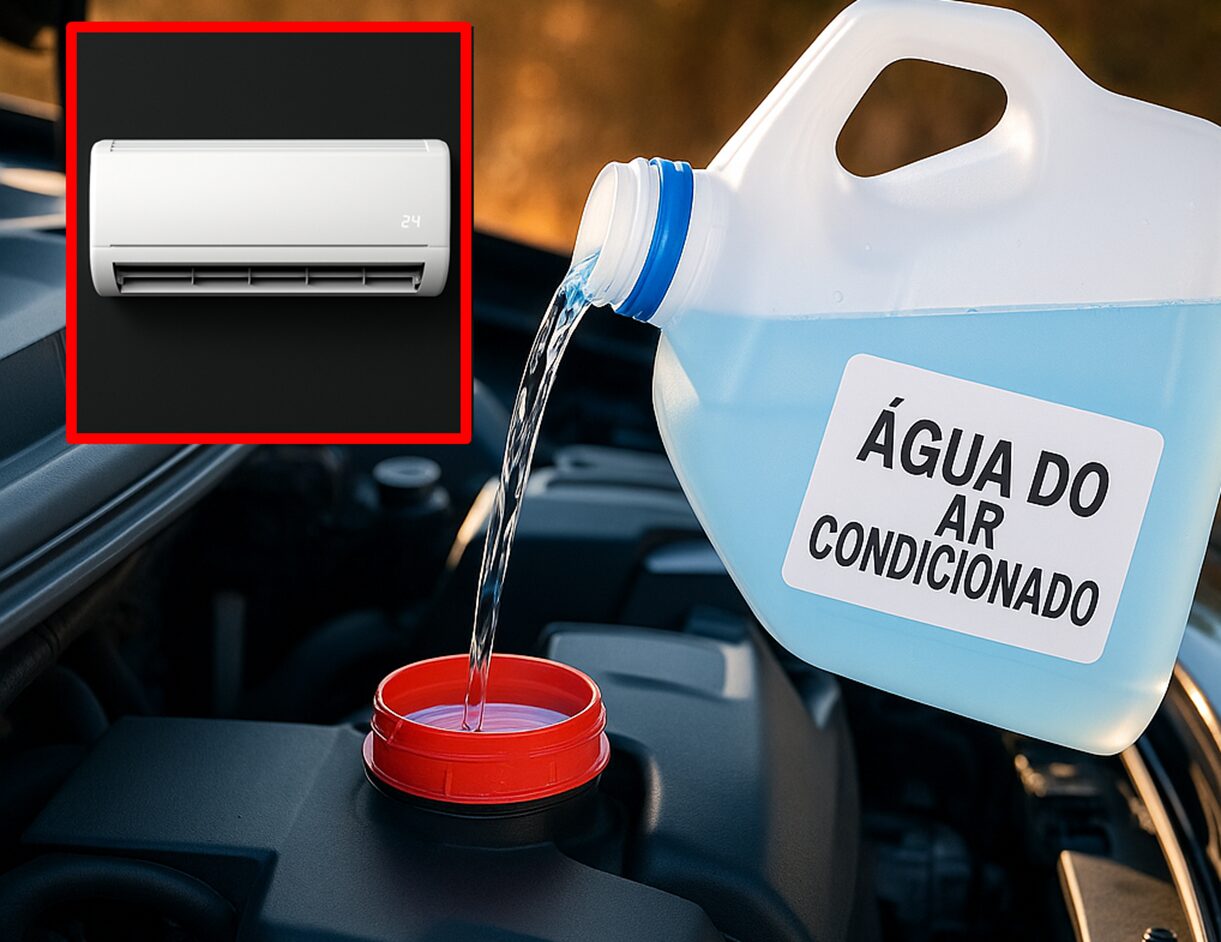


Air Conditioning Water May Seem Clean, But Is Not Suitable for the Car Cooling System; See the Risks and What to Use Instead
In the search for more economical and sustainable solutions, a common doubt has arisen among drivers: is it possible to use air conditioning water in the car cooling system?
The direct answer is no. Although it seems clean and abundant, this water does not meet the necessary requirements to ensure the proper functioning of the engine.
Understand why this practice is not recommended, even with the increasing availability of this type of water.
-
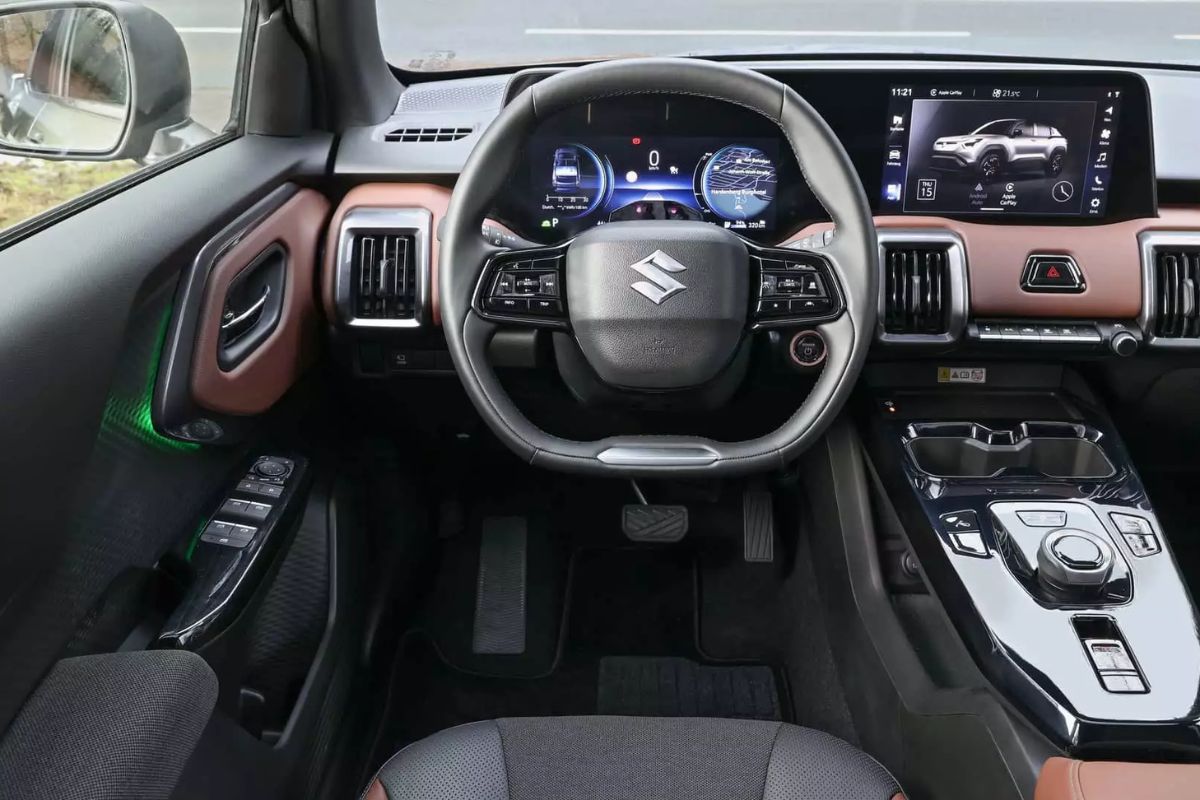
The 2026 electric Vitara arrives in Brazil and proves that Suzuki is not leaving: 4×4 traction, 184 hp, 61 kWh LFP battery, 293 km range, R$ 259,000, and a trunk capacity of 224 L.
-
Hyundai has unveiled the Boulder, a square SUV with a body-on-frame design, 37-inch mud tires, and carriage-style doors that seems to be made to take on the Ford Bronco and the Scout Traveller in the United States.

-
The Toyota Hilux is R$ 75.5 thousand cheaper and bets on the 2.8 turbodiesel engine with up to 204 hp and 50.9 kgfm to catch up with the VW Saveiro, which leads with 4,472 sales.

-
The new Renault Koleos has a screen exclusively for the passenger that is invisible to the driver, heated rear seats, and 29 assistance systems, but its Chinese competitors cost R$ 40,000 less and deliver more power.

The Increase in Air Conditioning Use and the Interest in Condensed Water
According to the International Energy Agency (IEA), Brazil has about 36 million air conditioning units.
The forecast is that this number will jump to 160 million by 2050, a growth driven by the hot climate and urbanization.
Globally, the number of units could reach 5.5 billion in the same period.
With this advancement, interest also grows in a byproduct often discarded: the condensed water released by the units.
This water, which drips constantly on hot days, is seen by many as an opportunity for reuse, even in cars. But is this practice safe?
How This Water Is Generated
The water that flows from the air conditioning is formed by the condensation process. The unit cools the air by using a refrigerant fluid.
When the hot air from the environment passes through the evaporator, the moisture present in the air condenses. The result is water droplets that accumulate and are expelled through a drain.
At first glance, this water seems clean. However, this does not mean it is free of risks.
Clean Water, But Unreliable
Despite its clear appearance, condensed water from the air conditioning is not potable.
This is because it may contain dirt, fungi, dust, and microorganisms accumulated in the unit’s internal ducts.
Studies have shown that it is not safe for human or animal consumption, although it can be used for other purposes.
The Federal University of Paraíba (UFPB), between 2018 and 2020, conducted a study that confirmed the viability of using this water for activities such as watering plants, cleaning floors, or for toilet flushing.
With filtering and treatment, it can meet technical standards for non-potable uses. But none of this makes it safe for a vehicle’s engine.
Why Not Use This Water in the Car Cooling System
Even though air conditioning water seems clean, it is not suitable for the car cooling system for three main reasons:
- Lack of Additives: The cooling system requires a mixture containing anti-corrosive and anti-boil additives. Air conditioning water does not have these substances and, therefore, does not protect against rust, cavitation, or bubble formation. Continuous use can cause serious internal damage to the engine.
- Invisible Contamination: This water may contain invisible particles of dirt, dust, bacteria, and even fungi. These elements compromise the internal cleanliness of the system and favor clogging of ducts, corroding metal parts over time.
- Chemical Instability: Unlike demineralized water sold in automotive stores, air conditioning water does not undergo a reliable purification process. It may contain residual minerals and impurities that accumulate in piping and reduce system efficiency.
What to Use, Then, in the Cooling System?
The recommendation is clear: always use the correct combination of demineralized (or distilled) water with a specific radiator additive, respecting the ratio indicated in the manufacturer’s manual — usually a mixture of 50% water and 50% additive.
This mixture protects against:
- Corrosion of internal parts
- Formation of scale and dirt
- Oxidation of metals
- Boiling and overheating
- Freezing in cold regions
This is the safe way to ensure that the engine operates within its ideal temperature range, preserving the integrity of the system for many years.
The Risks of Inadequate Water Use in the Car
Using unsuitable water, such as that from the air conditioner, can cause a series of problems. Among the most common are:
- Internal Corrosion of the engine block and radiator
- Clogging of the ducts, which reduces the circulation of the liquid
- Failures in the water pump, compromising the engine cooling
- Constant Overheating, which can lead to warping of the cylinder head gasket
These problems generate high costs and may even require a complete engine overhaul in more severe cases.
Responsible Reuse of Air Conditioning Water
Although it is not recommended for automotive use, air conditioning water can be reused sustainably in other areas. The UFPB study showed that it is viable for:
- Watering plants
- Cleaning floors and yards
- Washing vehicles
- Supplying flushing systems
The amount of water produced varies depending on the air conditioning model. A small unit of 7,500 BTUs can generate 0.20 liters per hour.
Larger models, such as 80,000 BTUs, can produce up to 6.81 liters per hour. In commercial environments, this volume accumulates quickly.
Some states have already begun to regulate this reuse. In Pernambuco, for example, a law requires public and commercial buildings to collect this water for non-potable uses.
The initiative follows the guidelines of the United Nations Sustainable Development Goals, promoting the efficient use of water resources.
A Common but Risky Practice
It is common to find drivers who, in the face of scarcity or the need to save money, consider using any available water to top off the radiator level.
However, this immediate saving can be costly. Improper use directly compromises engine performance and can lead to serious mechanical problems.
Therefore, whenever there is a need to fill the cooling system, the correct approach is to use demineralized water and an automotive additive compatible with your vehicle. Consulting the car manual is the best way to ensure the safety of the mixture used.
Air conditioning water should not be used in the car cooling system. Although it seems like a practical alternative, it does not have the necessary characteristics to protect the engine.
This practice can bring more harm than benefits, causing damage and maintenance costs.
On the other hand, this type of water can be a useful resource in other activities, as long as it is directed to non-potable uses and with the necessary precautions. Conscious reuse contributes to water savings, but it must always respect the safety limits of each application.
If the goal is to protect your car’s engine, the best approach is still to follow the manufacturer’s guidelines and opt for the recommended products. Cheap options in this case can end up being very expensive.










Mano do céu, quem pensaria isso, é óbvio que não dá, trata-se uma água cheia de resíduos que o propor ar filtrou fora outras coisas, arrisco em dizer que seria pior do que colocar água de torneira ou filtrada. Agora ser usada no limpador de parabrisa até vai, pois a borracha do limpador passa por intempéries iguais o que está água proporcionaria
Já vi em outra matéria que dá pra usar no limpador de parabrisa