





 Portuguese
  English
  Spanish
  3 min of reading
  0 comments


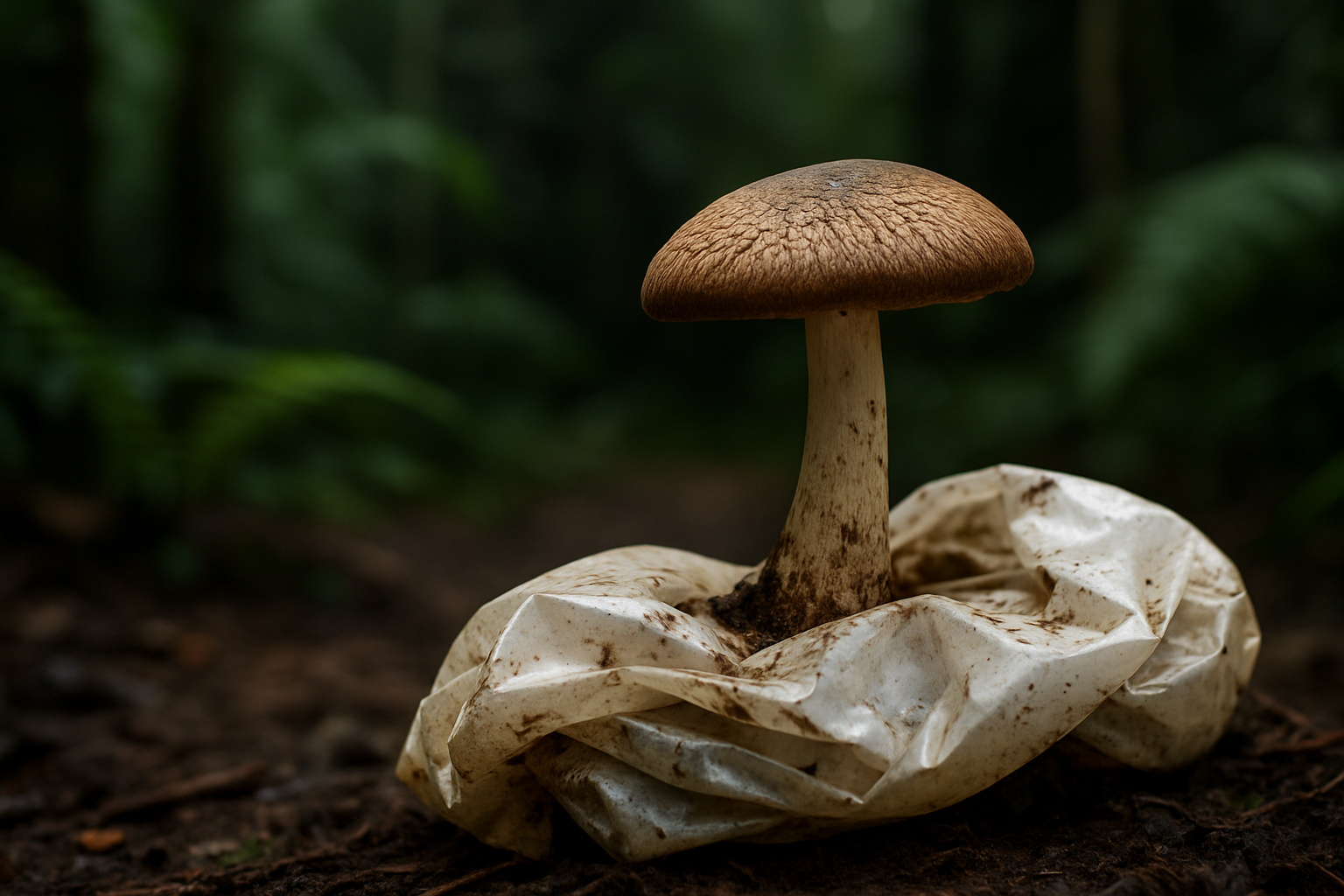
Amazon Fungus That Uses Plastic as an Energy Source Rekindles Debates on Natural Solutions for Persistent Waste
A scientific discovery made in 2011, during an expedition by Yale University to the Yasuni National Park in Ecuador, has gained new international attention. This is because, as reported by researchers, the Amazon fungus Pestalotiopsis microspora revealed an unprecedented ability to consume plastic, which rekindles discussions about real alternatives to tackle extremely durable waste.
Technical Research Identifies Rare Polyurethane Degradation Capability
According to Yale scientists, the fungus uses polyurethane as its sole carbon source, which is surprising given that the process continues even without available oxygen. Moreover, this metabolic ability functions continuously in deep environments, which expands its technical potential for application in compacted landfills where traditional decomposition does not occur.
In the Amazon rainforest, researchers identified a surprising organism: Pestalotiopsis microspora, a fungus capable of feeding exclusively on polyurethane — one of the most difficult plastics to decompose. pic.twitter.com/V7gWdy1Bki
ARTICLE CONTINUES BELOWSee also
How the terraforming of Mars can transform the planet: artificial aerosols can increase the temperature by up to 35°C in 15 years, creating conditions for liquid water.

Scientists drilled nearly 8,000 meters into the ocean floor above the fault that caused the 2011 tsunami in Japan and discovered that a layer of clay 130 million years old was responsible for making the wave much worse than any model had predicted.

Thousands of years after causing the largest eruption of the Holocene, one of the world’s largest supervolcanoes is rebuilding itself beneath the sea south of Japan, receiving new magma and alarming scientists with its transformation.

China has activated a magnet 700,000 times more powerful than the Earth’s magnetic field that operates for over 200 consecutive hours while consuming little energy, and now the world wants to know what Beijing plans to do with this technology in 2026.
— Senso Crítico ⚡ (@SensoCrtico1) August 3, 2025
Still, the central point of the research is the action of serine hydrolases, enzymes that break down the chemical chains of the polymer. Consequently, the fungus absorbs the smaller molecules and transforms them into energy. Thus, the finding demonstrates how natural processes can overcome challenges that the industry still faces.

Additionally, complementary studies conducted over the decade indicate that degrading fungi can act up to 20 times faster in prepared substrates, although these reports are limited to controlled environments.
Environmental Impacts and Challenges for Large-Scale Application
Despite the potential, experts clarify that the use of the fungus in real environments depends on rigorous validations. This is because factors such as climate, humidity, and microbial interference directly influence its performance. Similarly, productive systems require continuous cultivation, which demands specific infrastructure.
Among the Essential Criteria Are:
- Controlled environments that maintain enzymatic stability.
- Strict protocols to prevent negative impacts on local ecosystems.
- Biological isolation to avoid cross-contaminations.
With this, researchers emphasize that the current stage still requires in-depth studies before any operational implementation on a large scale.
Debates on Social, Environmental, and Operational Impacts
From this discovery, the expectation grows to reduce dependence on methods such as incineration and landfills, often associated with long-lasting environmental impacts. Furthermore, the study opens space for reflections on how natural organisms can complement existing industrial practices.
On the other hand, scientific teams highlight that any advancement must prioritize ecological safety, methodological transparency, and constant monitoring. Thus, experts are working to assess risks and establish guidelines that allow the safe use of the fungus in environmental projects.
Projections for the Future of Plastic Bioremediation with Fungi
With the advancement of research, initiatives emerge testing hybrid models that combine biotechnology and engineering, such as fungal treatment modules and biofactories dedicated to producing isolated enzymes. However, all these initiatives remain in the early stage and depend on continuous technical evaluations.
In this way, scientists emphasize that natural solutions can offer sustainable pathways to reduce durable waste and mitigate impacts accumulated over the last decades. Therefore, the progress of the field demands careful environmental governance, rigorous scientific validation, and commitment to responsible practices.
What do you believe should be the global priority: accelerating the use of natural solutions to combat plastic or advancing more cautiously to ensure long-term environmental safety?










-

-

2 pessoas reagiram a isso.