





 Portuguese
  English
  Spanish
  4 min of reading
  0 comments


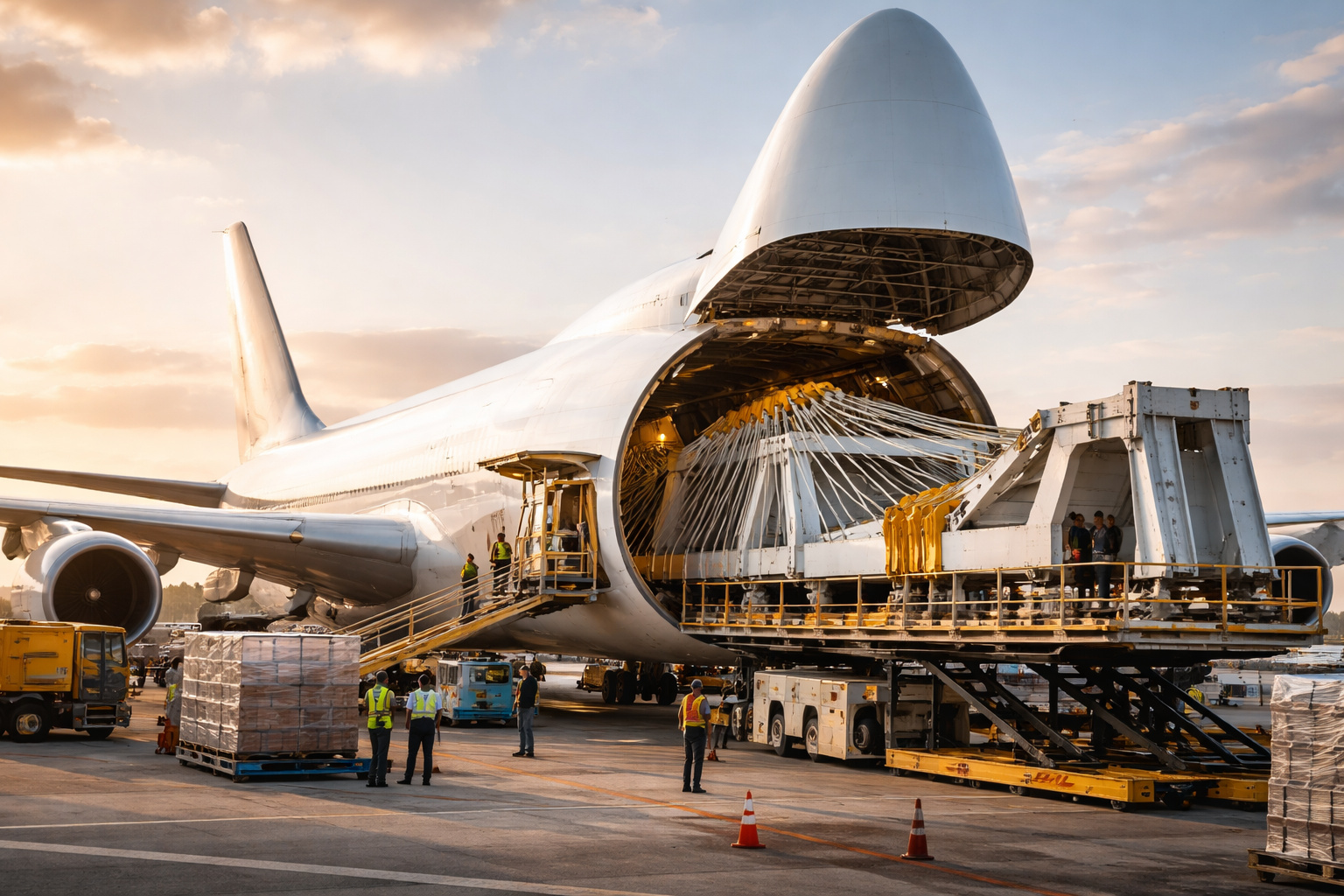
Unprecedented Logistics Operation Delivered Structures of a Cable-Stayed Bridge Produced in Brazil Directly to Angola in a Single Cargo Flight, Drastically Reducing International Transport Time.
A logistics operation of significant impact in international engineering recently took place between Brazil and Angola, drawing attention in the infrastructure and special cargo transport sector.
A cable-stayed bridge produced in Brazil flew across the Atlantic Ocean, in an operation that transported 48 tons of structural equipment from São Paulo to Luanda in just six days.
This timeline represents an unprecedented transit time for transporting heavy infrastructure components, especially when compared to traditional maritime modes.
-
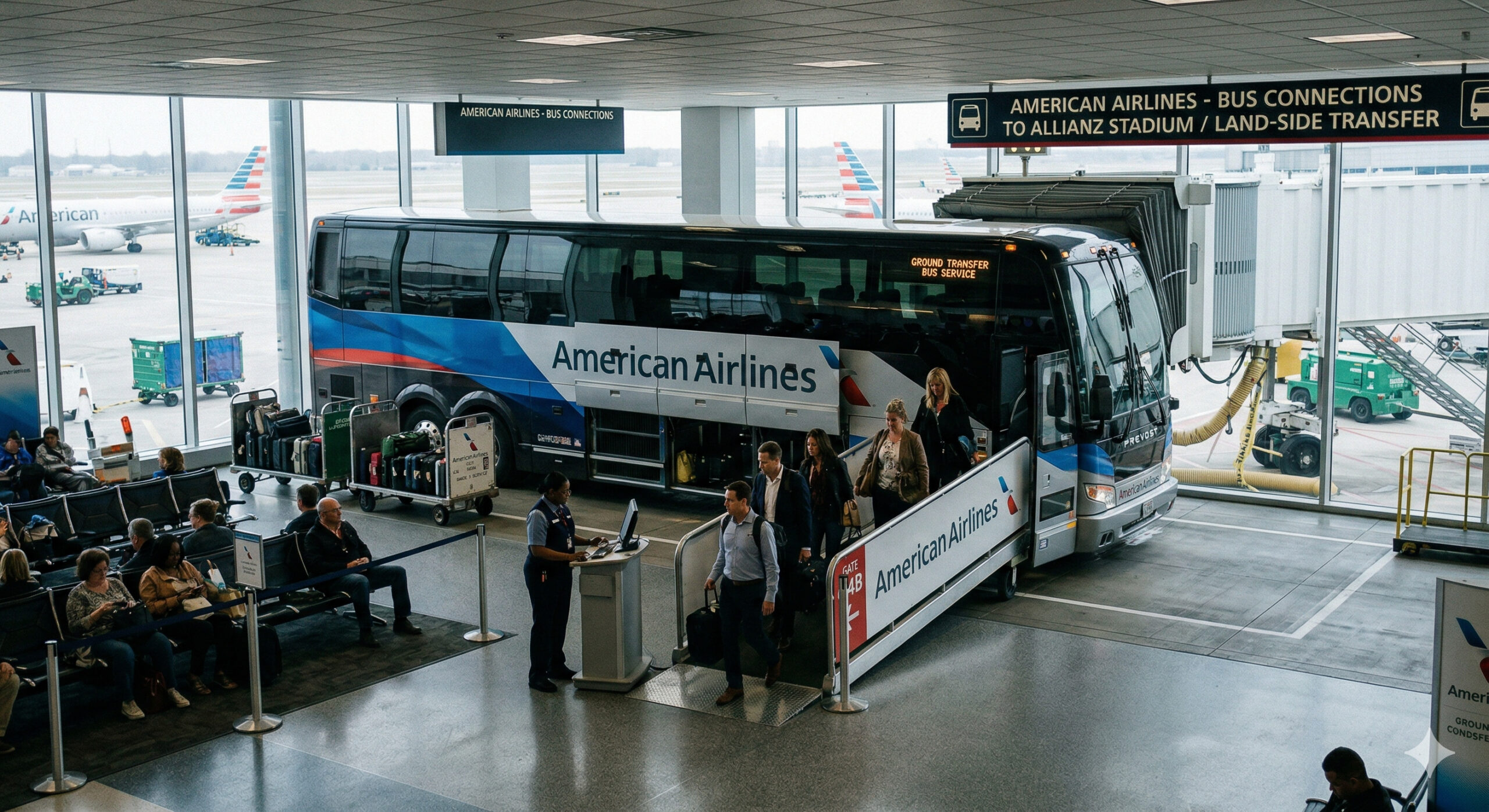
American Airlines starts selling trips as if they were flights, with check-in and baggage check at the airport, but on short routes, passengers board luxury buses connecting cities to major hubs in the U.S.
-
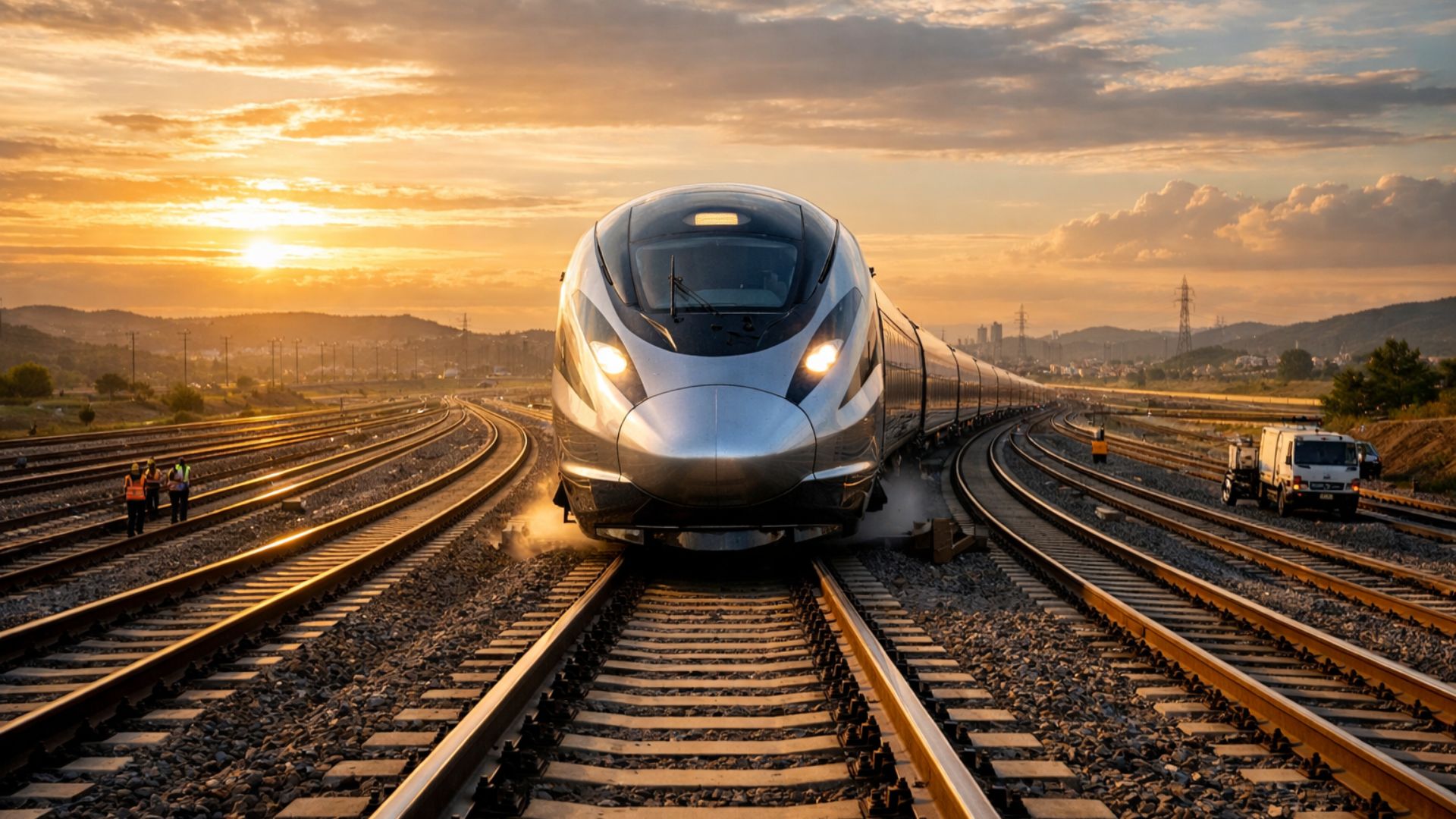
São Paulo surprises the world with a colossal railway network project that promises over 1,000 km of tracks, R$ 194 billion in investments, and 40 projects connecting the capital to the interior with fast and sustainable trains.
-
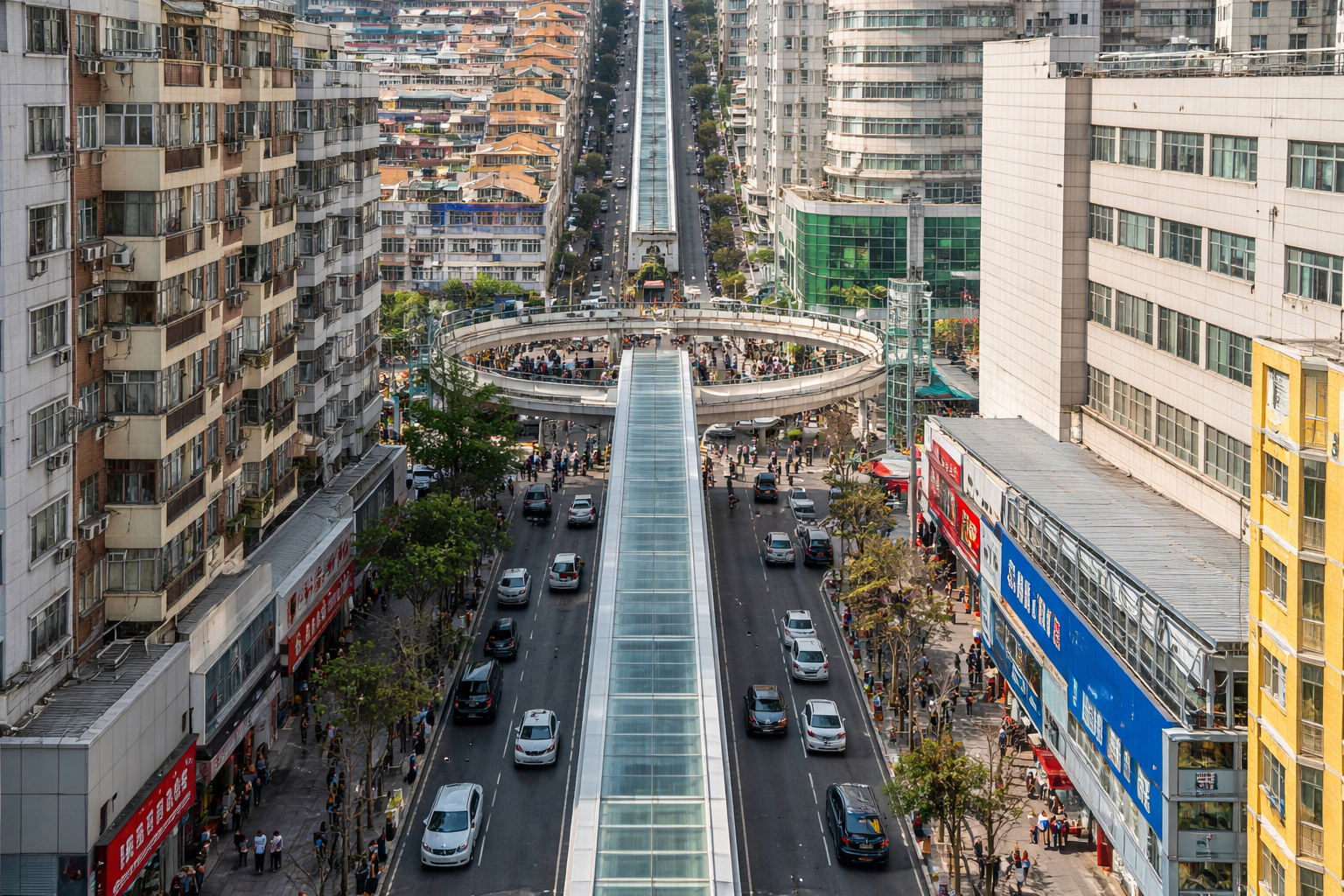
The world’s largest escalator, measuring 905 meters in China, reduces urban travel time from 1 hour to about 20 minutes and transforms mobility in mountainous regions with an engineering solution adapted to the terrain.
-
A R$ 300 million logistics giant is taking shape in Serra with over 100,000 m² and raises a question: how can this transform e-commerce and distribution in the state?

According to information released by DHL Global Forwarding and the Brazilian company Protende ABS, the operation met the construction schedule for the new Luanda Convention Center, set to open in April 2025.
Luanda Convention Center Boosts Strategic Project
The transport of the bridge is directly integrated into the construction of the Luanda Convention Center, located in the Chicala area of the Angolan capital.
The project has an estimated investment of around US$ 316.8 million and will occupy an area of approximately 72,000 square meters.
Among the main spaces planned for the complex is a theater with a capacity for three thousand people, designed to host major national and international events.
In this context, a cable-stayed bridge will connect the Convention Center to the new Marginal of Luanda.
In this type of structure, tensioned steel cables support the deck, a technology similar to that used in the Octávio Frias de Oliveira Bridge in São Paulo.
Logistical Challenge Requires Quick Solution
Transporting bridge structures represents a considerable logistical challenge, mainly due to the heavy weight and dimensions of the components.
In the case of the construction in Luanda, however, the main obstacle arose from the construction timeline, which required speed in delivering the components.
If ships had carried out the transport, the journey between Brazil and Angola could take about 70 days.
For this reason, the logistics team chose specialized air transport, which drastically reduced the total time of the operation.
The DHL Global Forwarding coordinated the mission and sent the structures directly from São Paulo to Luanda in just 144 hours, equivalent to six days of travel.
Logistics Engineering Involves Specialized Team
According to André Maluf, Air Freight Director at DHL Global Forwarding in Brazil, the operation mobilized a task force made up of about 20 professionals.
As the executive explained, the project required constant integration between engineering and logistics, in addition to ongoing communication among all teams involved.

According to Maluf, the planning allowed for the integration of the client’s engineering with the company’s logistical intelligence, ensuring efficiency throughout all stages of the operation.
To carry out the transport, the team utilized a charter flight, that is, a plane contracted exclusively for the mission.
The entire cargo traveled in a single flight made by a Boeing 747F cargo plane, an aircraft capable of transporting larger volumes and weights than conventional commercial airplanes.
Cargo Adaptation Ensures Flight Safety
Despite the air solution, significant technical challenges arose during the transport planning.
The bridge components presented distinct geometries and dimensions exceeding six meters, which complicated accommodation inside the aircraft.
Moreover, these components lacked suitable interfaces for air fastening, necessitating specific adaptations.
To solve the problem, the team created custom packaging and fastening structures at the airport itself, using wood and custom-made structural bases.
According to André Maluf, this solution resulted from a just-in-time packaging engineering process, developed to meet the operation’s timeline.
These structures kept the pieces completely stable throughout the flight, preventing displacements that could pose risks to the aircraft.
Vandalism-Resistant Components Are Part of the Cargo
Among the items transported were vandalism-resistant tubes, used to protect the bridge’s suspension cables.
These components act as coatings that protect the cables against natural damage and human interventions.
To transport these pieces safely, the specialists created a anchoring system capable of securing the vandalism-resistant tubes to the aircraft pallets.
This method transformed complex industrial components into air-freight-compatible cargo units.
According to DHL Global Forwarding, this operation represents one of the first Brazilian exports carried out by air involving heavy infrastructure structural systems.
A Historic Example of Bridge Transportation
The international transport of bridge structures is not entirely unprecedented in history. In the late 1960s, the original London Bridge was purchased by an American businessman to become a tourist attraction.
Subsequently, teams dismantled the bridge in London and rebuilt the structure in Lake Havasu City, Arizona, USA. At the time, the entire process of dismantling, transporting, and rebuilding took about three years.
Compared to this historical case, the recent transport between Brazil and Angola shows how logistical advancements can drastically reduce the time required to move large engineering structures across the globe.
In light of this unprecedented operation, a curious question arises: will other large infrastructure structures also be able to cross oceans in cargo planes in the future?






Seja o primeiro a reagir!