





 Portuguese
  English
  Spanish
  4 min of reading
  0 comments


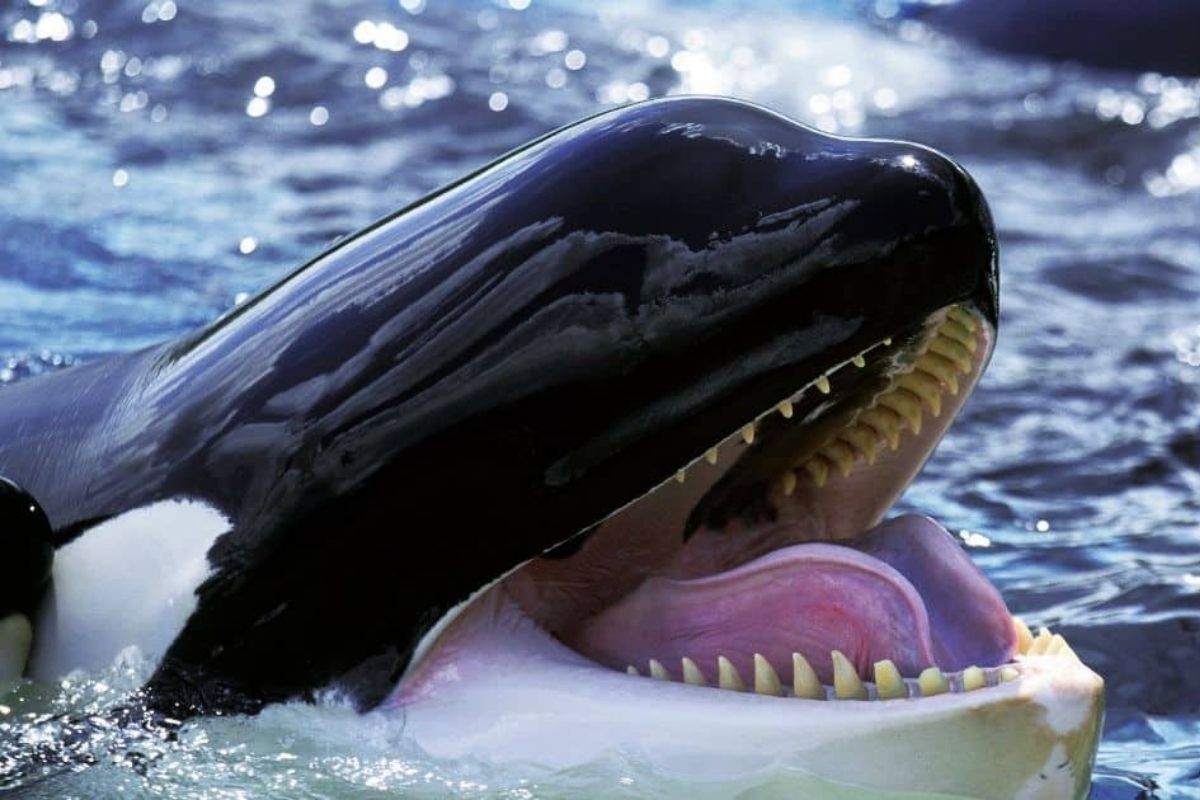
In Open Seas And Also In Parks In The United States, Orcas Show Tactics That Change According To Whales, Sharks, And Seals: Circles, Waves, Inversions, And Prolonged Attacks. They Prioritize Organs Such As The Tongue And The Liver, Test Prey, And Even Strand On Beaches To Capture Food, Rarely Faced In The Ocean Today
Orcas occupy a rare status among marine predators because they combine size, intelligence, and group coordination. In the ocean, they adapt their hunting to the target: small fish, sharks, and even whales enter into different strategies, planned according to the prey and the environment.
In the United States, the behavior of orcas also appears outside of open water, in parks such as SeaWorld Orlando and SeaWorld San Diego, where records show complex interactions with other animals and risks associated with captivity. The result is an animal with few natural threats and methods that inspire admiration and fear.
Group Hunting And Strategies That Change According To Prey

Orcas almost always hunt in groups and select a tactic according to dinner.
-
In Mexico, a 3,000-year-old Maya site with the dimensions of an entire city may have been built as a colossal map of the cosmos, created to represent the order of the universe and reveal how this people organized space, time, and rituals.
-
Japan wants to build a solar ring of 10,900 kilometers on the Moon to continuously send energy to Earth.

-
Weighing almost 1 ton, with temperatures of up to 3,000°C, the ability to launch 10,000 fragments within a radius of 1 km, capable of penetrating concrete and melting steel, Turkey’s terrifying bomb emerges as one of the most destructive non-nuclear weapons ever presented.

-
After a submarine disappeared beneath the “Doomsday Glacier,” scientists announce a new monstrous machine capable of operating at 3,000 meters depth to return to the heart of the ice and investigate a threat that could raise sea levels worldwide.

For schools of fish, records describe a carousel of air bubbles as a sufficient method to concentrate small fish.
When the target is larger, the dynamics change.
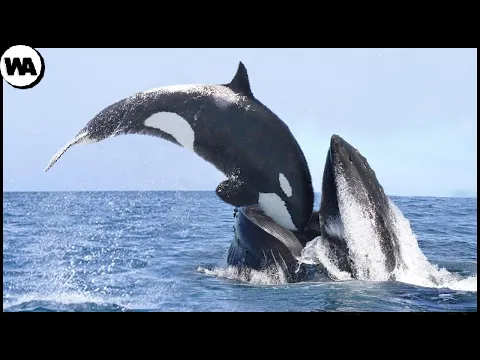
In attacks on whales, the reported pattern involves alternating charges, bites, and pulls, exploiting the progressive wear of the prey.
The goal is to exhaust an animal that, even though larger, loses efficiency after long pursuits.
Whales, Calves, And The Choice Of The Tongue As A Target

Records indicate that the most common prey are calves of whales, to the point that there are cases where humpback whales attempt to protect calves from other species when they perceive the approach of orcas.
The detail that stands out the most is selectivity.
In some attacks, orcas “often eat only their tongues,” leaving the rest of the carcass for other animals.
The explanation provided is straightforward: the tongue is especially tasty, making the selective cutting part of the pattern.
Sharks: Disorientation, Inversion, And The Liver As Priority

With sharks, selection also means efficiency.
Records state that orcas only eat the liver, described as an organ with useful substances, treated as “vitamins” in the account.
The dispute with the great white shark appears as one of the rare scenarios in which the prey may react, especially if it bites first.
Even so, the advantage returns to the orcas when they apply a strategy of pushing the shark to the surface, stunning it, and then turning the prey, exploiting the disorientation.
Beaches, Strandings, And The Hunt That Crosses The Water Limit
Among the most risky techniques mentioned is the hunt that involves invading beaches.
Records describe orcas that almost leap towards the coast to grab prey such as seals when there is sufficient motivation.
This method comes at a price.
There are mentions of numerous episodes where orcas “got too excited,” lost the timing, and became stranded.
In these cases, survival depends on the rising tide and, when people are nearby, on human support, as the account mentions animals weighing three to five tons.
Seals, Ice, And The Attack By Repeated Waves
On the ice, the logic is of behavioral engineering.
Seals climb onto blocks to rest, but orcas overcome this barrier with cooperation: several individuals speed up and brake in front of the block, creating a wave that drags the prey.
The central point is repetition. If the seal returns to the ice, the wave attack restarts, without hurry, until the capture occurs.
The method reinforces why beaches, ice, and open sea enter the same repertoire of orcas.
Play With Prey And What It Reveals About Learning
The account describes an uncomfortable dimension: orcas can prolong interactions with prey, using animals as if they were a “ball,” in repeated sequences.
The interpretation presented is that this may function as training, a demonstration for young ones, or simply playful behavior.
There are also mentions of varied prey in this dynamic, such as rays, turtles, and penguins.
In practice, the record supports a constant idea: when orcas decide to capture, they tend to insist until they succeed.
Where Strength Meets Limit: Sperm Whales, Captivity, And Parks In The USA
The text points out that male sperm whales can pose a risk due to their powerful tail, citing an adult weighing around ninety tons.
Still, the narrative itself recognizes that this rarely leads to direct confrontation, suggesting that the decisive factor is behavior, not just mass.
In captivity, the cited scenario occurs in the United States, with the case of Tilikum, described as involved in at least three deaths: Keltie Byrne, a man who entered the pool after the park closed, and the trainer Dawn Brancheau, at SeaWorld Orlando.
The record also mentions SeaWorld San Diego, with orcas using pieces of fish as bait to attract birds, signaling deliberate behavior even outside of open water.
The collection of episodes describes why orcas intimidate whales, face sharks, select organs like tongue and liver, and, in specific situations, cross the water limit to capture prey on beaches. The pattern is continuous adaptation, with technique, persistence, and few real threats.
If you want to follow this topic safely, it is worth observing the contrast between ocean and captivity, and how the environment changes the risk for animals and humans.
In your view, which animal or situation has a more real chance of making orcas retreat: whales, sharks, or the very limit of beaches?









-

-

-

-

-

7 pessoas reagiram a isso.