





 Portuguese
  English
  Spanish
  5 min of reading
  1 comment


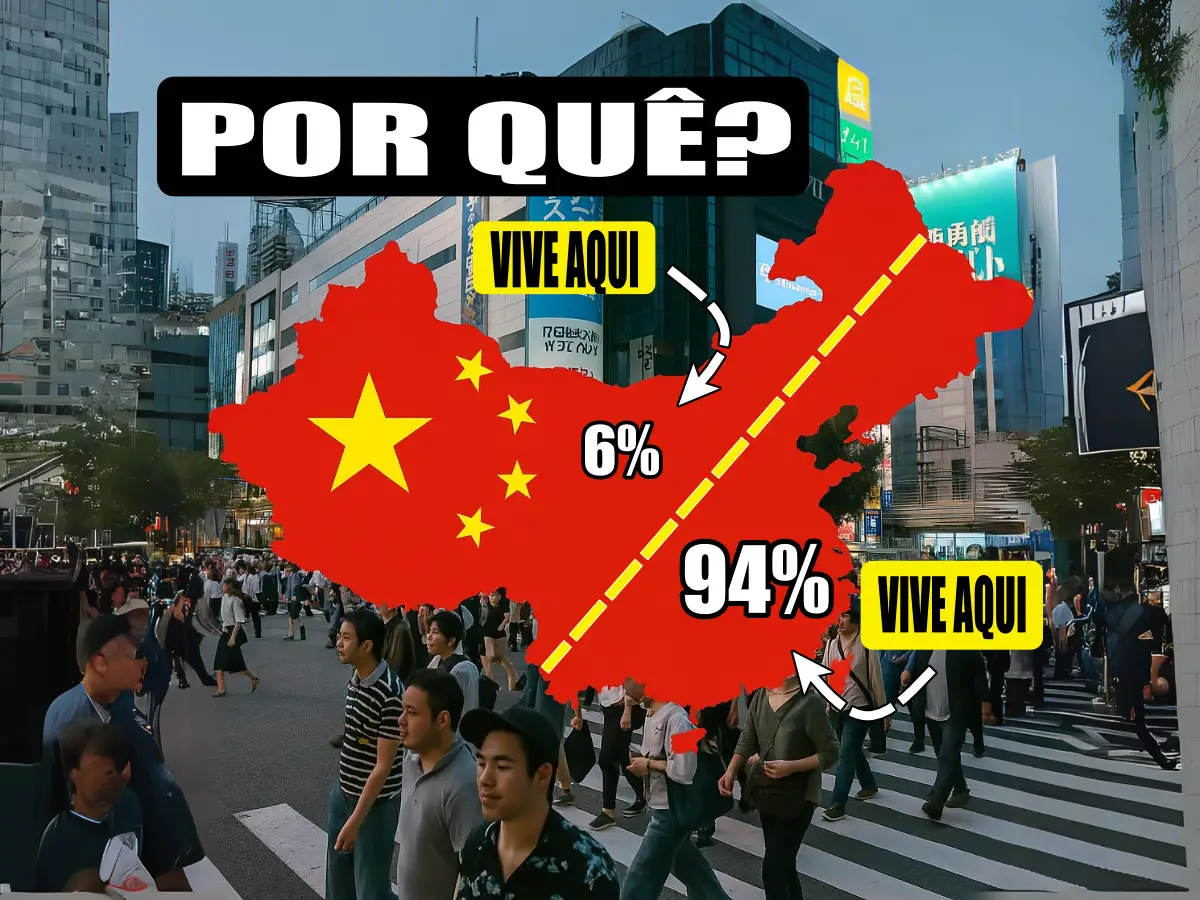


Why Is Western China Almost Uninhabited? 94% of Chinese Live to the Right of an Invisible Line. Find Out What Is Behind the Territorial Inequality of the Asian Giant
Imagine a country where a single city has more inhabitants than entire nations. Now, expand this scenario to provinces with populations higher than countries like France, the United Kingdom, and Egypt. This is China, an Asian powerhouse that is home to over 1.4 billion people — equivalent to almost 20% of the world’s total population, according to updated data from the UN. And yet, more than half of its territory remains practically uninhabited.
What explains this gigantic human concentration in a relatively small part of the country? In this article, we explore the historical, geographical, economic, and climatic factors that define this unequal distribution and how it might change in the future.
-
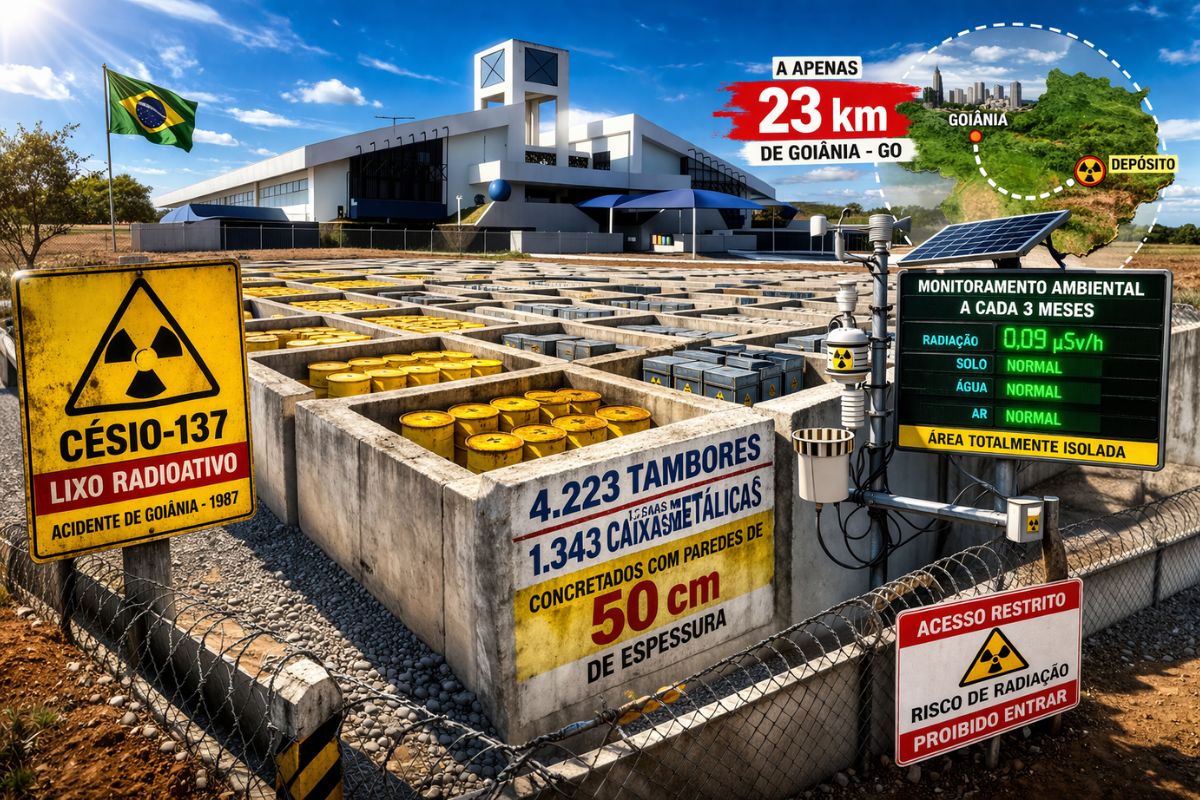
There are 4,223 drums and 1,343 metal boxes concreted with 50-centimeter walls that store the radioactive waste from Cesium-137 in the worst radiological accident in Brazil, just 23 kilometers from Goiânia, with environmental monitoring every three months.
-
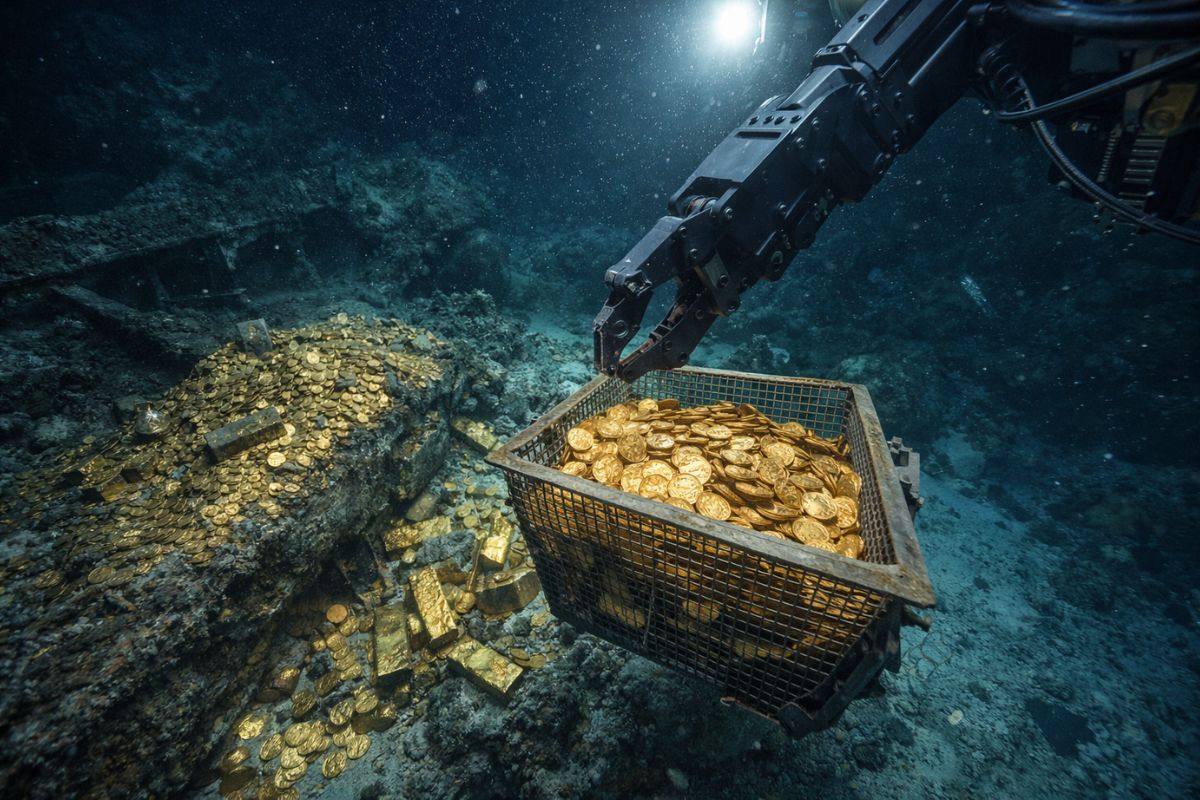
Giant Roman treasure found at the bottom of Lake Neuchâtel in Switzerland reveals an advanced trade system, circulation of goods, and armed escort in the Roman Empire about two thousand years ago.

-
He buried 1,200 old tires in the walls to build his own self-sufficient house in the mountains with glass bottles, rainwater, and an integrated greenhouse.

-
The aircraft carrier HMS Prince of Wales is heading to the Arctic with F-35 fighters, helicopters, and warships in an operation that repositions the United Kingdom at the forefront of NATO in 2026.

The Largest Population in the World and One of the Largest Territories, Rivaling Powers Like the United States and Canada
China is the most populous country on the planet — even surpassing India, its demographic rival, and is also one of the largest in land area, rivaling powers like the United States and Canada. With a territory of over 9.5 million km², the Asian giant could, theoretically, accommodate its population in a balanced manner. However, what we see is an extremely uneven distribution: 94% of the Chinese population is concentrated in the eastern strip, while the vast territories of the west and central parts of the country remain practically empty.

This concentration is so intense that the cities of Shanghai, Beijing, and Guangzhou combined have more inhabitants than all of South Korea. To give you an idea of the scale, Henan province has a population equivalent to that of France, and other provinces exceed entire countries in population.
Why Does Eastern China Attract So Many People?
The pattern of occupation in China has deep historical roots. Since before Christ, Chinese civilizations developed in the eastern region, near the Yellow Sea, favoring trade and agriculture. Dynasties like Han, Qin, Tang, and Ming established their capitals on or near the coast, shaping the country’s population geography to this day.
Another determining factor is the favorable climate and abundant water resources. The eastern region is washed by the Kuroshio warm current, which brings moisture from the Pacific, favoring rainfall and, consequently, agricultural development. The presence of the three largest rivers in the country: Yangtze, Yellow River, and Pearl River, makes this area one of the most fertile in the world. According to the FAO, over 25% of the planet’s food comes from lands irrigated by rivers like these.
The Uninhabitable West: Mountains, Deserts, and Isolation
While the east thrives, the west faces severe natural challenges. This part of Chinese territory is dominated by arid deserts and high mountains, such as the Gobi Desert, the Taklamakan Desert, and the Tibetan Plateau, the highest inhabited region in the world. In these areas, the climatic conditions are extremely adverse: negative temperatures, low humidity, and scarce rainfall make cultivation nearly impossible and hinder human settlement.
Moreover, these regions are surrounded by mountain ranges such as the Himalayas, Tianshan, and Qinling, which act as natural barriers. They block the arrival of moisture-laden clouds from the ocean, a phenomenon known as orographic shading, responsible for the extreme dryness. The result is a vast territory that is inhospitable.
Comparisons with Brazil: Large Territory, Concentrated Population
The Chinese situation somewhat resembles what happens in Brazil, where states like Amazonas, Pará, and Mato Grosso have vast territorial areas but low population density. In the case of China, however, the difference is even more marked: 60% of the territory has less than 6% of the population.
An extreme example is Tibet, which, although vast in area, has fewer inhabitants than the state of Rio Grande do Norte, which has about 3.5 million people. This also reflects on the economy: Tibet’s per capita GDP is similar to that of countries like Peru or Nigeria, while coastal provinces like Beijing already exceed the per capita GDP of Portugal, according to data from the World Bank.
A New China on the Horizon: Chinese Government Plans Billion-Dollar Investments and Creation of Logistical Poles in Previously Isolated Territories
Aware of this internal inequality, the Chinese government has sought to reverse the scenario. In 2020, officials officially announced the eradication of extreme poverty and launched a series of public policies aimed at developing the west. The main strategy is the so-called New Silk Road, an ambitious infrastructure project intended to connect China with Europe and the rest of Asia through railways, highways, and gas pipelines that cross the less developed regions.
According to the official website of the Belt and Road Initiative, the plan foresees billion-dollar investments and the creation of logistical poles in previously isolated areas. This will not only boost the economy of the interior but will also reinforce China’s sovereignty in strategic regions, such as the border with India, where there are recurring conflicts with Indian troops over territory in the Himalayas.
The Future of the Asian Giant
Although development projects are underway, the challenge of redistributing the population of China is monumental. Infrastructure, resources, and climate still largely favor the eastern region, where the largest companies, industries, and urban centers of the country are concentrated. However, with planning, technology, and investment, the arid and almost empty interior could become the next growth frontier for the Asian giant.
Do you want to know China? Have you ever thought about what it would be like to live in the most populous country in the world, where millennia-old tradition and cutting-edge technology mix at every corner? Before packing your bags, it’s worth understanding why 94% of Chinese live concentrated in just one part of the territory — and what this reveals about the contrasts of this Asian superpower.Leave your opinion in the comments








O Tibet não é China, ele foi invadido covardemente (nem exército regular o Tibet possuia) na década de 1950 pelos chineses. É um país com língua e cultura completamente diferente da chinesa. Parem de omitir e dizer mentiras.