





 Portuguese
  English
  Spanish
  4 min of reading
  0 comments


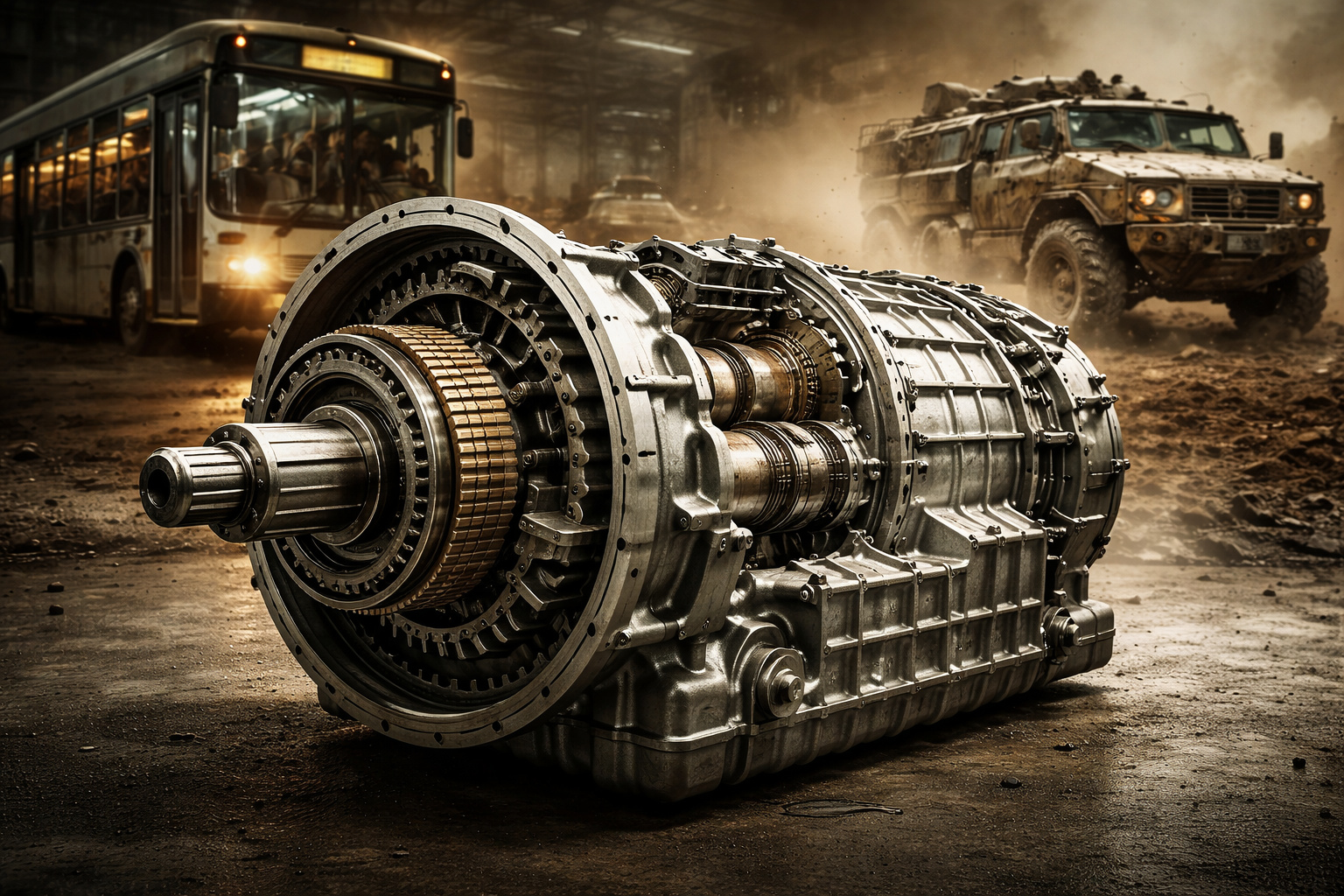
Created For Buses And Military Vehicles, The Allison 4000 Series Is The Automatic Transmission That Prevents Human Errors And Is Expensive Because Of It.
In regular vehicles, human error costs wear. In heavy vehicles, human error costs millions, accidents, and critical downtimes. It was precisely to eliminate this risk that the Allison 4000 Series was created. This automatic transmission was not designed to please drivers, deliver sportiness, or reduce fuel consumption on the highway. It was designed to prevent the operator from destroying the mechanical assembly, even under extreme, repetitive, and often incorrect use.
What Is The Allison 4000 Series And Where Is It Used
The Allison 4000 Series is a heavy-duty automatic transmission designed for urban buses, intercity buses, military vehicles, emergency trucks, and severe industrial applications.

It operates in scenarios where the vehicle:
-
Leapmotor C16 lands in Brazil in 2027 with electric and hybrid options, a futuristic design, interior for 6 people, and a range that can exceed 1,000 km in another Chinese offensive from Stellantis.

-
Why buying a car at a dealership is more expensive? New study reveals the factors that raise the price.
-
Starting at R$ 144,590 and featuring a 1.0 turbo engine and a complete ADAS package, the 2026 Hyundai Creta surpasses the Nivus, Pulse, and even the Kwid, advancing in the SUV rankings in Brazil.
-
Used Toyota Corolla Cross features a 2.0 engine with up to 177 hp, a hybrid version that achieves up to 17 km/l and 122 hp combined, a 10-speed CVT transmission, a package with 6 airbags and adaptive cruise control, as well as prices starting from R$ 117,000 and reaching R$ 149,000 in versions such as XRE, XR, XRV Hybrid, and GR-S.
- runs all day long,
- carries maximum weight constantly,
- faces constant stop-and-go traffic,
- and is driven by hundreds of different drivers throughout its lifetime.
Why The Design Does Not Allow Human Error
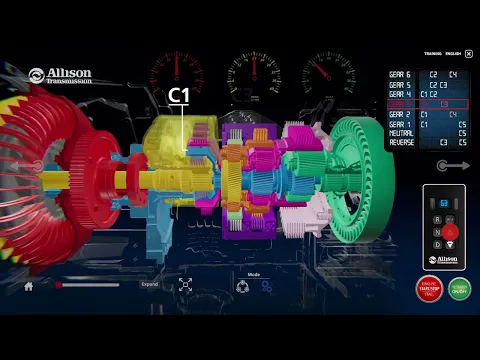
The principle of the Allison 4000 is simple: the driver does not control the transmission — the transmission controls the driver. It uses control logic that prevents harmful commands, such as:
- shifting outside of the safe range,
- aggressive downshifting at high speeds,
- incorrect torque application during heavy starts,
- thermal overload of the assembly.
If the command puts the system at risk, the transmission simply does not execute.
Reinforced Torque Converter: The First Shield Against Error
Unlike automated or dual-clutch transmissions, the Allison 4000 uses a heavy-duty torque converter, designed to absorb abuse. This allows:
- smooth starts even at full load,
- elimination of jolts caused by acceleration errors,
- drastic reduction of mechanical shock on axles and differentials.
The converter acts as a permanent mechanical shock absorber.
Oversized Gears For Extreme Cycles
The Allison 4000 does not operate at the limit. It operates with high structural margins. The gears, internal shafts, and planetary sets are designed for:
- torques well above what is necessary,
- continuous load cycles,
- operation for thousands of hours without disassembly.
In practice, this means that mistaking the throttle does not break anything.
Electronic System That Protects The Assembly At All Times
The Allison electronic module constantly monitors:
- oil temperature,
- applied load,
- input and output RPM,
- vehicle tilt,
- operating history of the assembly.
If any parameter goes outside the safe envelope, the transmission alters shifts, reduces torque or limits responses, even against the operator’s will.
Why It Is Ideal For Crowded Urban Buses
Urban buses are the worst possible scenario for transmissions:
- stops every few meters,
- variable load (empty bus vs full bus),
- different drivers every shift,
- continuous operation for up to 20 hours daily.
The Allison 4000 was made exactly for this. It does not depend on the “sensitivity” of the driver to survive.
Military Use: Where Failing Is Not An Option
In military vehicles, the Allison 4000 is fitted to:
- troop carriers,
- heavy logistics vehicles,
- armored platforms.
In this environment, the transmission needs to work:
- in extreme heat,
- intense cold,
- dirt, mud, and water,
- with poorly trained operators.
Therefore, the system is designed to survive even when operated incorrectly.
Why It Is So Expensive
The high cost of the Allison 4000 is not in luxury, but in engineering. It is expensive because:
- it uses oversized materials,
- undergoes extreme durability tests,
- has a lifespan measured in decades, not years,
- drastically reduces downtime, maintenance, and accident costs.
In large fleets, the initial price is offset by operational reliability.
Predictive Maintenance, Not Corrective
Another key point is that the Allison 4000 was designed for preventive maintenance, not corrective. Oil changes, filters, and inspections follow clear intervals. Internal failures are rare when the basic plan is respected.
This explains why many units run hundreds of thousands of kilometers without being opened.
Why This Type Of Transmission Is Not Used In Regular Cars
Despite its robustness, the Allison 4000 is:
- heavy,
- large,
- expensive,
- focused on durability, not maximum efficiency.
In passenger cars, this level of protection would be unnecessary and economically unfeasible. It exists for environments where making a mistake cannot cost the entire operation.
The Allison 4000 Series is a rare example of engineering created to neutralize the human factor. It does not trust the driver, does not accept dangerous commands, and does not operate at the limit. Instead, it works with wide margins, conservative logic, and absolute priority on the survival of the assembly.
Therefore, in crowded buses and military vehicles, it is not seen as a luxury — but as a permanent mechanical safeguard.








-

-

-

3 pessoas reagiram a isso.