





 Portuguese
  English
  Spanish
  5 min of reading
  2 comments


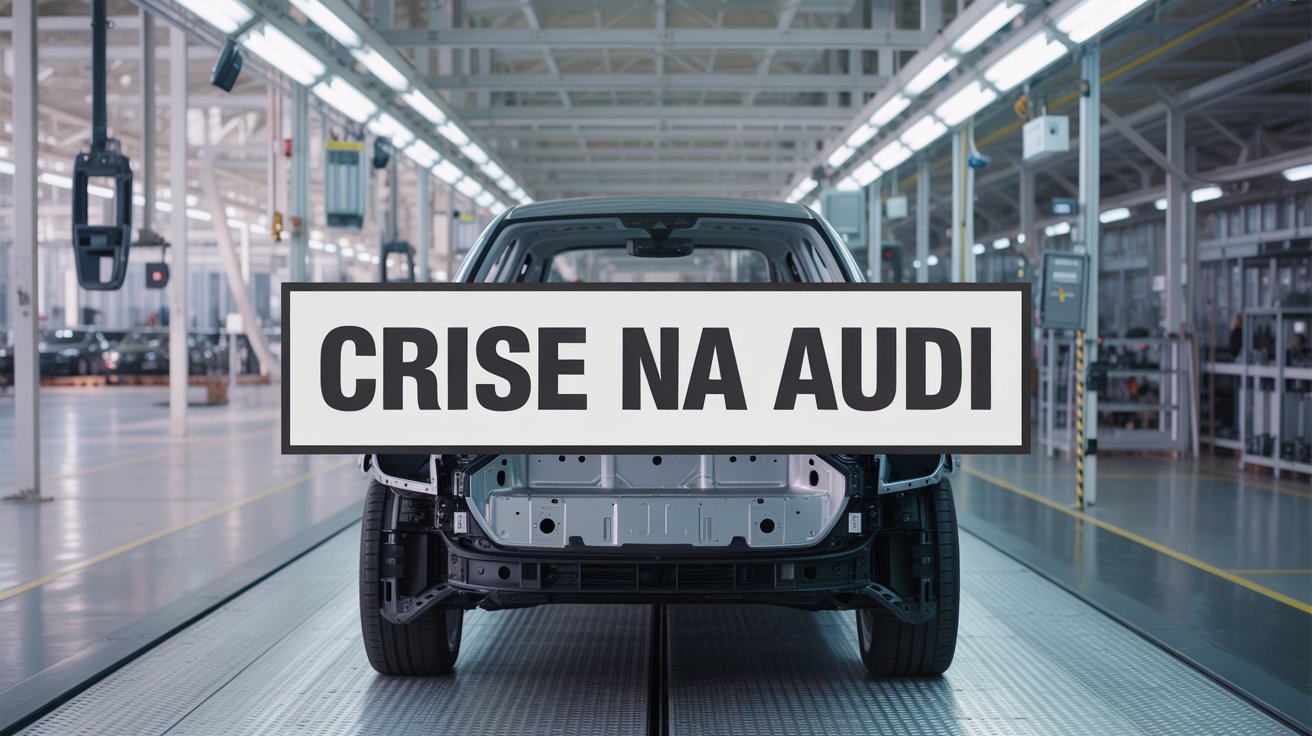


Strategic Changes, Sales Drops, and New Electric Bet Mark the Most Delicate Phase of Audi, Which Seeks to Reinvent Itself in the Face of Strong Competition and Reposition Its Role Within the Volkswagen Group.
In the global automotive landscape, Audi, traditionally recognized as one of the most influential luxury brands within the Volkswagen Group, is facing the most delicate moment in its recent history.
The last few years have brought a series of challenges for the German manufacturer, evidenced by significant sales declines and criticism regarding the quality of its vehicles, as well as a perception of stagnation in comparison to competitors’ technological advancements.
This context has turned Audi into what is referred to as a “case of crisis” within the Volkswagen holding, requiring quick responses and assertive strategies to reverse the situation and avoid a potential financial collapse.
-
The Federal Revenue Service now automatically cross-references everything you declare with data from banks, credit cards, brokerage firms, and insurance companies, and any discrepancy between your income and your expenses triggers an alert in seconds.

-
Amid global tensions, Brazil blocks the United States’ proposal at the WTO and paves the way for a trade crisis and possible retaliations.

-
Shopee opens the largest logistics warehouse in Brazil in Guarulhos: 220,000 m² on Dutra, contract signed before construction, pays R$ 45/m² and accelerates deliveries at scale, putting pressure on Mercado Livre and Amazon.
-
After mistakenly transferring R$ 50,000 via Pix, a man will receive the amount back along with R$ 10,000 for moral damages from the recipient.


Audi Crisis Volkswagen: The Start of the Critical Phase
According to official data released in 2024, Audi’s global sales recorded an 11.8% decline in the previous year, followed by another drop of 5.9% in 2025.
The negative results were interpreted as a warning sign not only by the market but also by executives of the Volkswagen Group itself, who began to consider Audi as the most vulnerable point of the conglomerate.
According to internal sources within the group, the main concern lies in Audi’s difficulty in keeping pace with the innovation imposed by direct rivals such as BMW and Mercedes-Benz, both already established as leaders in the global premium segment and with a strong presence in the electric vehicle market.
Restructuring Audi and New Directions
In response to the adverse scenario, Audi implemented a deep restructuring of its leadership and product strategy.
Gernot Döllner, the current CEO of the company, publicly admitted that the brand is going through a critical period.
In an interview with the German press, Döllner stated: “I don’t want to beat around the bush; we need to get back on track now.”
The executive further highlighted that, after years without significant launches, the company is beginning to emerge from what he classified as the “lowest point” of its trajectory.
The expectation is that the new phase will begin at the IAA Mobility, an international event scheduled for September 2025 in Munich, Germany, with the presentation of a groundbreaking electric concept.
New Electric Concept: TT Moment 2.0
The project, internally called “TT Moment 2.0,” will be a fully electric sports coupe inspired by the legacy of the Audi TT, one of the manufacturer’s most iconic models.
The initiative aims to recover part of the lost prestige, betting on an innovative design and unprecedented technological features for the brand’s portfolio.
Although it is a prototype, the concept is expected to lead to a production model within two years, symbolizing the start of a new phase for Audi in terms of design, technology, and market positioning.
According to the CEO, the car will be “highly emotional” and aims to establish a new standard for the brand’s identity.
Changes to the Electrification Timetable
However, Audi’s path towards full electrification has been revised.
The company postponed the plan to end the production of internal combustion engines, which was previously scheduled for 2032, delaying the transition to at least the middle of the next decade.
The adjustment in strategy reflects the difficulties faced in both technological development and market acceptance for fully electric models, as well as issues related to the global supply chain.
Audi intends to balance the offer of electric vehicles with traditional combustion models to meet different consumer profiles and international markets.
Strategies for the Chinese Market
Another important strategic move was the creation of the new brand AUDI, written in capital letters and without the traditional four-ring logo, aimed exclusively at the Chinese market.
This electric division, with local production and development, debuted with the E5 Sportback SUV and will be responsible for an independent line of models intended for China, the largest automotive market in the world and central to the manufacturer’s recovery plans.
The repositioning seeks to respond to the growing demand for electric vehicles in the Asian country and reinforce Audi’s presence in a strategic region for the global industry.
Admission of Errors and Search for Quality
Self-criticism has been recurrent within the company.
Oscar da Silva Martins, the director of product and technology communications, acknowledged in an interview that the quality of the brand’s cars was once higher and emphasized the commitment to return to the high standards that have always distinguished Audi in the luxury segment.
Moreover, executives from the Volkswagen Group admitted that Audi is currently seen as a manufacturer of “mediocre” products, which intensifies the urgency for innovations, new launches, and improvements in quality.


Intense Competition and Future Launches
The luxury and electric vehicle segment is becoming increasingly competitive, with BMW, Mercedes-Benz, and Chinese manufacturers expanding their offering of advanced models and gaining ground among traditional Audi consumers.
In response, the brand intends to accelerate the portfolio renewal, with launches planned for SUVs, sedans, and sports cars such as the new Q3, Q5, A5, and A6, which are set to arrive in major global markets in the coming months.
The strategy aims to reposition Audi as a reference in automotive technology, comfort, performance, and safety, fundamental pillars for success in a rapidly transforming sector.
Financial Outlook for the Volkswagen Group
In the financial context, the Volkswagen Group has been closely monitoring Audi’s performance, evaluating potential adjustments to investments, strategic partnerships, and reinforcements in research and development.
The goal is to ensure that the brand recovers competitiveness without compromising the financial health of the conglomerate.
Industry specialists observe that the success or failure of the measures taken by Audi could directly influence the balance of the Volkswagen Group, given the historical and strategic importance of the brand within the group’s global portfolio.







Matéria em tom exagerado. Todas empresas passam por ajustes no planejamento plurianual.
Merecem quebrar junto c a Volkswagen arrogantes prepotentes exploram nos carros e peças, descartáveis comprei um Audi A4 zero 2011 já fiz o motor 2x peças fracas mal feitas, o preço dele vale hj 80% menos q um novo, são bonitos potentes mas gastam muito 6 por litro nada confiáveis, só enganação por isso estão vendendo pouco, comprei um corolla showwww econômico confiável confortável agora bonito por isso são os mais vendidos do mundo