





 Portuguese
  English
  Spanish
  5 min of reading
  6 comments


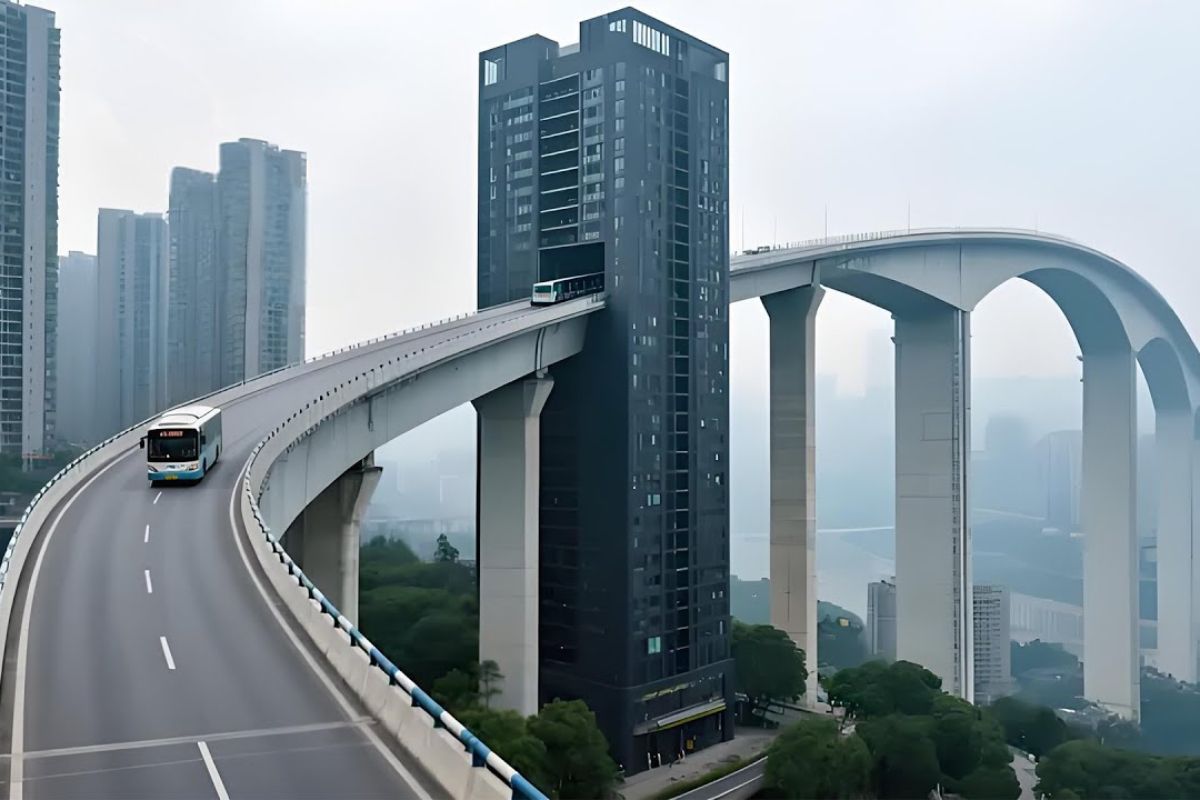


State Coordination, Industrial Scale, and Engineering Applied in the Field Explain How China Delivers Tunnels Under the Sea, Sky-High Bridges, and Railways in Extreme Climates with More Predictable Deadlines and Costs
The China is rewriting infrastructure rules while other countries deal with aging networks and approval bottlenecks. At the same time that projects stagnate in debates and revisions, the Asian country piles up large-scale deliveries, connecting remote regions and accelerating production chains. The combination of centralized planning, domestic innovation, and standardized execution helps to transform plans into completed works consistently.
This contrast appears on multiple fronts. While traditional urban systems register slowdowns and increasing costs, China expands high-speed railways, closes tunnel fronts in open sea, and erects bridge towers the size of skyscrapers. Scale and coordination reduce frictions between design, licensing, supplies, and construction, shortening schedules without compromising technical control.
Costs, Deadlines, and the Logic of Coordination
The discussion about performance begins with management fundamentals. China operates with integrated industrial chains, from steel to the manufacturing of tunnel boring machines and components, which reduces supply risk and currency variation within the project cycle.
-
Archaeologists find a colossal 2,000-year-old vessel at the bottom of the sea near Alexandria linked to the elite of Egypt and reveal a pleasure barge from the last dynasty of the pharaohs that the sea has hidden for centuries.

-
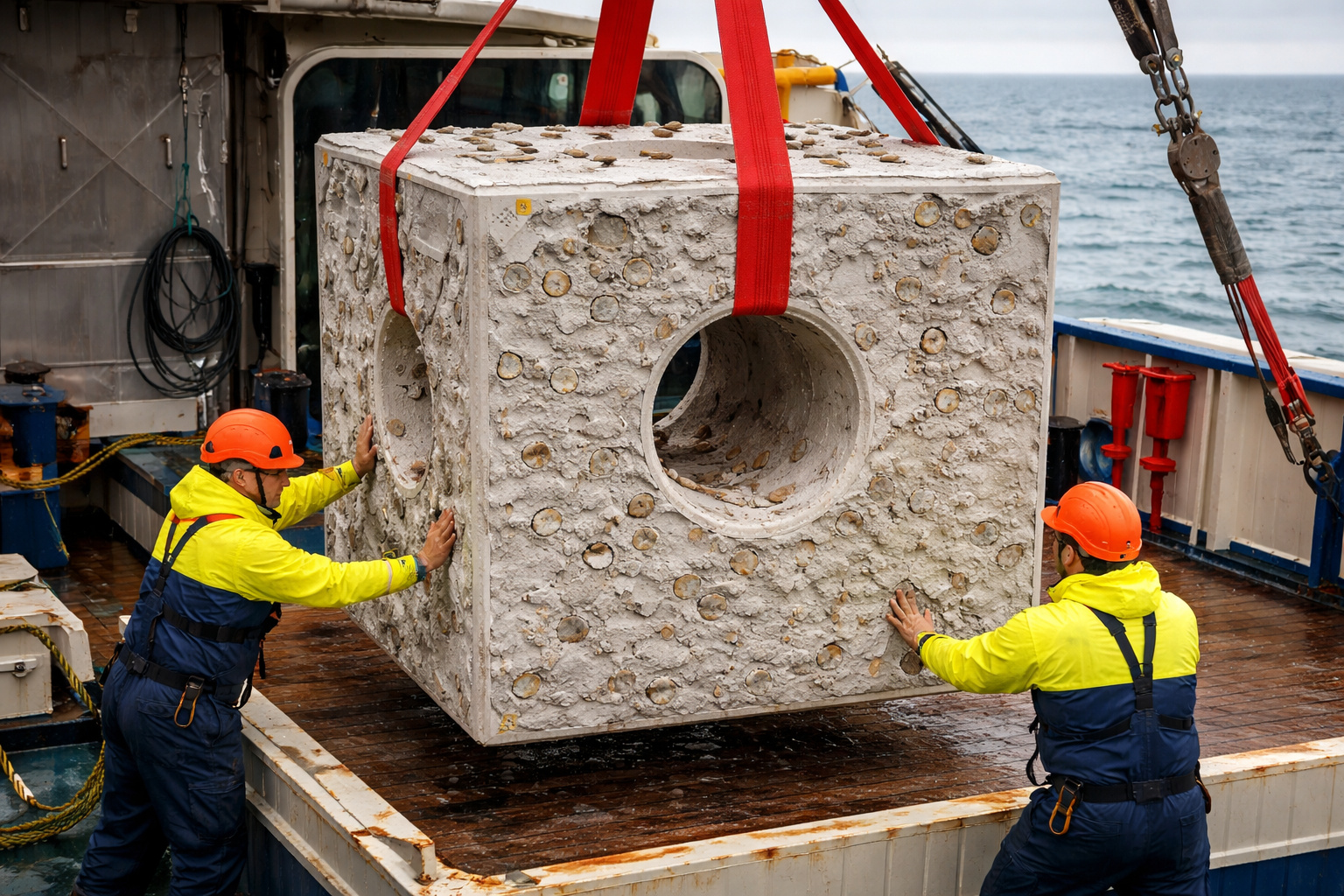
United Kingdom clears 40 tons of shells and concrete into the sea in an innovative project that promises to restore a marine ecosystem lost for over 200 years and improve water quality.
-
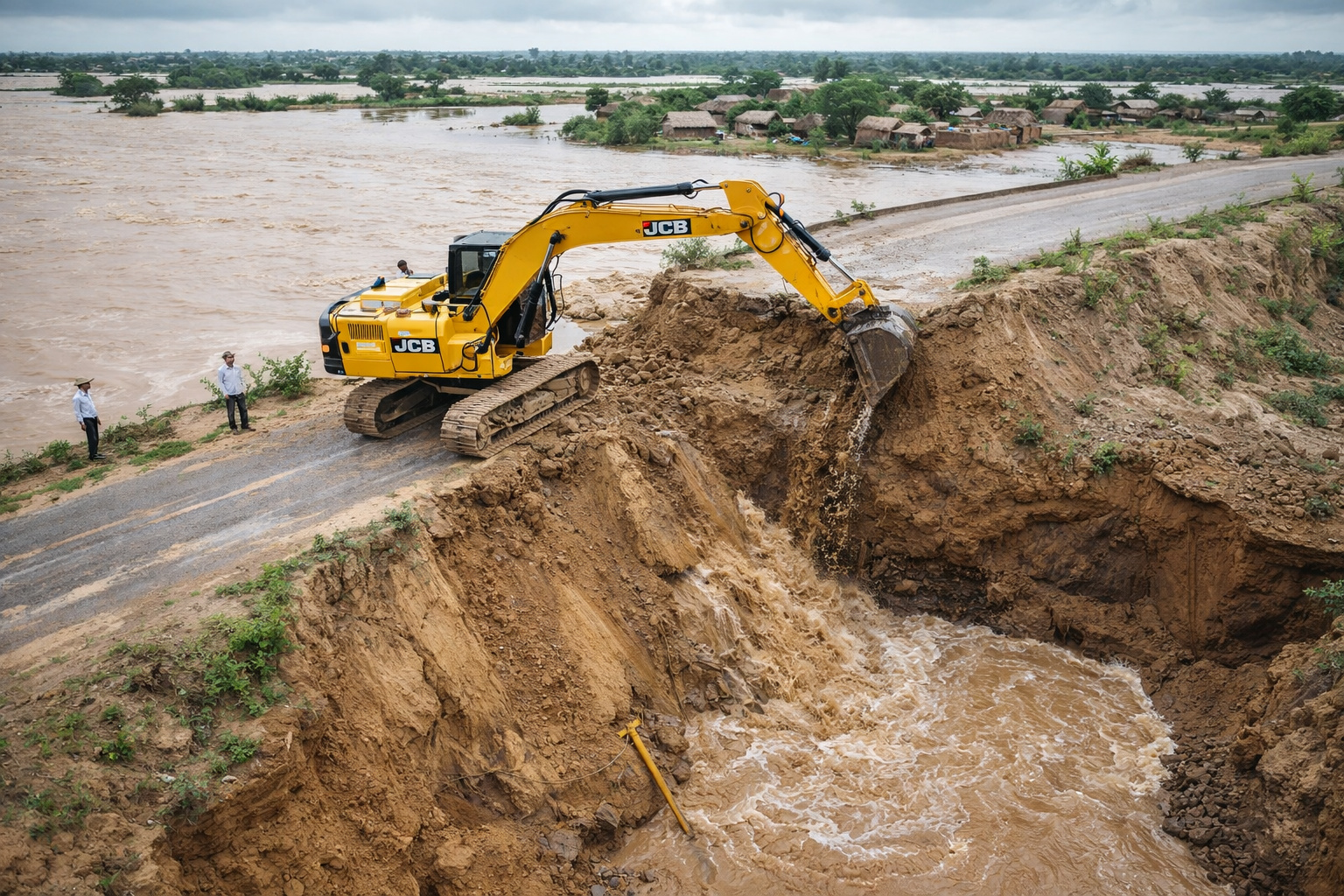
With emergency diversion to abandoned mining craters, engineers save villages from a devastating flood that was advancing through the desert and threatening to destroy entire communities in a matter of hours.
-
It seems simple, but it enriches: from R$ 500 to R$ 6,000 per piece and up to 10 days of handcrafted production, how is the couple from Praia Grande making a high income with hyper-realistic miniatures and turning a hobby into a money-making machine?


As a result, construction packages tend to be closed with more stable scopes, favoring productivity and predictability.
Another vector is the standardization of solutions. By replicating typologies of bridges, tunnels, and stations, China gains portfolio effect: trained teams, recurring suppliers, and schedules that already consider field lessons.
The practical result is less rework and lower cost dispersion per unit in comparable projects.
Tunnels Under the Sea and National Tunnel Boring Machines
Along the coastal axes, China has advanced in submerged tunnels for railways and freight, facing high pressures, heterogeneous soils, and tidal windows.
The construction in the Pearl River Estuary illustrates the technological leap: large-scale tunnel boring machine, domestically manufactured, and continuous advancement in depth, focusing on safety, ring sealing, and settlement control.
In addition to the record depth for high-speed railways, the work consolidated engineering milestones in cable imaging, tail injection, and millimetric tolerances in the coupling of segments.
In practice, the deeper the project, the greater the demand for geotechnical control and real-time monitoring, a requirement met by embedded instrumentation and inspection routines.
Bridges Taller Than Skyscrapers
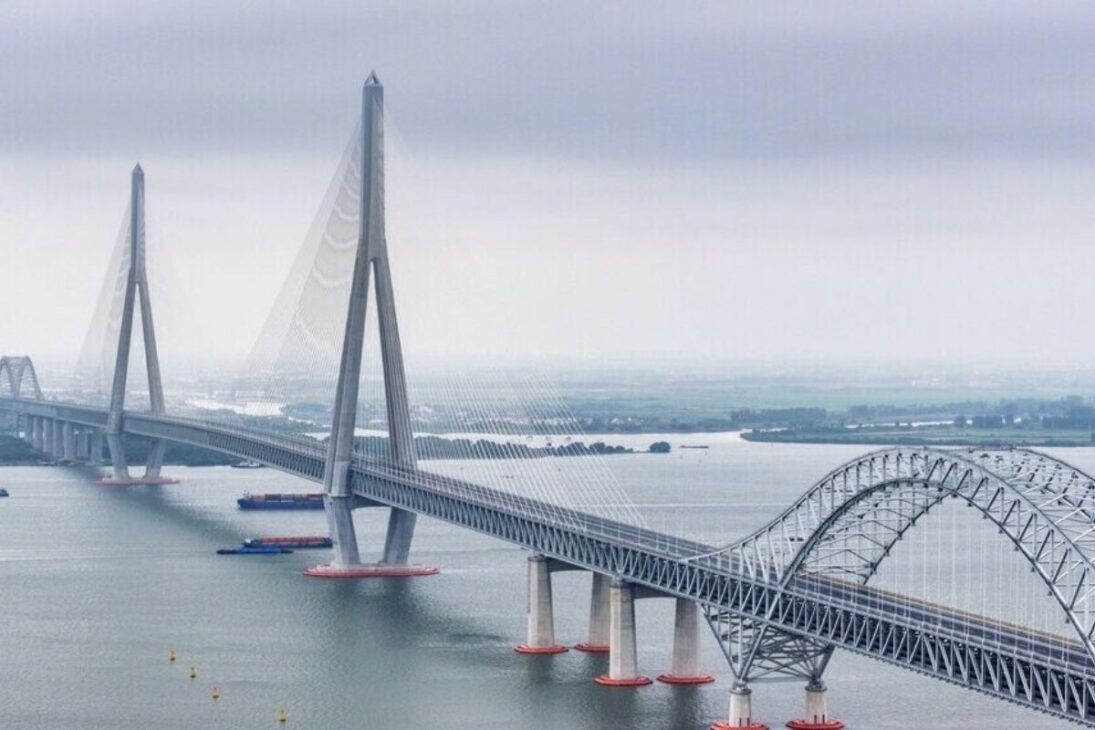
The landscape of bridges in China features high-stayed cables, main spans over a kilometer long, and massive underwater foundations.
The crossing of the Yangtze River with the Changtai Bridge synthesizes the approach: unprecedented tower heights, modal integration on the deck, and logistics of assembly in large blocks.
In parallel, structures like Beipanjiang and Hutong demonstrate diverse solutions for extreme orography.
In deep canyons, the priority is rigidity and safety against wind; in wide river crossings, traffic management, maintenance, and navigation take precedence.
In both cases, engineering bets on heavy prefabrication, long lifts, and metrological control from joint to joint.
Railways Over Ice, Desert, and Plateaus
The high-speed network and long-distance axes traverse permafrost, deserts, plateaus, and coastal zones.
At altitude, the answer involves ventilated beds, elevated passages, and thermal stabilization of the ground.
In arid environments, the focus is on sandy protection, drainage, and ballast maintenance, to preserve performance over the years.
This set is anchored in permanent rail fleets, scheduled maintenance windows, and centralized asset management.
The goal is simple and technical: predictable travel time and high availability. In network, this reduces regional isolation and increases urban productivity by shortening daily commutes.
Energy and Megadam in the Electric System
On the energy axis, China operates an expanding clean portfolio with large hydropower plants and transmission lines that cover long distances.
Projects like Baihetan symbolize the synergy between concentrated generation and urban industrial consumption, moving large blocks of energy with controlled losses.
Pipelines add to this mosaic with extensive miles of gas and oil, standardizing diameters and valves and shortening commissioning times.
Together, the energy mesh works as the backbone of industrial hubs, reinforcing the viability of new railway and logistics corridors.
Deep Subsoil and Scientific Exploration
Internally, China explores the subsoil with deep scientific wells, facing heat, pressure, and complex geological formations.
The goal is to expand investigation capacity, refine seismic models, and generate historical data series for energy, geotechnical, and natural resources planning.
The advancement of drilling at depths exceeding ten thousand meters requires locally developed drills, fluids, and automation of probes, reducing external dependency and increasing the learning rate per campaign.
Construction Methods, Productivity, and Safety
A recurring key is the industrialization of the construction site. China uses incremental launching of slabs, bridge rotation, large format precast, and assembly at production line pace. This reduces interference with traffic, reduces time exposed to risks, and concentrates inspections at critical points.
Safety derives from redundancies and telemetry: sensors monitor deformations, vibration, temperature, and pressure, feeding into control centers.
The more data, the faster the construction adjusts in the field, avoiding long stops and allowing process corrections.
International Contrast and Scale Lessons
Comparisons with iconic corridors show that China delivers comparable lines in less time and with lower unit costs, thanks to industrial integration, project governance, and shortened supply chains.
On routes where other countries accumulate delays and budget overruns, portfolio discipline and the repetition of typologies make a measurable difference.
This does not eliminate challenges. Environmental management, resettlements, and transparency remain central in the global infrastructure debate.
Nonetheless, the Chinese case shows that the triad of long-term vision, local engineering, and standardized execution profoundly alters the construction cycle.
Recent trends show China operating infrastructure as an integrated system: maritime tunnels with millimetric tolerances, colossal tower bridges, railways over ice and desert, and energy grids that anchor new hubs.
The common denominator is coordinated scale, which transforms innovation into routine on site.
Among the projects described, which technical solution from China do you consider most decisive for reducing costs and deadlines in complex works in Brazil?




Adoro os comentários de especialistas em China, que nunca pisaram lá e que acreditam fielmente que capitalismo, comércio, mercado e produção são a mesma coisa.
Que a china avança em desenvolvimento isso e verdadeiro, mas o dinheiro vem de mão de obra escrava há centenas de anos. E da miseria que +- 80 da população vive, em geral o povo nada tem e tudo que produz vai para a republica comunista da china.
Hahahahahahha, o custo è claro, milhares de vidas ceifadas pois p trabalhador é descartado, horas de trabalho, praticamente, forçado. Prejuízo para o meio ambiente sem nem se preocupar, desapropriação de terras, especulação imobiliária, corrupção, hahahahahahahaha.
O milagre Chinês sem dúvida é incrível, mas não é para toda população.
Matéria comprada.
Tem mérito sim, saíram do nada, da pobreza extrema, fizeram muito, mas não é só o que está escrito aí.