





 Portuguese
  English
  Spanish
  5 min of reading
  0 comments


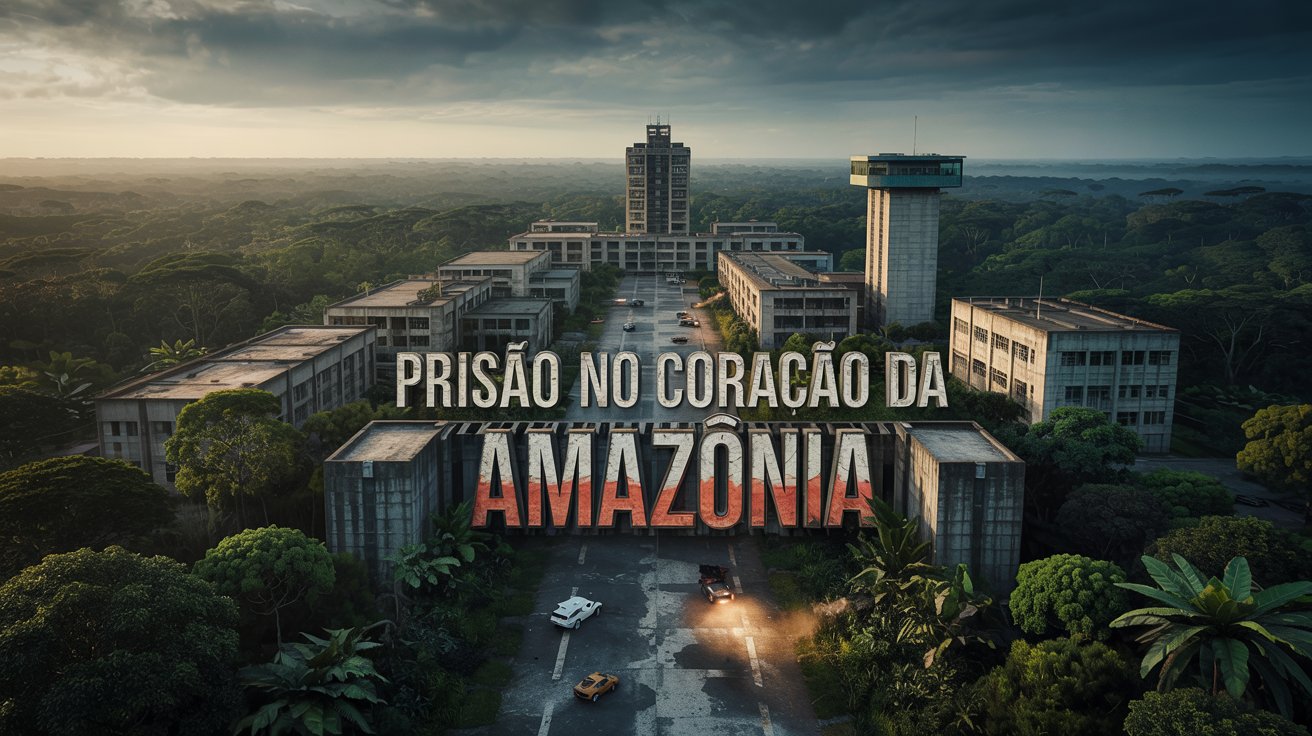
Surprising Decision By France To Build A Supermax Prison In The Heart Of The Amazon Reignites Discussions On International Strategies Against Drug Trafficking, Extreme Surveillance, And Geopolitical Isolation In The Heart Of One Of The Most Remote Regions Of The Planet.
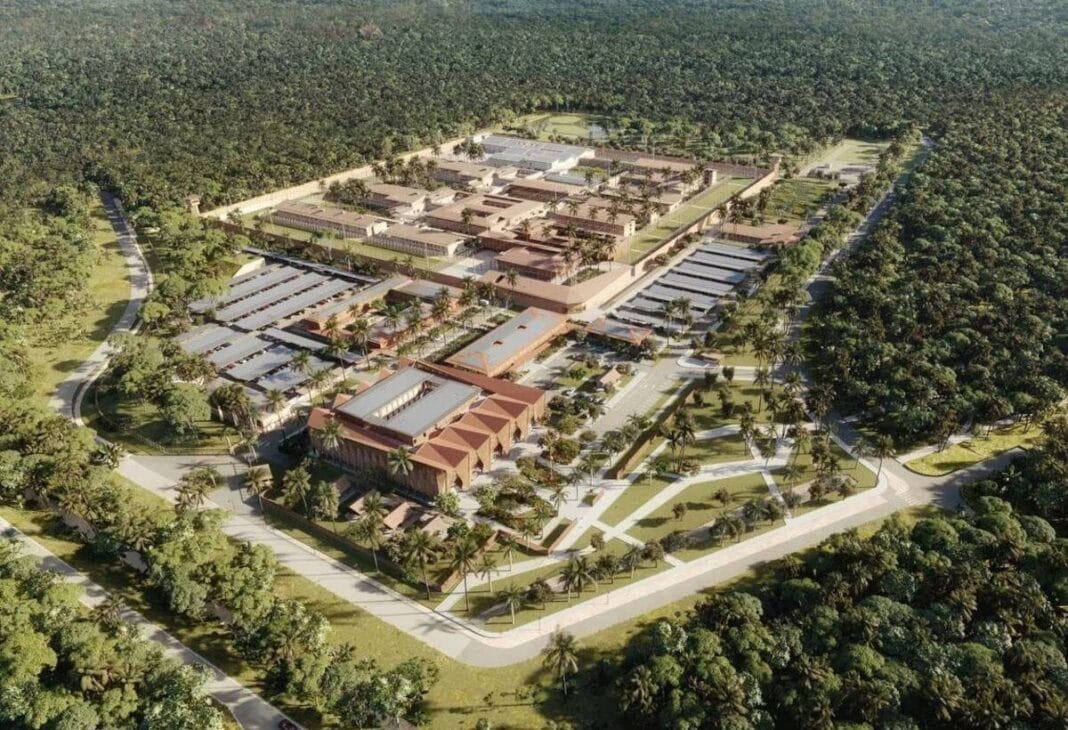
The French government surprised the world by announcing the construction of a supermax prison in the middle of the Amazon rainforest, more precisely in the city of Saint-Laurent-du-Maroni, in French Guiana.
The measure, revealed in April 2025, focuses on <strong(containing the advance of drug trafficking and combating international criminal organizations with transnational operations, as well as isolating individuals considered highly dangerous.
The prison, which is set to be completed by 2028, will have the capacity to house up to 500 inmates, including high-ranking drug traffickers and Islamic extremists convicted of terrorism.
-
With over 14 million baskets of earth moved, an ancient North American metropolis built a monumental pyramid of 30 meters and established a city with 20,000 inhabitants nearly a thousand years ago.
-
A 1,900-year-old treasure emerges from a Roman house destroyed by fire and sealed since antiquity in Romania, with coins and metals fused among the ashes.
-
The Brazilian colonial city that stopped in time and shares territory with a rocket launch base.
-
79-year-old woman challenges limits, visits 193 countries in the world after 56 years of planning and reveals the behind-the-scenes of a global journey that few have managed to accomplish.


The initiative, announced by French Interior and Justice Minister Gérald Darmanin, aims to establish a new paradigm of total isolation for criminals who pose a serious threat to national and international security.
A Prison In The Jungle: Bold And Controversial Strategy
Installing a prison in the heart of the Amazon may seem strange at first glance, but the location has strategic motivations.
French Guiana, an overseas territory of France in South America, is one of the entry points for drug trafficking between South America and Europe.
Next to Brazil and Suriname, the region is used as a route by drug trafficking networks that utilize mules to transport cocaine to European airports.
According to the French government, isolating inmates in the dense forest will hinder any contact with their criminal networks.
The project also plans to use advanced technologies to reinforce surveillance, such as drones, cell signal blockers, and 24-hour monitoring cameras.
The measures aim to make any unauthorized communication with the outside world impossible.
“I decided to establish France’s third supermax prison in Guyana,” Darmanin stated to the newspaper Le Journal du Dimanche (JDD).
“It will be an extremely strict prison regime with one goal: to take the most dangerous drug traffickers out of circulation,”
he added.
History Of Prisons In French Guiana
Although the idea sounds modern, French Guiana has previously hosted notorious prisons in the past.
During the colonial period, the territory housed various penal colonies known for their brutality, like the infamous Devil’s Island, where Captain Alfred Dreyfus was unjustly imprisoned in the 19th century.
The new project somewhat revives the idea of extreme confinement through geographical isolation, now with modern justifications and a focus on technology and maximum security.
The new prison will cost around € 400 million (approximately R$ 2.5 billion), and its structure will include specific wings for high-risk inmates and a separate area with 15 exclusive slots for Islamic radicals or individuals convicted of terrorism.
High Technology And Total Surveillance
In addition to the isolated location, the new French prison will be equipped with the most advanced penitentiary control systems used in Europe.
Signal blockers are planned to prevent the use of cell phones, motion sensors, aerial patrol drones, facial recognition, and strict limitations on sunlight and visitation times.
The proposal is to eliminate any possibility of remote command of crimes by inmates, something that remains a reality even in high-security prisons in other parts of the world.
According to Darmanin, the unit will have an “extremely rigid prison regime” precisely to eliminate external influence and prevent escapes, riots, or coordinated actions from within the prison.
Reactions Inside And Outside France
The decision to install the penitentiary in French Guiana has generated diverse reactions.
Human rights experts warn of the risks of super-isolation and dehumanization of penal treatment, as well as the environmental implications of construction in a sensitive area of the Amazon.
On the other hand, local authorities view the investment positively, as it may generate jobs and develop the region’s infrastructure.
However, political leaders in France and the European Parliament have debated whether the geographical distance could pose obstacles to supervision and legal monitoring of inmates.
The French government’s response has been clear: combating international drug trafficking requires tough and innovative measures, especially in the face of the growing sophistication of criminal networks operating across continents.

French Guiana As A Key Piece Against Drug Trafficking
The choice of French Guiana also signals France’s repositioning as a more direct actor in the anti-drug geopolitics of the southern hemisphere.
Sharing land borders with Brazil and Suriname, and having river access to the Amazon region, Guiana is a strategic point on the map of international crime, especially for cocaine trafficking produced in countries like Colombia, Bolivia, and Peru.
The region has been used by drug traffickers who recruit young Guianese to act as “mules” on flights to Europe.
In 2023 alone, over 1,500 drug trafficking cases were registered at French Guiana’s airports, according to local police data.
The supermax prison arises in this context as a direct response to the frequent use of the territory as a logistical corridor for international drug trafficking.
The construction of a supermax prison in the middle of the Amazon rainforest marks an unusual and strategic chapter in the global fight against organized crime.
France’s bet on extreme geographical isolation, combined with cutting-edge technological surveillance, could become a model — or a controversial experiment — in combating transnational crime.
Do you think that isolation in the heart of the Amazon can really curb drug trafficking, or could this decision generate new controversies and challenges? Comment below and join the conversation.





Seja o primeiro a reagir!