





 Portuguese
  English
  Spanish
  4 min of reading
  0 comments


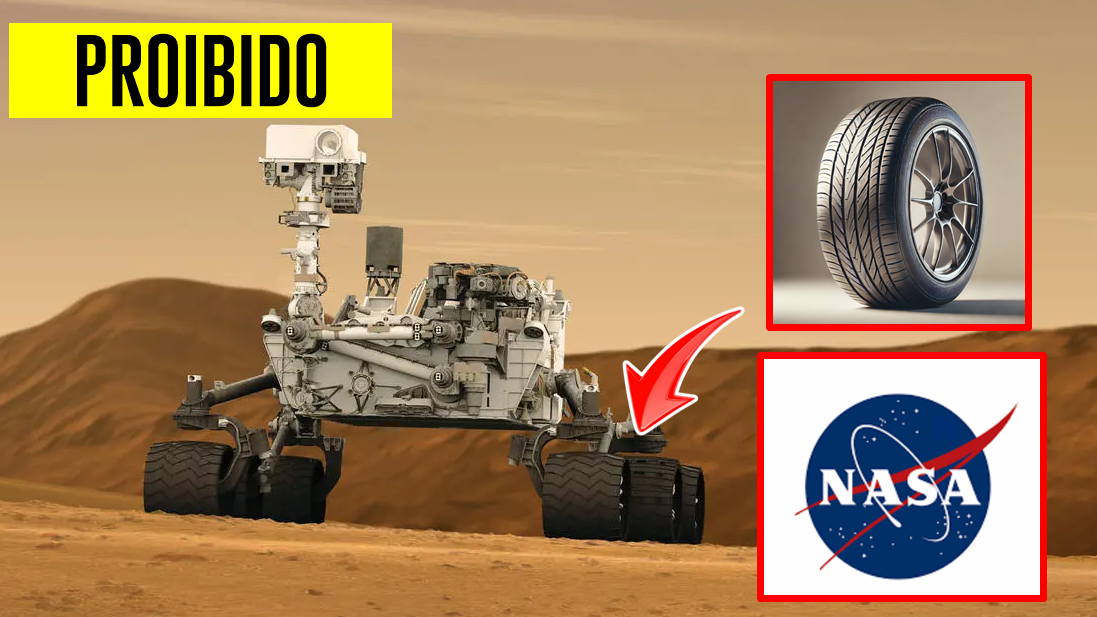
Did You Know That Rubber Tires Are Prohibited on Mars? Discover the Hidden Risks, the Challenges of Extreme Temperatures, and How NASA Developed a Revolutionary Solution to Ensure the Success of Missions on the Red Planet.
There are four rovers rover on Mars, but the challenges of mobility on the red planet continue to intrigue engineers and scientists. How do space agencies deal with the exploration of such a hostile surface? And why aren’t regular rubber tires viable on Mars?
If you were planning a long trip, you would probably do a check on your car before you left. Checking the fluids, lights, and of course, the tires would be essential. But what if the trip was to Mars?
First, it’s good to ensure that the heater works well, because temperatures there can reach -107°C.
-
China is testing a train that will operate at 400 km/h in daily service, which is 80 km/h faster than the French TGV, and uses carbon fiber, magnesium alloys, and more than 4,000 sensors to become the fastest commercial train on the planet.

-
Forget about having an air fryer, electric oven, and steam pot taking up space in your kitchen because a 30-liter smart oven combines all these functions, automatically selects the ideal temperature, and even turns off by itself when cooking is done.

-
Engineers rewrote all the apps from scratch and bet everything on a buttonless screen: now the creator of the iPhone says that Apple needs to make the same revolution again because of AI.

-
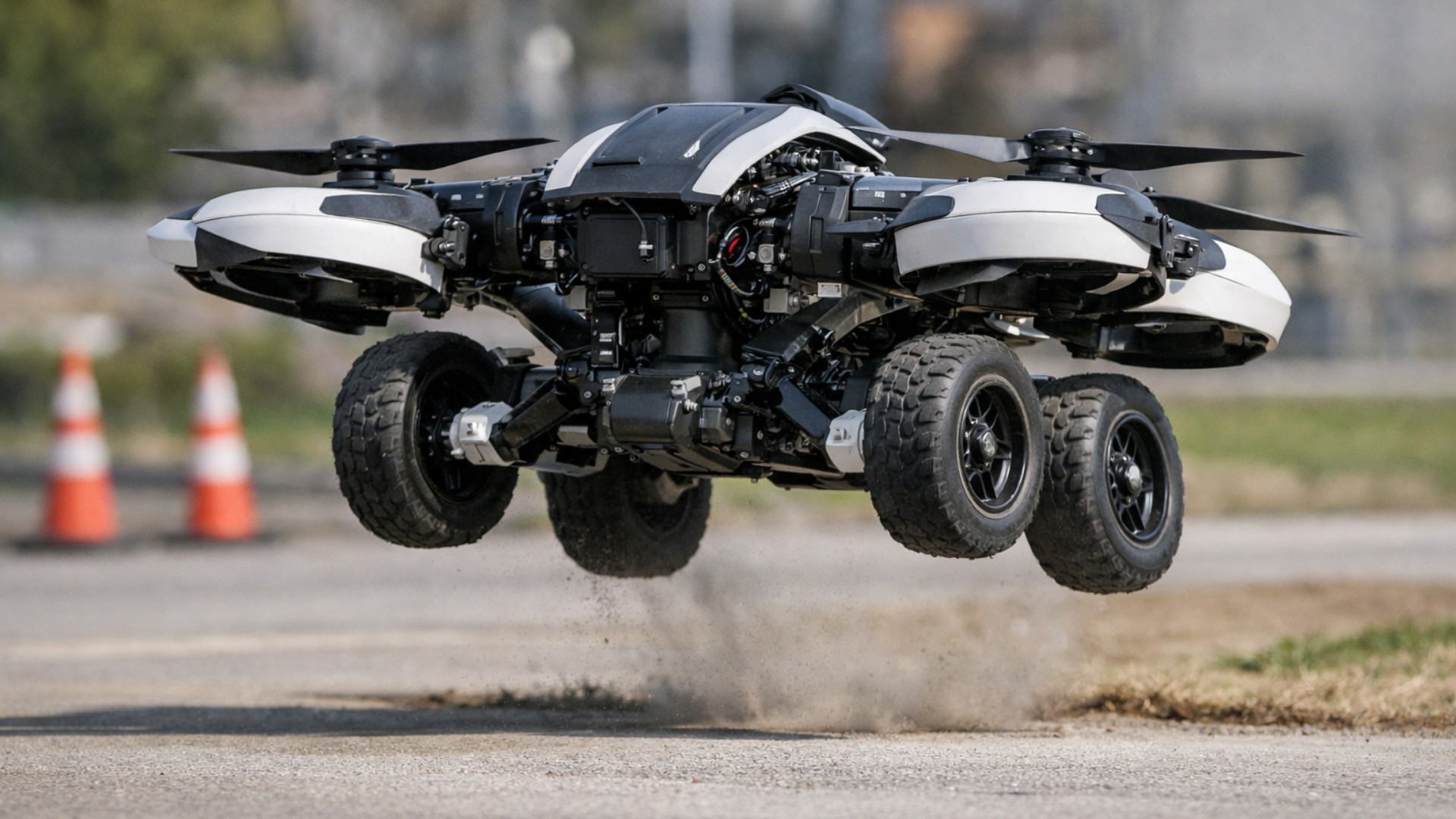
Researchers in the U.S. have created a flying robot that transforms into a land vehicle while still in the air. The technology, based on aerodynamic transition, converts landing into a scene worthy of Transformers and redefines mobility between sky and ground.

At that temperature, rubber ceases to be flexible and becomes brittle, like glass. Kicking a rubber tire on Mars could literally shatter it. That is already reason enough to keep traditional tires out of rover designs.
Why Is Weight a Problem on Mars?
Even if extreme cold were not an issue, weight would be. Robust rubber tires, with internal weaving and reinforced rims, would add a load that the rovers simply cannot carry.
Missions to Mars need to optimize every gram transported. A spacecraft that is too heavy can compromise descent and landing, increasing the risk of a disastrous impact.
The surface of Mars is covered by regolith, a mixture of loose dust and rock fragments. This terrain is treacherous.
If the rover does not have an ideal weight distribution, it can sink or slide, putting the entire mission at risk even before it starts.
NASA Made a Lightweight, Yet Durable Wheel for Mars
NASA engineers have adopted creative solutions to overcome these challenges. In the case of the Curiosity rover, each wheel was machined from blocks of aluminum, making them incredibly lightweight and thin. At only 0.75 mm thick, the wheels sacrificed some durability to meet weight restrictions.
Every extra millimeter in the thickness of the wheels could add about 10 kg to the total mass, which would require cuts in other equipment.
Although this approach has been crucial for mission success, it brought new challenges. The Martian surface turned out to be harder than expected, with sharp rocks and conditions described as “shark teeth embedded in concrete.”
This punishing terrain caused significant damage to the Curiosity wheels, with holes and tears that compromise their efficiency.
Mobility Challenges
The suspension system of the rovers is designed to distribute the load evenly. When a wheel encounters an obstacle, the weight is redirected to the other wheels.
This can lead to unexpected pressures at certain points, resulting in greater damage than anticipated.
The holes in the wheels are not just an aesthetic inconvenience. They increase the resistance to movement, causing the rover to consume more energy to move. This extra energy could be used to carry out scientific experiments or send data back to Earth, but instead, it is spent just to keep the rover moving.
Improving the Design
In light of these issues, NASA is working on new wheel designs for future missions. The next generation of rovers, slated for launch in 2020, brought the need for changes in design.
The materials will likely remain the same, but the shape of the wheels will need to be adapted to better withstand the conditions of the Martian terrain.
In addition to sharp rocks, loose sand remains a major obstacle. The rover wheels are equipped with claws to improve traction in Mars’ reduced gravity, which is about 40% of Earth’s gravity. However, these claws are not always enough to prevent the rover from getting stuck.
The Impact of Gravity and Surface
According to Dr. Terence Richards, an expert in spacecraft performance, the gravity and extreme dryness of Mars exacerbate mobility issues.
The absence of moisture makes regolith less compact, making it harder to support the weight of the rovers. When the wheels sink into the ground, rolling resistance increases, requiring more energy to move.
A potential solution is deformable wheels, which expand the contact area with the ground and distribute weight better. However, designing wheels that are lightweight, durable, and capable of handling all these challenges remains a complicated balance.
What We Learned from the Rovers
The innovations developed for Mars rovers have applications beyond space exploration. In 2015, NASA demonstrated the Modular Robotic Vehicle, an electric car that incorporated control technologies and independent wheels used in the rovers.
It was energy-efficient, easy to maneuver, and joystick-controlled. Although this vehicle is not commercially available, it shows how solutions for Mars can inspire innovations on Earth.
The exploration of Mars continues to be a learning journey. Each mission reveals new challenges but also paves the way for technological advancements that benefit not only space science but also our daily lives.






Seja o primeiro a reagir!