





 Portuguese
  English
  Spanish
  4 min of reading
  0 comments



With So Many Technological Advances, Why Does the Audio Quality of Phone Calls Still Fall Short? Understand the Reasons!
Since the invention of the telephone in 1876, communication technology has advanced considerably. Today, we can watch high-definition videos, make video calls with people around the world, and access vast databases in seconds. However, the audio quality of conventional telephone calls still leaves much to be desired.
Why does this happen? We explore the main factors influencing this issue, addressing everything from technical limitations to telecommunications infrastructure and how new technologies can solve this problem.
The Infrastructure of Conventional Phone Calls
Traditional phone calls use circuit-switched networks, which were designed to support frequencies between 300 Hz and 3400 Hz.
-
10 million robots per year in unprecedented industrial scale place China at the forefront of automated production and raise the question of how far machines can manufacture other machines.

-
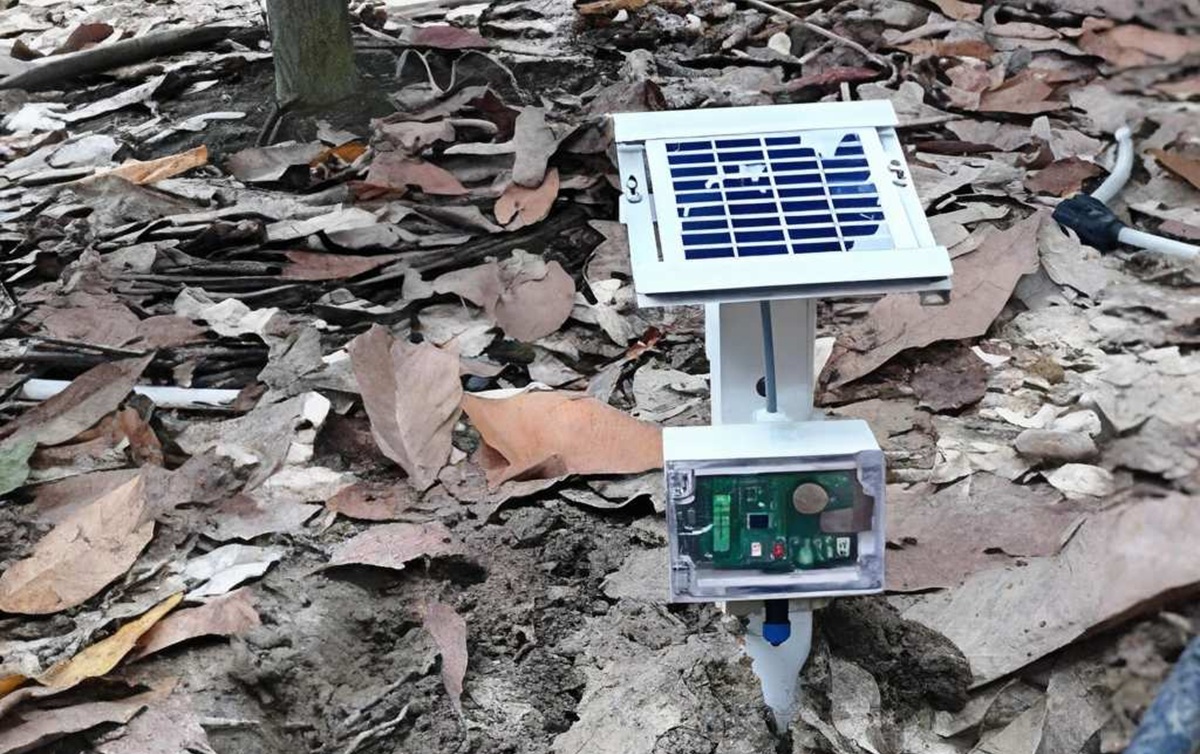
Researchers in Malaysia buried sensors at 15 and 30 cm and can now predict soil moisture with 95.49% accuracy, helping the field to irrigate only at the right time and reduce water waste.
-
Technology developed to protect military communications in the 1940s scrambled voices and today gives rise to the robotic sound that dominates current music.

-
If you look at the sky this Wednesday, you will see the Pink Moon shining at its peak at 10:11 PM, but before you get disappointed, know that the name has nothing to do with the color and instead refers to flowers that bloom at this time in the United States.

This means that many frequencies of the human voice are simply not transmitted, which reduces the clarity and sharpness of the audio. This infrastructure, established decades ago, is still widely used, limiting the quality of calls.
Additionally, voice transmission via landline relies on copper networks, which suffer from quality losses over time.
While some regions have migrated to fiber optics, this transition is still not universal, maintaining the limitations imposed by the old infrastructure.
Investment in fiber optics has been a significant challenge for operators, who need to balance costs and financial returns.
Voice Quality in Mobile Calls
With the popularization of cell phones, voice transmission began to be carried out over wireless networks. In these cases, the voice is converted into digital data and transmitted over different communication channels.
The most commonly used compression standard is G.711, which also restricts the range of transmitted frequencies.
Moreover, mobile calls face additional challenges, such as interference, packet loss, and network congestion.
These factors can result in robotic voice, call drops, and low intelligibility. The problem worsens in densely populated areas or regions where the signal is weak.
The Latency Problem in Phone Calls
Another important factor affecting quality is latency, or the time it takes for a signal to travel the distance between a transmitter and a receiver.
In long-distance calls, this delay can cause communication difficulties, resulting in overlapping speech and delayed responses. This latency is more noticeable in 2G and 3G networks, which are still used in various regions.
The Revolution of VoIP and Internet Calls
With the evolution of the internet, VoIP (Voice over Internet Protocol) emerged, allowing voice transmission over IP networks.
Unlike conventional calls, VoIP does not rely on the legacy infrastructure of telecom operators and can use more advanced audio codecs, such as SILK (used by Skype) and OPUS.
These codecs allow the voice to be transmitted with greater fidelity, capturing a broader spectrum of frequencies.
As a result, calls made through applications like WhatsApp, Messenger, and Zoom generally have better audio quality than traditional phone calls.
However, even VoIP can face challenges, such as dependence on stable connections and sufficient bandwidth. In congested networks or with low speed, call quality can be compromised, resulting in drops or noticeable delays.
The Impact of the Transition to 4G and 5G Networks
In recent years, the implementation of 4G and 5G networks has brought significant improvements in voice transmission. VoLTE (Voice over LTE) technology allows high-definition calls, reducing noise and improving voice intelligibility.
The arrival of 5G promises even greater advances, with lower latency and higher bandwidth. This means that, in the near future, the audio quality of phone calls could finally reach levels comparable to internet calls.
5G will also allow for greater integration with virtual assistants and emerging technologies that can further enhance the user experience.
Despite technological advances, the audio quality of phone calls is still limited by the inherited infrastructure of telecommunications. However, the transition to 4G, 5G, and the adoption of VoIP is changing this scenario.
If you want to improve the quality of your calls, one alternative is to prioritize voice applications over the internet whenever possible.
Additionally, it is important to keep an eye on the advances of telecom operators to take advantage of new technologies as soon as they become available.
The future of phone calls promises to be clearer and more efficient, but there is still a way to go before this reality becomes universal.









Seja o primeiro a reagir!