





 Portuguese
  English
  Spanish
  4 min of reading
  1 comment


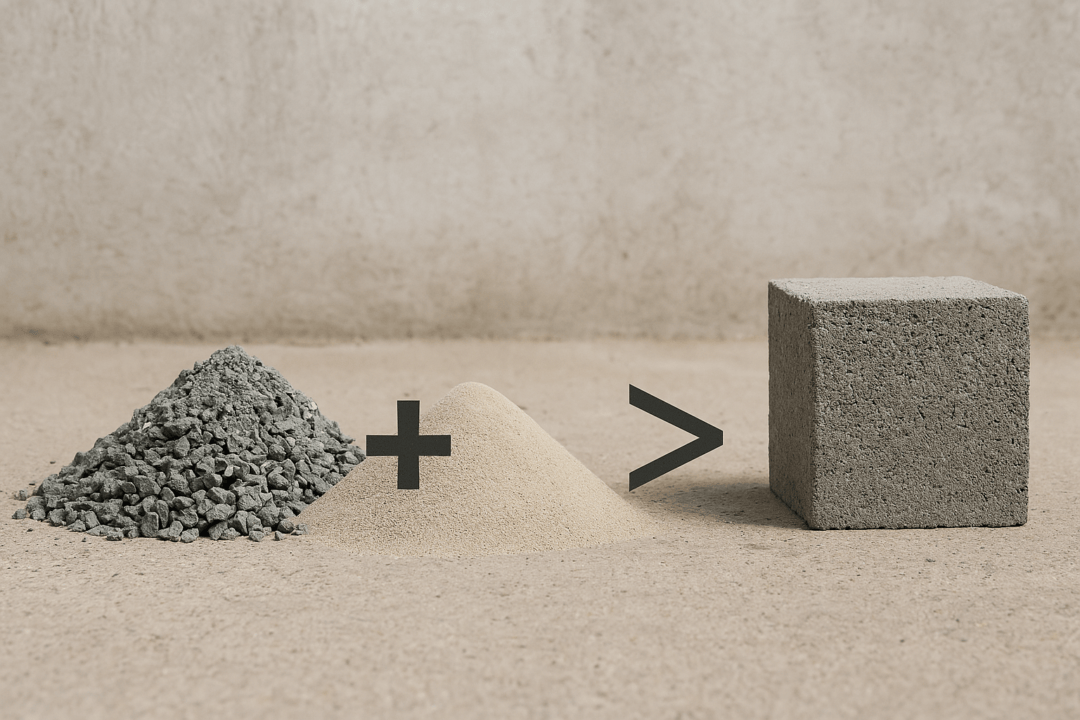


Understand The Technical Reason Behind This Curious Difference That Confuses Many People On Construction Sites. Learn How The Actual Yield Of The Materials Used In The Concrete Mixture Works And Avoid Surprises On Site.
Anyone who has closely followed a construction project or worked with construction knows that, often, the amount of gravel and sand used seems to be much greater than the volume of concrete that remains at the end. This leaves many people wondering: why do we use so much material when the final volume seems smaller?
This difference can be explained and is entirely related to how the materials fit together during mixing. In practice, concrete undergoes a reduction in volume when gravel, sand, cement, and water are mixed. This phenomenon occurs because the voids between the sand and gravel grains are filled, causing the final volume of the concrete to be less than the sum of the dry materials. And don’t forget about safety: goggles, gloves, and masks are essential when working with cement and sand.
Here you will understand in a simple and direct way:
-
The lack of welders, electricians, and operators becomes a structural threat in 2025, with the construction industry and manufacturing already suffering from delays, cost pressures, and labor shortages in Brazil.
-
Brazil and Paraguay are just 46 meters away from a historic union on the bioceanic bridge that promises to revolutionize trade between the Atlantic and the Pacific.

-
With 55 km over the sea, a cost of US$ 20 billion, and enough steel to build 60 Eiffel Towers, China’s largest project has connected Hong Kong, Zhuhai, and Macau in a colossal bridge that defies the logic of engineering.

-
A trick with joint compound transforms a Styrofoam ceiling into a plaster-like ceiling: leveled panels, wires and mesh at the joints, sand, paint, and change the environment while spending little today.

- How to calculate the correct proportion of materials;
- Why volume loss occurs in concrete;
- How this affects the project budget;
- And what to do to avoid mistakes when purchasing materials.
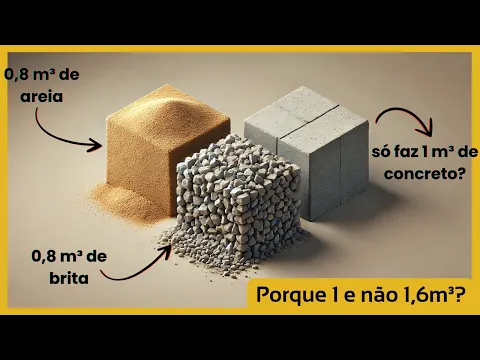
Many people think that by combining 1 cubic meter of gravel with 1 cubic meter of sand and a bit of cement and water, they will end up with 2 or even 3 cubic meters of concrete in the end. But that’s not how it works.
What happens is that the sand grains fit into the gaps of the gravel, and the cement, along with the water, penetrates all of this. The result? What seemed like a lot, decreases significantly after mixing. This reduction in volume is natural and occurs due to the compaction of the materials.
This “shrinkage” can reach 20% or more, depending on the type of gravel, sand, and the proportion used.

Understand The Calculation Of Concrete
The basis of everything lies in the concrete mix, which is the formula that defines how much of each material will be used per cubic meter. A common mix, for example, could be 1:2:3 (cement : sand : gravel). This means:
- 1 part of cement
- 2 parts of sand
- 3 parts of gravel

But when it comes time to mix everything with water, the voids between the grains are filled, and this reduces the final volume of the mixture. Therefore, those calculating concrete on-site need to account for this loss; otherwise, they will run out of material before the pouring is complete.
How This Affects Project Cost
If the construction team is not aware of this, they may end up buying less material than necessary. And the damage comes immediately: not enough concrete, delays in service, increased freight costs, and even issues with finishing the structure.
Therefore, it is important to work with a safety margin. Many professionals already account for this loss when ordering materials — especially in large volumes, such as slabs, foundations, and industrial floors.
How To Avoid Mistakes When Using Gravel And Sand?
Here are some simple and valuable tips:
- Use standardized mixes based on technical tests or reliable tables;
- Consult an engineer or construction technician to calculate exactly what will be necessary;
- Do not use buckets or shovels as a measure since the volume can vary with the moisture of the materials;
- Consider volume loss in the budget — better to have a little left over than to run short halfway through the pouring.
Extra Tip: Use A Concrete Calculator Or Online Calculator
Nowadays, there are numerous online tools that help you calculate how much cement, sand, and gravel you need for each cubic meter of concrete. Many of them already account for volume loss, helping to avoid headaches on-site.
Concrete “shrinks” because the materials fit better when mixed. It’s like assembling a puzzle: the pieces on their own take up more space than when they are organized. Therefore, the amount of gravel and sand used on-site exceeds the final volume of concrete.
Understanding this helps not only to save money but also to plan better for the project, avoid delays, and ensure the quality of what is being built.









Qual é essa relação 1:1.5:3 rendimento 7,7 ?