





 Portuguese
  English
  Spanish
  6 min of reading
  5 comments


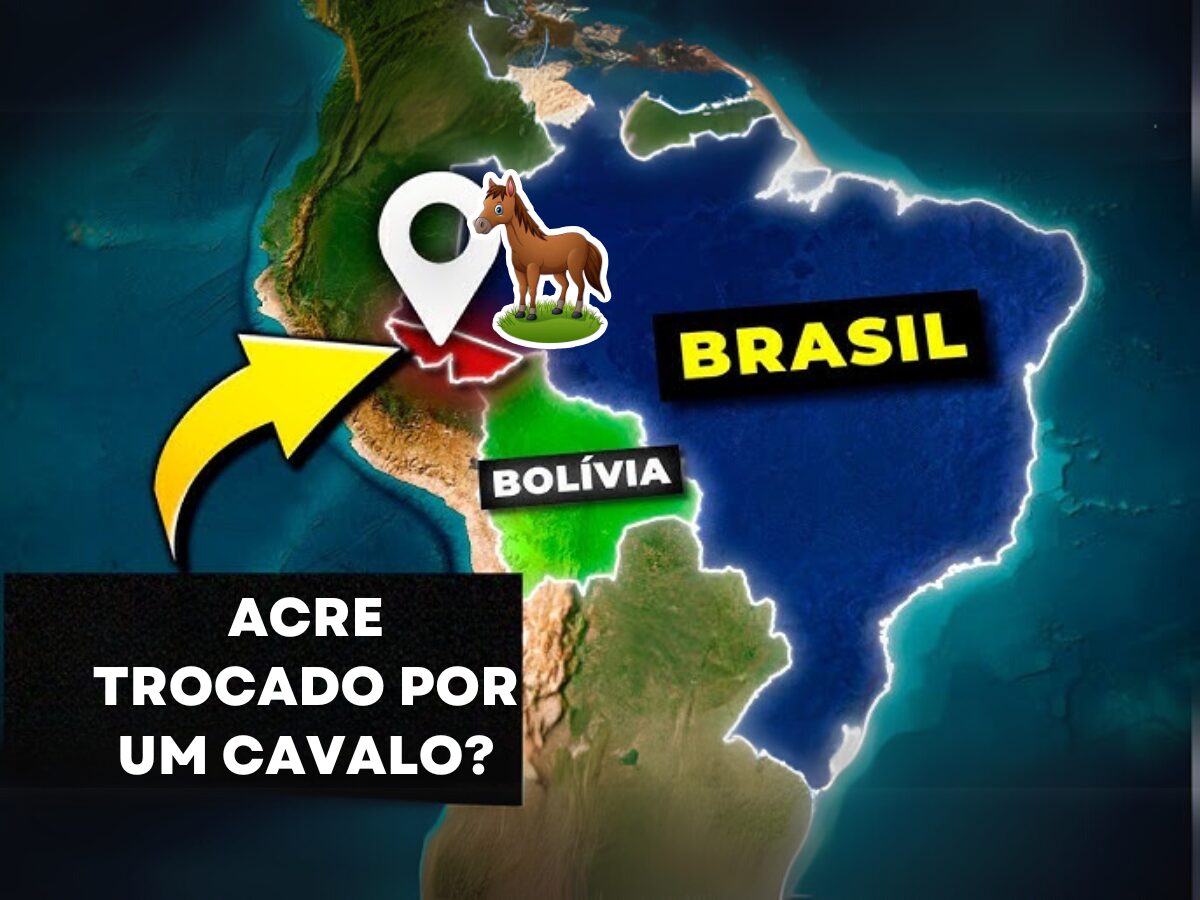

Brazil Tried to Forget Acre. Bolivia Called It ‘Exchanged for a Horse’. But Why Do They Still Say That This State, Filled with ‘White Gold’ from the Amazon, Does Not Exist?
In the 21st century, one of the most symbolic states in Brazil still carries the stigma of “not existing.” It may sound like a joke, but behind the irony lies a story marked by abandonment, international disputes, forgotten wars, and a purchase that Brazil only agreed to make after much diplomatic pushing and shoving. Today, more than 100 years after the acquisition of Acre, many Brazilians do not even understand how this piece of the Amazon made it onto the map. Worse yet: they still doubt its existence.
The ‘White Gold’ of the Amazon and the Beginning of the Land Dispute
At the end of the 19th century, what drove the Amazon economy was not gold or coffee, but rubber. The latex extracted from rubber trees turned into “white gold”, essential for the industrial revolution in Europe and the United States. The process was exhausting: rubber tappers would enter the forest to bleed the trees, collect the sap, and smoke the final product.
With high international demand, thousands of Brazilians began migrating westward into the Amazônia, invading lands that, according to the Treaty of Ayacucho of 1867, officially belonged to Bolivia. By 1899, around 400 rubber plantations were operating in the region, the majority run by Brazilians and supported commercially by Belém and Manaus. The State of Amazonas alone multiplied its revenue tenfold thanks to rubber.
-
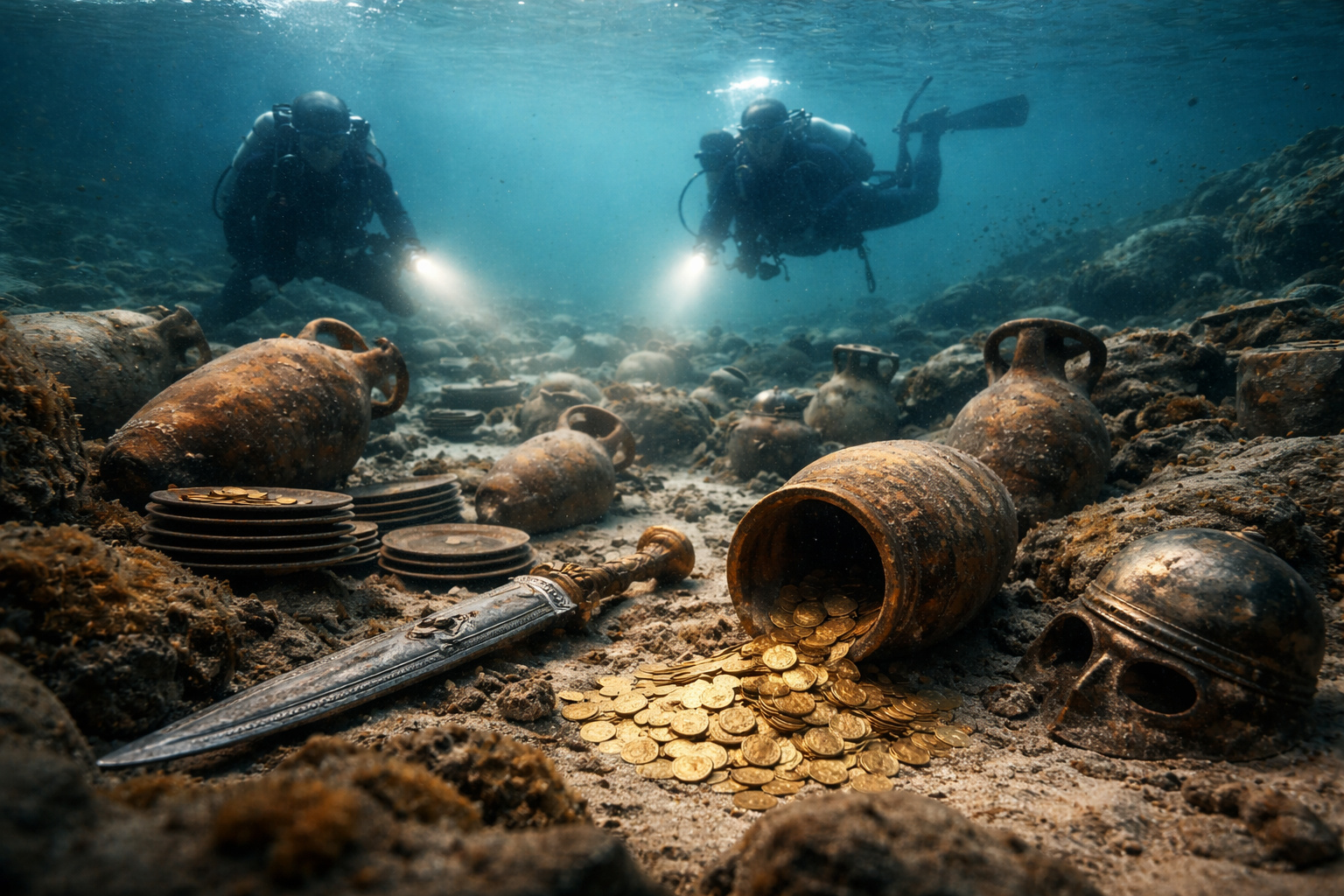
Giant Roman treasure found at the bottom of Lake Neuchâtel in Switzerland reveals an advanced trade system, circulation of goods, and armed escort in the Roman Empire about two thousand years ago.
-
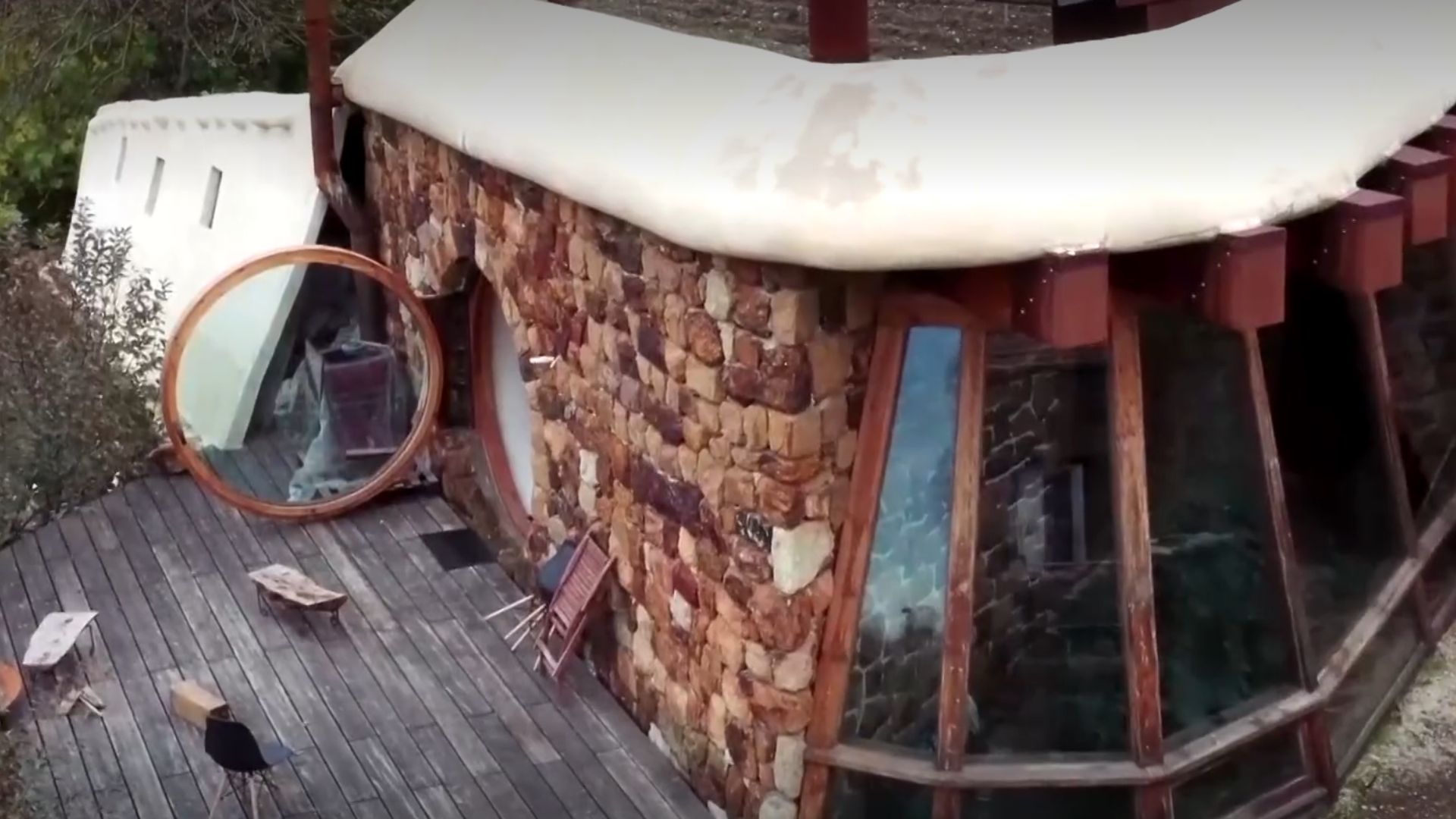
He buried 1,200 old tires in the walls to build his own self-sufficient house in the mountains with glass bottles, rainwater, and an integrated greenhouse.
-
The aircraft carrier HMS Prince of Wales is heading to the Arctic with F-35 fighters, helicopters, and warships in an operation that repositions the United Kingdom at the forefront of NATO in 2026.

-
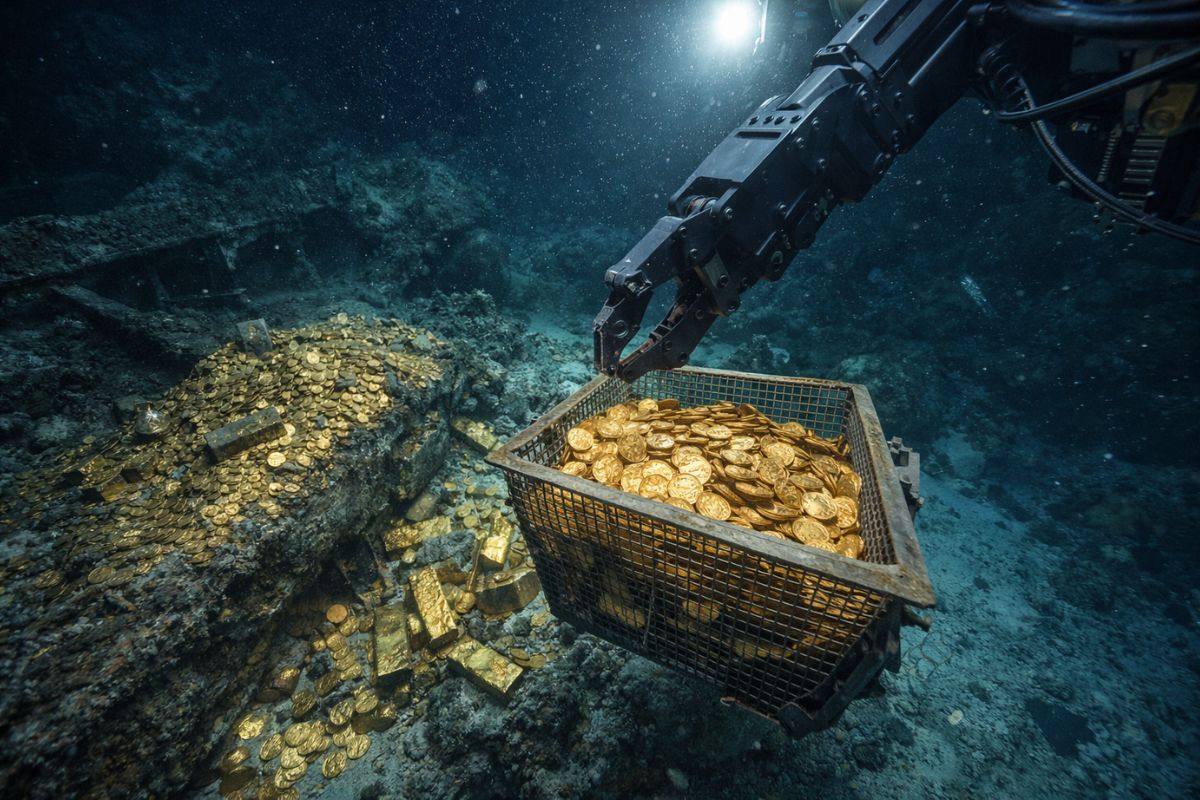
He found the largest gold shipwreck in the United States with tons of the precious metal at a depth of 2,400 meters in the Atlantic and recovered a treasure that no one thought possible to reach, but 500 gold coins disappeared without explanation.

Bolivia Almost Gave Acre to the USA
Bolivia, unable to effectively occupy its lands in the forest, decided to outsource the problem: it made a deal with the Bolivian Syndicate, a consortium of British and American businessmen based in New York. The contract gave this group nearly colonial rights over Acre — including the right to maintain its own army and collect taxes. Brazil, until then silent, found itself faced with the real possibility of seeing part of the Amazon handed over to U.S. interests.
The Unlikely Emperor of Acre
In this scenario entered Luis Gálvez Rodríguez de Arias, a Spanish diplomat who arrived in the region in search of the mythical El Dorado. Not finding gold, he became a journalist in Belém and later the Bolivian consul. Upon discovering Bolivia’s plans, he sought out the Governor of Amazonas, Ramalho Júnior, who saw there a chance to take Acre once and for all.
Financed with weapons, money, and mercenaries, Gálvez proclaimed, on July 14, 1899, the independence of the region, creating the Republic of Acre. He founded ministries, schools, and even a fire department. The self-proclaimed nation even sent diplomatic representatives abroad. According to historian Victor Missiato from Unesp, the government had real popular legitimacy, but weakened due to internal conflicts and external pressures.
The Birth of the Acrian Revolution: Brazilian Government Decided to Intervene and Deported Gálvez to Europe
Gálvez’s imperial dream lasted only six months. A local rubber baron assumed power for a month until the Brazilian government decided to intervene and deported Gálvez to Europe. But the situation worsened when Bolivia formalized the contract with the foreign consortium.
The response came from gaucho military man Plácido de Castro, who organized an army made up of rubber tappers. The Acrian Revolution erupted in 1902, culminating in the capture of Rio Branco in 1903 and the third proclamation of the Republic of Acre. This time, Brazil decided to act diplomatically.
The Purchase of Acre for the Equivalent of R$ 2 Billion and the Railway That Became a Cemetery for 2,000 Workers
The then Brazilian chancellor, Barão do Rio Branco, proposed a peaceful solution: the purchase of the territory. The Treaty of Petrópolis, signed on November 17, 1903, sealed the deal: Brazil would pay 2 million pounds sterling to Bolivia, the equivalent of over R$ 2 billion today, and committed to building a railway between the Madeira and Mamoré rivers to facilitate the shipment of Bolivian production.
The promise turned into tragedy. The construction of the Madeira-Mamoré Railway resulted in the deaths of about 2,000 workers, victims of malaria and other tropical diseases. The project became known as the “Devil’s Railway”. Today, it is in ruins, a symbol of the human cost of Acre’s annexation to Brazil.
The Origin of the Name “Acre” and Institutional Erasure: State Originated from a Spelling Mistake
Interestingly, the name of the state arose from a spelling mistake. A rubber tapper, trying to write “Aquiri” — as the river was known locally — ended up spelling “Acre” in a letter. The mistake caught on and was adopted officially.
Despite the annexation, Acre remained for decades a Federal Territory, without full autonomy. All the rubber revenue went directly to the federal coffers. Only in 1962 did the people of Acre gain the right to become a Brazilian state in fact.
An Open Wound Between Brazil and Bolivia
Resentment is still palpable. In 2006, then-Bolivian President Evo Morales declared in an interview that Acre was “exchanged for a horse,” referring to the diplomatic deal made at the beginning of the 20th century. The statement reflects the view that Bolivia was wronged in the agreement, as the promised railway never fulfilled its role.
Historian Paulo Henrique Martinez defines the negotiation as “a manipulation of the population by diplomatic and economic agents in the international scenario.” The legacy of the purchase still echoes in the speeches and memories of both sides of the border.
An “Experimental” State of Brazil
Even with its elevation to statehood, Acre was treated as a “laboratory.” The local identity remained invisible to the rest of the country. So much so that even the official gentilic was changed. With the Orthographic Agreement, those born in Acre must be called acriano, with an “i”.
The term “acreano” was no longer accepted by the Brazilian Academy of Letters. The justification? The unstressed ending, similar to that of Açores — whose inhabitants are called “açorianos.”
Acre Exists, Yes — and It Is More Real Than Many Imagine
The joke that Acre “does not exist” reveals more than geographical ignorance: it exposes a historical process of abandonment, diplomatic disputes, and cultural erasure. While other Brazilian states were integrated into the national project with prominence, Acre was ignored, sold, exploited, and forgotten.
Today, in the context of migratory crises like the one involving Venezuela, Acre is back in the spotlight, as an entry route and place of shelter for thousands of refugees. The local reality is complex and deserves visibility — not memes.
And You, Acriano or Acreano?
Which form do you prefer to use to identify yourself? Did you already know all this history behind Acre? Leave your opinion in the comments and share this article so that more people know that yes — Acre exists, and its story is one of the most fascinating and underrated in Brazil.








Tem tanto gente mal desinformado que a inda acha que no Amazonas só tem indo jacaré **** quanto mais outras regiões
Entrega esse estado que nao produz nada x nada o brasil deveria dar de graça
Aproveita e vende sua mãe também
Você devia respeitar os Acreanos. Amo meu estado. Você é um ignorante em relação a nossa História. Se liga e estuda mais!
O Acre é um estado q ainda tem muito a oferecer, más infelizmente é preferível deixar as moscas ea merce de invasores.