





 Portuguese
  English
  Spanish
  5 min of reading
  0 comments


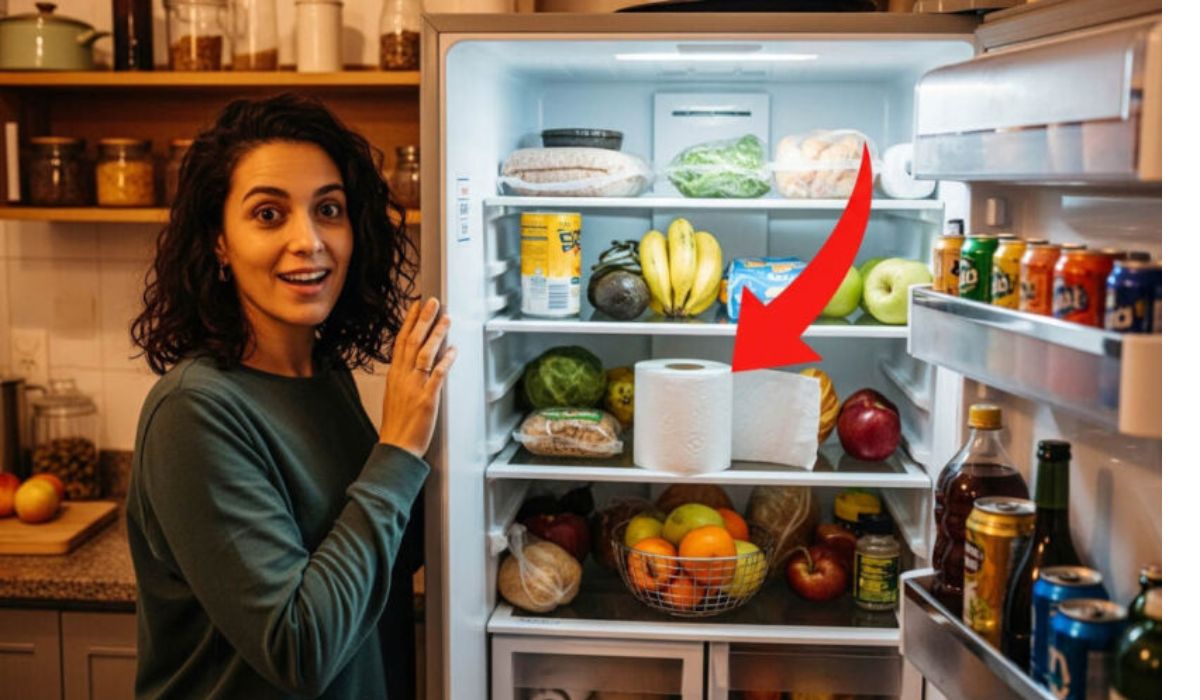
A Curious Habit Has Drawn Attention in Brazilian Kitchens and Raised Questions About Hygiene, Preservation, and Odors in Domestic Refrigerators.
The practice involves a common item in daily life and raises discussions about effectiveness, limits, and necessary care in food storage.
Putting a roll of toilet paper inside the refrigerator has ceased to be merely a curiosity shared on social networks and has started to appear as a practice adopted in different households.
The most cited explanation for the habit lies in the characteristics of the material: primarily made of cellulose, the paper has the capacity to absorb moisture from the environment and can help reduce the perception of odors inside the appliance.
-
He started running at 66 years old, broke records at 82, and is now a subject of study for having a metabolic age comparable to that of a 20-year-old, in a case that is intriguing scientists and inspiring the world.

-
Oldest tree on the planet reappears after 130 years of searches: Wattieza, 385 million years old, was 10 meters tall and had no leaves or seeds; Gilboa fossils in New York solved the mystery in 2007.

-
A 48-square-meter house assembled in hours with 4,000 bricks made of recycled plastic that does not absorb moisture, has natural thermal insulation, and costs less than 90,000 reais in a complete kit.

-
Luciano Hang revealed that Havan’s air fleet has already accumulated more than 20,000 landings, 10,000 flight hours, and 6 million kilometers traveled, and he says that without the planes, the company would never have grown so quickly.

According to recurring guidance in consumer and domestic organization content, the paper does not act as a cleaning agent nor eliminates the source of the smell.
The reported effect, when it occurs, is associated with the partial absorption of moisture from the air, which can mitigate light odors in specific situations.
Food preservation experts emphasize that the practice does not replace basic hygiene and storage care.
How the Refrigerator Accumulates Odors Even Without Spoiled Food
The refrigerator operates as a closed environment, subjected to constant variations.
Each opening of the door allows warmer, humid air from the external environment to enter; when closed, the drop in temperature causes condensation of this moisture.
At the same time, the interior concentrates foods with distinct characteristics.
Cheeses, onions, seasonings, meats, very ripe fruits, and leftovers stored for a longer time release volatile compounds that tend to spread.
When containers are poorly sealed or there are uncovered foods, these odors remain in circulation, even without obvious signs of deterioration.
In other cases, the smell indicates more specific situations, such as expired foods, liquids that have leaked and dried on shelves, or the accumulation of dirt in less visible areas, such as corners and the rubber sealing of the door.
What Toilet Paper Can Do Inside the Refrigerator

The use of the paper is associated with its ability to absorb moisture, a factor that can influence the intensity of odors in closed environments.
Domestic guidance materials describe this effect as possible in specific scenarios, precisely because of the material’s composition.
However, experts warn that the paper does not actively neutralize odors.
It also does not prevent the smell from returning if the source remains inside the refrigerator.
If there is decomposing food, leaks, or accumulated residues, the tendency is for the odor to reappear after a short period.
There is also the risk of the roll itself becoming a problem.
When it absorbs excess moisture, the paper can lose its function and develop an unpleasant smell, in addition to promoting the growth of mold if it remains damp for an extended time.
In Which Situations Is the Method Often Cited as Useful
Reports about the use of paper often mention effects in situations considered mild, such as the recent presence of strongly smelling foods or quickly ripening fruits.
In these cases, the partial absorption of moisture from the air can reduce the feeling of a stuffy environment.
This result, when it occurs, varies according to factors like the amount of food stored, the frequency of door openings, and the level of internal humidity.
Experts highlight that there is no guarantee of effectiveness and that the effect, when perceived, tends to be temporary.
On the other hand, intense, persistent odors or those with acidic characteristics often indicate problems that require direct intervention.
In these situations, the most common recommendation is to identify the source of the smell, discard items unsuitable for consumption, and perform a thorough cleaning of internal surfaces.
Cautions When Placing Toilet Paper in the Refrigerator
For those who choose to test the method, basic guidelines are usually highlighted.
The main one is to use a new, clean, and dry roll, reserved exclusively for the refrigerator.
Hygiene experts discourage reusing paper that has been exposed to bathroom moisture or other environments, due to the risk of contamination.
It is also advised to avoid scented paper.
Artificial scents can spread inside the refrigerator and interfere with the smell and even the taste of more sensitive foods, especially when stored without proper sealing.
The location where the roll is placed also influences the outcome.
If there is direct contact with liquids or uncovered foods, the paper can quickly absorb moisture, lose its function, and need to be discarded in a short time.
Periodic replacement is another point mentioned.
When the roll appears damp, deformed, or heavier, it means it has already absorbed as much as possible.
In households with intensive use of the refrigerator, this saturation can occur in short intervals.
More Efficient Alternatives for Controlling Odors in the Refrigerator
For longer-lasting odor control, experts often point out traditional methods.
One of the most mentioned is the use of baking soda in an open container, associated with odor neutralization and greater durability compared to improvised solutions.
Consumer guidance indicates that baking soda should be changed periodically, usually after a few months, when it loses effectiveness.
Another alternative cited in informational materials is activated charcoal, also used for odor absorption in closed environments.
Even with these options, professionals in the field emphasize that none of them replace essential practices, such as storing food in well-sealed containers, respecting expiration dates, and regularly cleaning shelves, drawers, and sealing rubbers.
In daily life, the roll of toilet paper can be used as a temporary resource in specific situations, as long as it does not replace basic maintenance care.








-

-

-

-

5 pessoas reagiram a isso.