





 Portuguese
  English
  Spanish
  5 min of reading
  1 comment


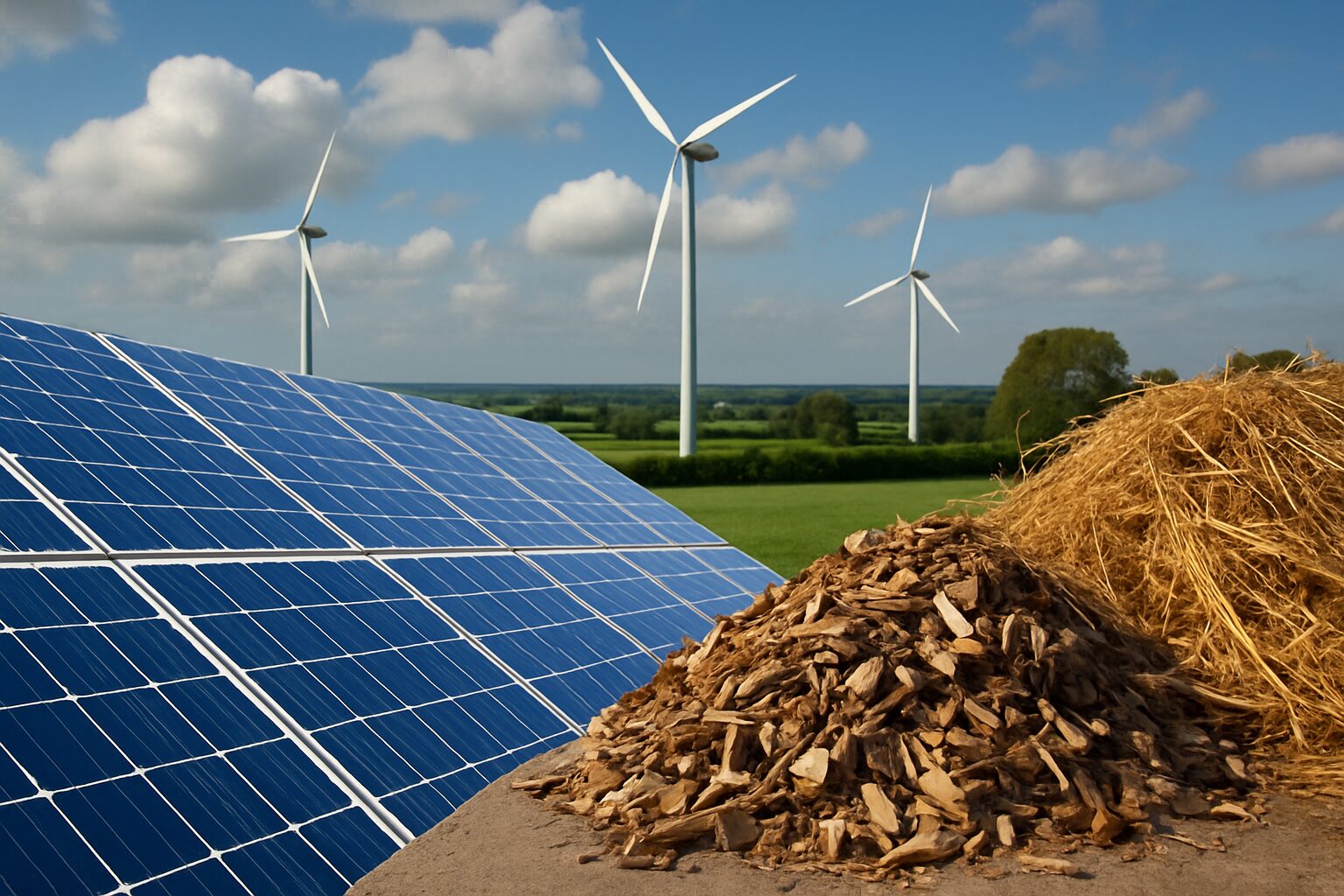


Discover Why Renewable Energy Materials Are Essential for a Sustainable Future, Driving Clean Sources Like Solar, Wind, and Biomass with Less Environmental Impact.
The history of humanity is closely tied to the way we use and produce energy.
From the first uses of fire to the Industrial Revolution, when coal was the primary source of energy, humanity has sought ways to harness natural resources to meet its energy needs.
However, the fossil fuel-based model has proven to be unsustainable over time, generating negative environmental impacts.
-
Renewable energy advances over protected areas in Brazil, and a survey by the Energy Transition Observatory reveals silent impacts that challenge environmental conservation and pressure sensitive traditional territories.

-
Rio Grande do Sul accelerates energy transition: State invests in renewable technologies and consolidates decarbonization strategies and pathways to attract billions in new industrial investments.

-
With 160,000 m² of collectors, an area larger than 20 football fields, Silkeborg, in Denmark, hosts a solar thermal plant that heats 19,500 homes and could become the largest solar heating plant in the world.

-
A study reveals the expansion of renewable energy procurement in Brazil and shows how companies are taking advantage of opportunities to reduce expenses, ensure energy efficiency, and strengthen strategic environmental commitments.


Such as the emission of greenhouse gases and global warming.
With the increase in awareness about climate change and the scarcity of natural resources, the search for cleaner and more efficient alternatives has intensified.
Thus, renewable energy materials have emerged, which are now a crucial necessity for developing a more sustainable future.
These materials not only aid in energy generation but also promote a more responsible and efficient use of natural resources.
Therefore, the use of renewable materials is directly related to the planet’s energy future.
It is through them that we can transform solar, wind, hydro, and biomass energy into usable electricity sources.
The Historical Development of Renewable Energy Materials
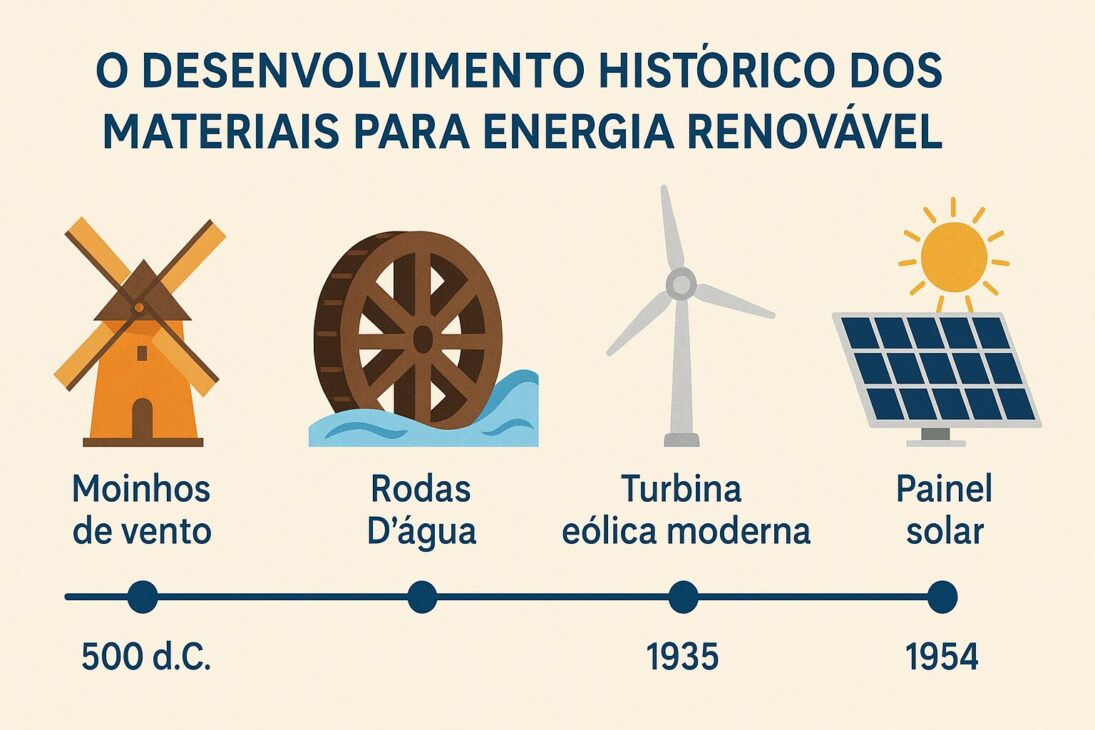
The search for more sustainable energy sources is not a recent idea.
In fact, the earliest forms of harnessing solar and wind energy date back to ancient times. The use of windmills, for example, is recorded in ancient Persia, around 500 AD.
The waterwheels, used by the Romans, are one of the first technologies to harness energy from flowing water to grind grains.
Over the centuries, the Industrial Revolution, which occurred in the late 18th and early 19th centuries, brought about greater dependency on fossil fuels, such as coal and oil, for energy generation.
This transition to non-renewable sources resulted in significant societal advances but also caused the environmental problems we face today.
In the 20th century, technology advanced, and from the mid-century onwards, new alternatives began to emerge.
The first modern wind turbine was designed in Denmark in 1890, and since then, there has been a continuous improvement in technology.
The International Wind Energy Association (IAE), in its 2020 report, mentions that:
With the increasing efficiency of turbines, wind energy has become one of the most economically competitive renewable sources for electricity generation.
The development of solar panels also followed this path, with the invention of the first photovoltaic devices in the 1950s.
In 1954, scientists at Bell Labs in the United States developed the silicon solar cell, which would be the foundation for modern solar panels.
Renewable Energy Materials: Application in Energy Sources
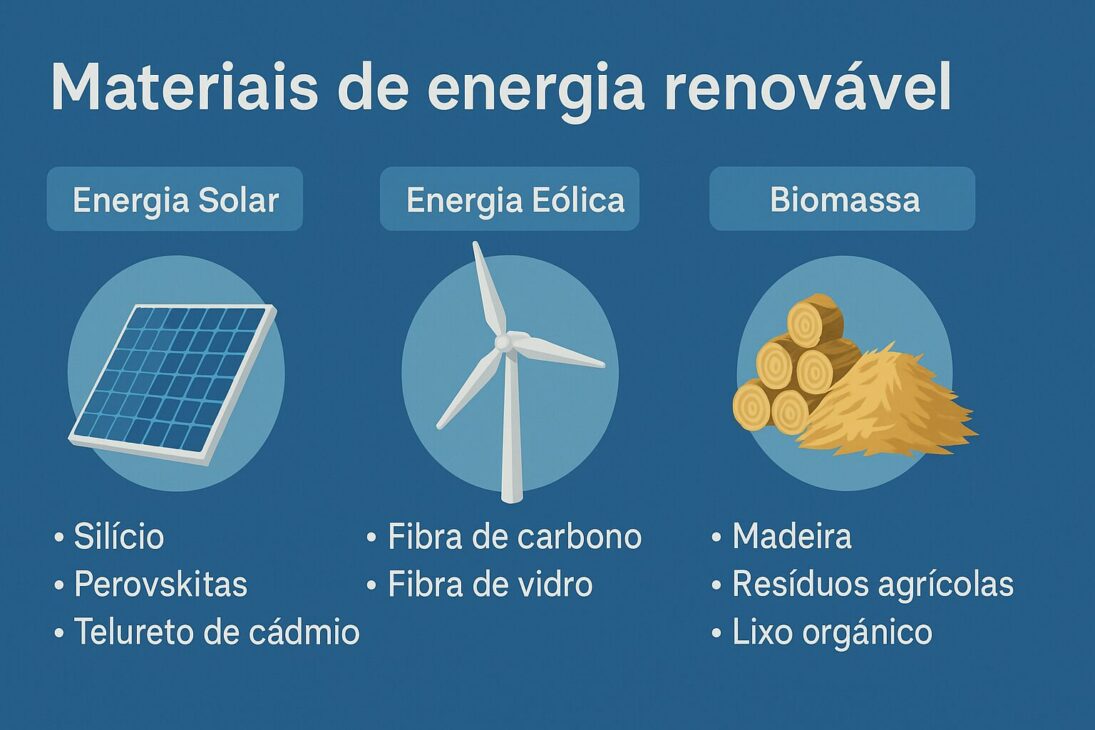
Renewable energy materials are essential components in the manufacturing of devices that convert natural sources into usable energy.
In the case of solar energy, the technology is based on photovoltaic solar panels, which primarily use silicon.
This material, abundant in nature, is extracted from sand but goes through a complex purification and crystallization process to be used in the manufacturing of solar cells.
However, silicon is not the only material used.
Other materials, such as perovskites, cadmium telluride, and copper, indium, gallium, and selenium (CIGS) thin films, are being researched and improved by scientists worldwide, such as the team from Stanford University (2021), to enhance the efficiency of solar panels.
In 2021, Science Advances, a renowned scientific journal, published a study that demonstrated that solar cells made of perovskite could achieve efficiencies greater than 30%, surpassing the traditional limits of silicon cells.
Regarding wind energy, the development of more efficient wind turbines has been driven by the use of lightweight and durable materials, such as carbon fiber and glass fiber.
These materials ensure that turbine blades are large and lightweight, allowing for greater wind capture and increased energy generation.
According to the American Wind Energy Association (AWEA), modern wind turbines can generate up to 10 megawatts of electricity, which is enough to power approximately 3,000 homes.
Biomass, another important renewable source, uses organic materials such as agricultural, forest, or urban waste to generate heat and electricity.
Sustainability and the Importance of Durability
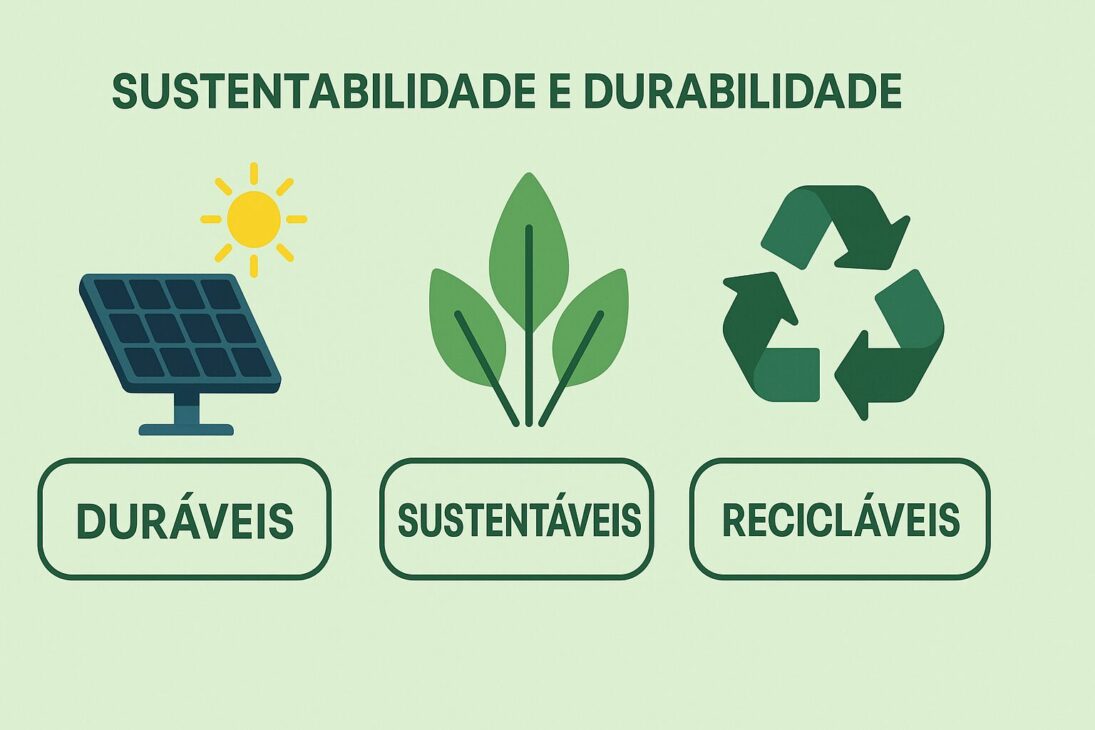
Renewable energy materials not only play a fundamental role in energy production but are also crucial for ensuring the sustainability of that energy over time.
The durability of the materials used in renewable sources is one of the most important factors for the success of the energy transition.
This means that solar panels, for example, need to be designed to withstand adverse weather conditions for long periods without losing efficiency.
According to the International Renewable Energy Agency (IRENA, 2022), the lifespan of solar panels can reach 25 to 30 years.
However, it is essential to ensure that they are made from materials that can be recycled at the end of their life to minimize the environmental impact of disposal.
Regarding wind energy, the development of wind turbines with greater durability is also a priority.
More resilient and recyclable materials, such as carbon fiber composites, are being researched to increase the lifespan of turbines and reduce the lifecycle cost of wind energy.
The recycling of materials, such as wind turbine blades and solar cells, is becoming an increasingly important area of research.
Cambridge University (2022) published a study on how the use of new biodegradable materials and the improvement of recycling of components could further reduce the environmental impacts of these technologies.
The Social and Economic Impact of Renewable Energy Materials
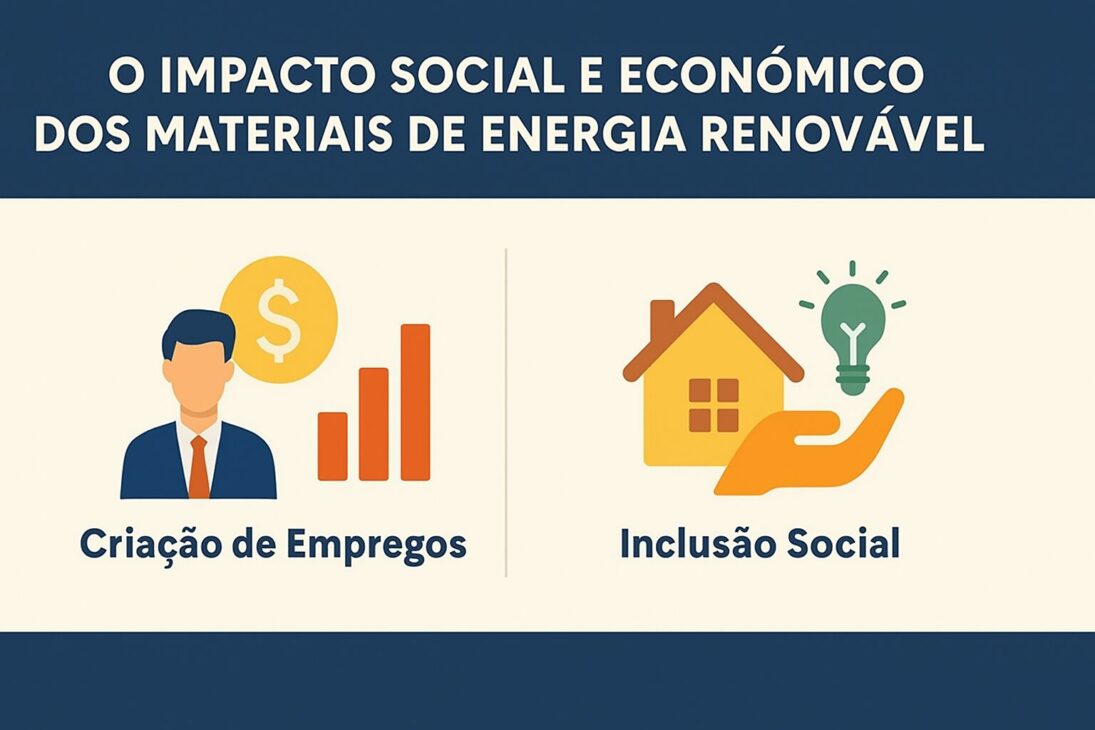
The transition to renewable energy is not just an environmental issue but also social and economic.
The development and use of renewable energy materials have the potential to create millions of new jobs worldwide.
According to the International Labor Organization (ILO, 2020) Green Jobs Report, the renewable energy sector is estimated to be responsible for the creation of up to 85 million jobs by 2030.
In developing countries, renewable energy also plays a crucial role in providing solutions for communities without access to electricity.
The installation of solar panels in remote areas can provide energy sustainably, while the construction of small wind farms can generate local jobs and improve quality of life.
The World Bank, in its 2021 report, highlighted that the use of renewable technologies has helped reduce inequalities in rural areas, in addition to contributing to social inclusion and improving living conditions.
The Future of Renewable Energy Materials
The future of renewable energy materials seems promising, with new technologies constantly emerging.
The search for more efficient and less environmentally impactful materials is an ongoing challenge but also an opportunity for innovation.
The use of nanotechnology, for example, is being studied to enhance the efficiency of solar cells, while composite materials are helping to reduce the weight and increase the durability of wind turbines.
Research is also focused on more sustainable solutions, such as:
The use of organic solar cells, which are cheaper and more flexible, and methods to recycle the materials used in turbines and solar panels.
In summary, renewable energy materials are essential to ensure that the transition to clean energy is viable, effective, and sustainable.
They are not only the foundation for the operation of renewable technologies.
But also represent a fundamental step in building a more sustainable and balanced future for generations to come.











Excelente matéria