Portuguese
  Spanish




Historical Decision Changed the Country’s Routine and Continues to Generate Debates About Energy Economy and Quality of Life
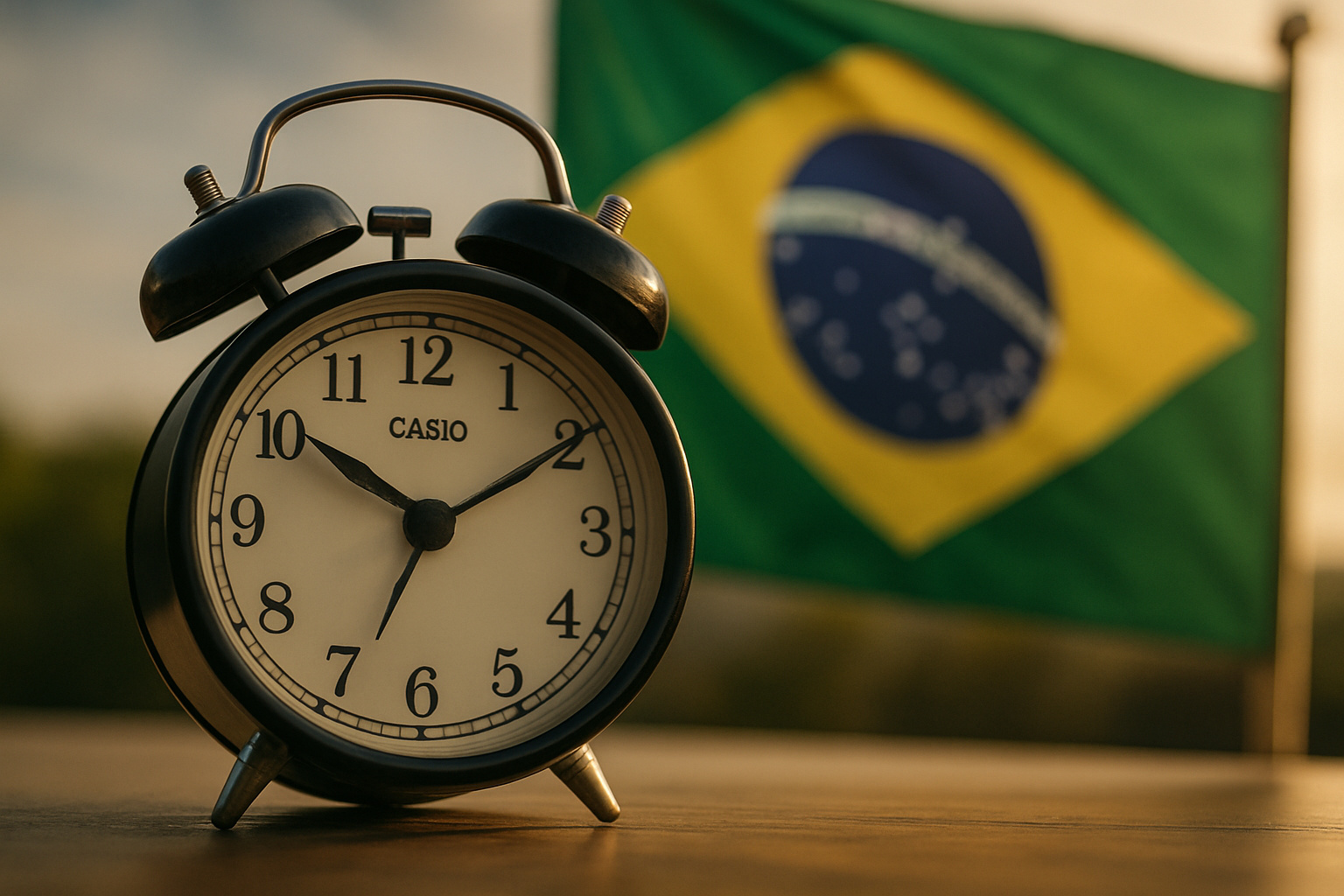
The adoption of Daylight Saving Time in Brazil began in 1931, when President Getúlio Vargas signed the first decree. Since then, the measure has undergone suspensions and returns.
In 1933, just two years after its creation, the special time was suspended. However, it returned in 1985 and became official in 2008, with Decree No. 6,558.
During its validity, the change affected the Southern, Southeastern, and Central-Western states, as well as the Federal District. Thus, the aim was to reduce energy consumption during peak hours.
-
To erect the “Baleia” building on the richest avenue in Brazil, he bought 35 houses, paying with trips to Disney, a truck, and even an apartment, waited over 20 years, and today the complex is valued at R$ 2.5 billion.

-
The land belonged to her great-great-grandfather and was worth R$ 25 per square meter during the pandemic; the couple sold 250,000 m² for the nearly R$ 30 billion project that is transforming the “neighbor of Jericoacoara,” and today a house in the region goes for R$ 4.2 million.

-
Labor shortage reaches the truck drivers’ area: Brazil is already facing a deficit of 120,000 drivers, 65.1% of transport companies feel the impacts, and Mercedes-Benz strengthens training in the face of the new generation of technological trucks.
-
An important sector in Brazil is suffering from a labor shortage, requiring the qualification of 14 million workers by 2027, leading companies to invest R$ 5 million to train professionals and address the technical deficit.




Clock Change and Direct Impact on Consumption
Traditionally applied from November to February, the measure advanced the clocks by one hour. This way, the longer duration of summer days in the Southern Hemisphere could be utilized.
In some states, sunlight lasted until 7 PM, which allowed for a reduction in the use of artificial lighting between 6 PM and 7 PM, when demand increased.
However, in April 2019, the government of Jair Bolsonaro (PL) decided to suspend Daylight Saving Time. This occurred due to changes in consumption habits.
Moreover, the new configuration of the Brazilian electric sector was cited as justification. Thus, the government claimed that the impact of the measure was no longer significant.
Historic Drought and Energy Under Pressure
Between 2022 and 2024, the country faced one of the greatest droughts in its history. Despite this, the measure remained suspended, even with reservoirs in a critical situation.
In September 2024, the Minister of Mines and Energy of Lula’s government, Alexandre Silveira, confirmed that there was no risk of blackout, even though there was intense drought.
According to the minister, reservoirs were kept stable thanks to energy planning. Therefore, the strategy included diversification of sources and better control of consumption during critical periods.
Comparison with Other Countries
The Ministry of Mines and Energy reminded that Brazil was one of the few tropical countries to adopt the measure. Moreover, it is common in regions above the 30° parallel.
Among the countries that still use Daylight Saving Time are Canada, Australia, Mexico, New Zealand, Paraguay, Uruguay, Chile, and the United States.
The National Electric System Operator (ONS) highlighted that the measure’s impact in Brazil would be small. In fact, the maximum estimated reduction would be only 2.9%.
This percentage was considered low given the size of the Brazilian electric system. Furthermore, the country already has new efficiency solutions and modern generation alternatives.
Clean Energy and Technological Advances Replace the Measure
In recent years, Brazil has made progress in renewable energies, notably with wind farms and the expansion of solar plants in various regions of the territory.
Additionally, the widespread use of LED bulbs and the popularization of low-consumption devices have reduced the need for policies like Daylight Saving Time.
Consequently, this set of factors has enabled greater energy efficiency, eliminating the dependence on seasonal measures. Thus, the country bets on lasting and sustainable solutions.
Health Risks and Medical Community Warning
Another argument against is related to the health of the population. After all, the artificial advancement of the clock can interfere with the circadian cycle, responsible for regulating sleep, mood, and concentration.
International studies indicate an increase in fatigue and a higher occurrence of heart attacks and strokes during the months when the time change is applied.
Although there are no specific surveys in Brazil, experts warn that elderly people and children are the most vulnerable groups to sudden changes in routine.
The Future of Daylight Saving Time in Brazil
Based on analyses from the ONS and the Ministry of Mines and Energy, the trend is for Daylight Saving Time to remain suspended in the coming years.
The debate, however, remains open. For some, the measure could be useful in scenarios of water crisis. On the other hand, the health impacts make its return unfeasible.
And you, do you believe that Brazil should prioritize modern energy efficiency based on innovation and sustainability, or reinstate Daylight Saving Time as a reinforcement of economy?