





 Portuguese
  English
  Spanish
  3 min of reading
  0 comments


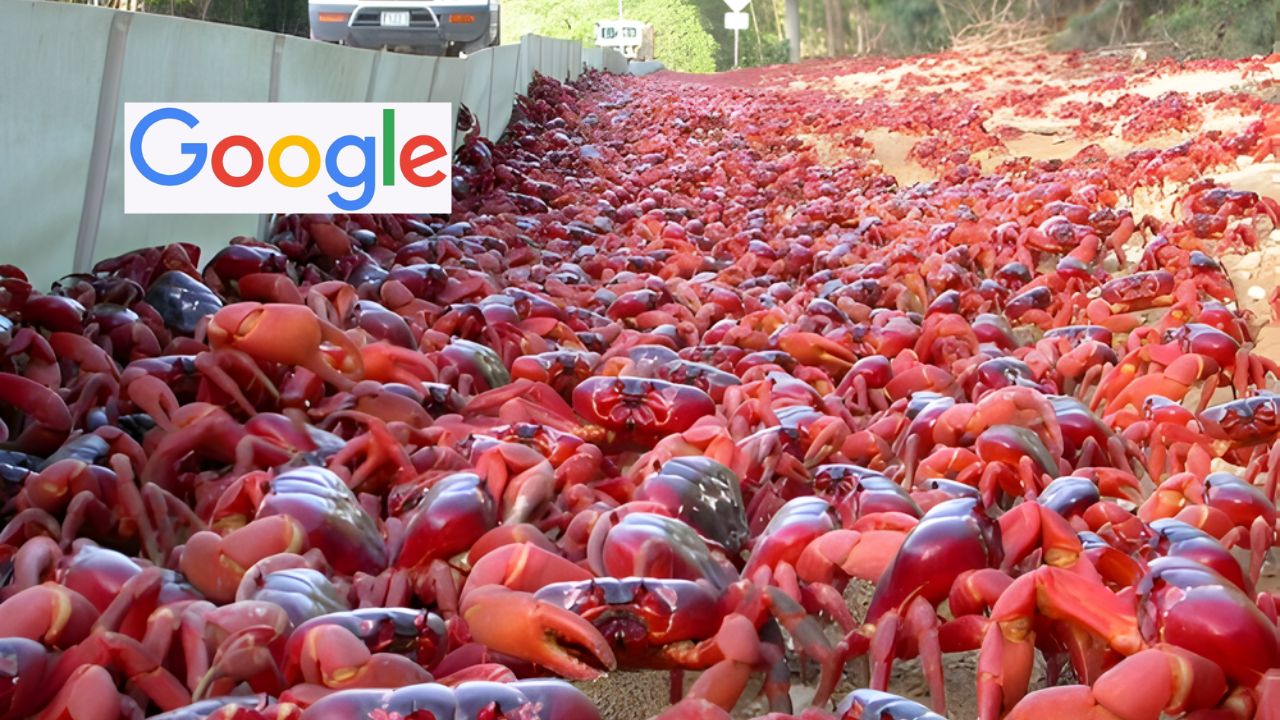
Google Announces New Submarine Cable Plans on Christmas Island, Australian Territory with 1,500 Inhabitants and 120 Million Crabs. Understand Why the Location Is Strategic for Global Technology.
In the middle of the Indian Ocean, Christmas Island — an Australian territory of 135 km² — is entering a new chapter that mixes nature and technology. The location, known worldwide for housing 120 million red crabs, is now on the radar of Google.
The tech giant has entered into an agreement with the Australian Army to advance the installation of submarine cables as part of the Australia Connect initiative and has identified the island as the ideal point to connect Darwin, Singapore, Melbourne, and Perth.
As the crabs head towards the sea, engineers and authorities are discussing how to balance infrastructure projects with environmental preservation.
-
These living root bridges and ladders are over 700 years old and help indigenous people survive in one of the rainiest regions in the world.

-
From sertanejo star to international investor: Ana Castela invests millions in a mansion in the USA, creates a themed accommodation in Orlando, and shows that the “boiadeira” also wants to grow away from the stage.

-
The 10 most stunning motorhomes in the world: a $3 million trailer with a rooftop nightclub and garage for a Ferrari, “palaces on wheels” with Italian marble, private cinema, and five-star hotel luxury for billionaires.

-
Trump wanted to spend $400 million on the White House, but the courts prohibited the million-dollar construction.


Why Did Google Choose Christmas Island?
According to Google, the strategic position of Christmas Island in the Indo-Pacific is crucial for the expansion of the region’s digital connectivity.
The company highlighted that the new cable, named Bosun, will connect the island to Darwin and subsequently to Singapore.
The name is a tribute to the white-tailed tropicbird, the island’s symbol.
Additionally, the Australia Connect initiative aims to interconnect the Bosun system with other fiber optic routes, such as Tabua, which already connects the United States, Australia, and Fiji.
To achieve this, the company also plans to deploy a terrestrial fiber network between Darwin and Sunshine Coast, reinforcing the infrastructure’s reach.
The goal is simple yet ambitious: improve regional connectivity and reduce reliance on already saturated routes.
By bringing the project to Christmas Island, Google aims to enhance the safety and redundancy of the network that supports global cloud, AI, and data services.
Crabs on the March: The Natural Challenge of the Construction
While Google moves forward with its plans, nature follows its own schedule.
Every year, between October and December, over 100 million red crabs leave the forests and cross roads, rocks, and beaches toward the ocean, where females release up to 100,000 eggs.
Few hatchlings survive the return to the plateau, but the spectacle remains one of the most impressive biological phenomena on the planet.
This year, the migration started earlier and is expected to peak between November 15 and 16, forcing local authorities to close roads and create alternative routes.
The measures aim to protect the crustaceans and avoid the impact of human movement.
As a result, the coexistence between the crabs and Google’s engineers has become a topic of debate among residents and environmental agencies.
Balance Between Technology and the Environment
Despite the excitement about the advancement of connectivity, environmentalists warn about the impact of cabling works on the island’s ecosystem.
Since more than 60% of its area is covered by tropical forests and national parks, each intervention requires rigorous studies and environmental permits.
Google, in turn, states that precautionary measures will be implemented to ensure that the annual migration of the crabs is not harmed by the operations.
For the local community — around 1,500 inhabitants — the project brings both economic opportunities and ecological concerns.
The increase in digital infrastructure can create jobs and improve connectivity, but it also requires care to maintain the balance that makes Christmas Island unique on the planet.
With information from the site Xataka.







Seja o primeiro a reagir!