





 Portuguese
  English
  Spanish
  4 min of reading
  0 comments



State Railway Can Change Freight Transport and Boost the Local Economy, But Will It Really Benefit All Involved?
The state of Mato Grosso, known as one of Brazil’s largest grain producers, has made a bold and strategic decision: to build its own railway, the Senator Vicente Vuolo State Railway.
The project, which cuts through part of the Mato Grosso territory, was born not only out of logistical necessity but also frustration with the federal government’s delays in meeting the region’s demands.
The objective is clear: to transport agricultural production more efficiently, autonomously, and competitively in the national and international scenarios.
-
A Japanese mason transforms raw granite into small cups and handcrafted utensils, collects giant stones, cuts with precision, and impresses with detailed manufacturing and finishing.
-
With 1,066 acrylic panels, the building known as the friendly alien is supported by a steel skeleton, has a façade that functions as a giant screen, and impresses the world without any internal columns.

-
Scientists warn that a comet about 1 km in size that has started to release gases may actually change direction in space. It was spotted by NASA and surprises with potential impacts near Earth.

-
These living root bridges and ladders are over 700 years old and help indigenous people survive in one of the rainiest regions in the world.

Instead of waiting for unfulfilled promises, the state chose to take the reins of its logistical development.
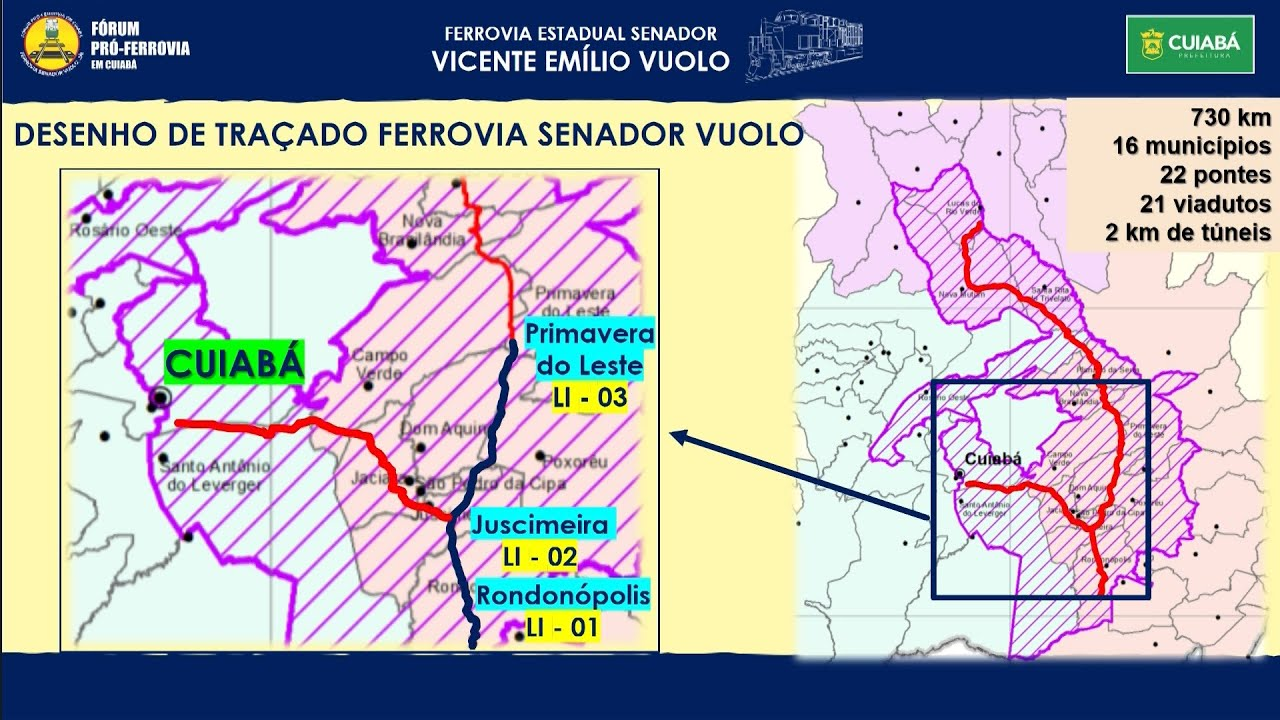
The work will start from the municipality of Rondonópolis and will go up to the municipality of Lucas do Rio Verde, crossing strategic cities such as Campo Verde, Primavera do Leste, and Nova Mutum.
The total length will be approximately 730 kilometers, with a billion-dollar investment made possible through a public-private partnership (PPP) with the company Rumo Logística.
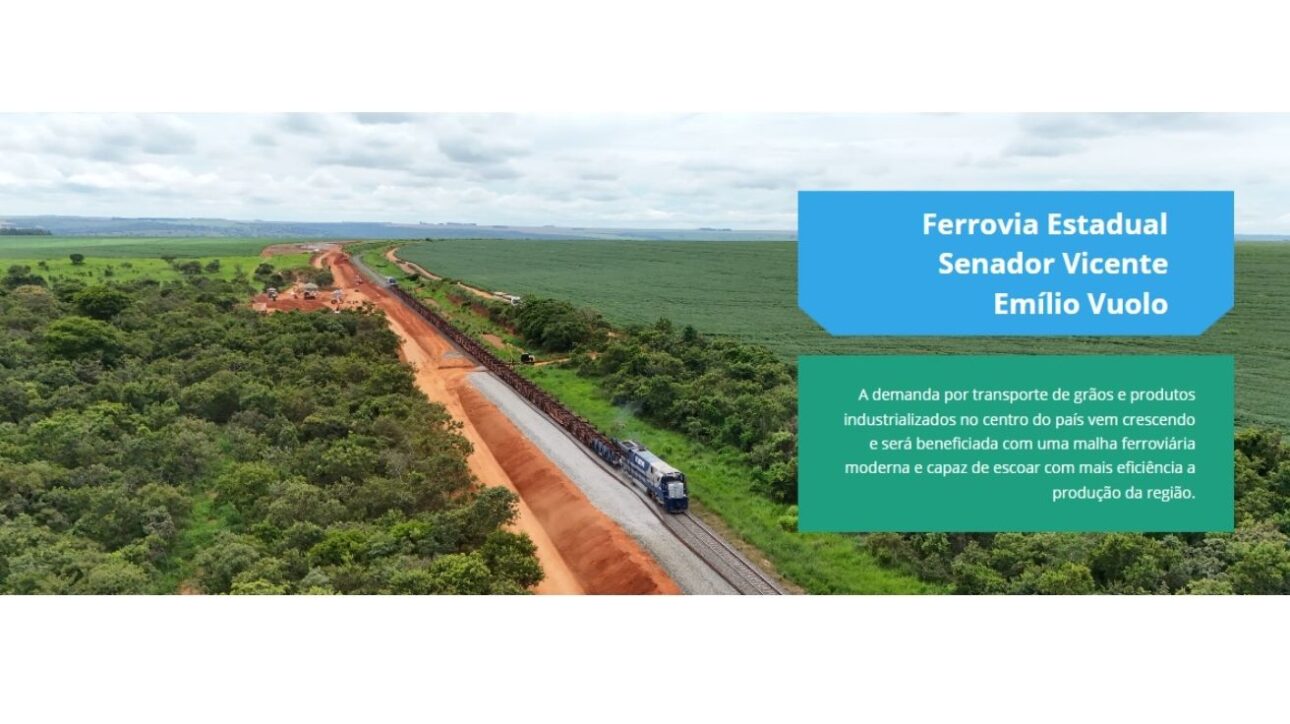
Regional and Logistical Railway Project
The railway is a direct response to the limitations of road transport, which still dominates Brazilian logistics but imposes high costs and risks on producers.
Today, over 70% of the state’s agricultural harvest is transported by trucks, which overloads the roads, increases freight costs, and creates significant logistical bottlenecks, especially during harvest times.
With the railway, it is expected that the cost of grain transportation will be reduced by up to 30%, in addition to enhancing the competitiveness of Mato Grosso’s agribusiness in the global market.
The integration of the new line with the Northern Network, which connects Rondonópolis to the Port of Santos, will allow a direct link between productive fields and exporting ports.
For the productive sector, this represents a long-awaited logistics revolution.
Federal Delays and Mato Grosso’s Autonomy
Although the federal government has long-standing plans for railway expansion in the region, such as the FICO (Central-West Integration Railway), successive delays have eroded trust in the Union.
The FICO project, for instance, which was supposed to connect Mara Rosa (GO) to Água Boa (MT), has been promised since the 1990s but has only recently entered the initial phase of construction — even then, at a slow pace and with uncertainties.
In light of this scenario, the Mato Grosso government decided to use the prerogatives of the new Railway Law, approved in 2021, which allows states and private companies to authorize railway projects without federal concessions.
This is how the state came to the forefront and authorized the construction of its own railway, becoming a pioneer in a model that could inspire other federative units.
Private Investment, Public Impact
The project is being financed with resources from Rumo Logística, which is expected to invest around R$ 11 billion over the next few years.
In return, the company will have the right to economically exploit the railway for a period of up to 45 years.
The authorization contract also sets execution targets, deadlines, and social countermeasures.
In addition to the economic benefits for agribusiness, the construction of the railway is expected to generate over 230,000 direct and indirect jobs throughout the construction and operation.
The cities crossed by the railway line are also expected to experience a new growth cycle, with real estate appreciation, investment attraction, and improvements in urban infrastructure.
Sustainability and Clean Technology in Transport
The environmental impact of the project is also being considered.
The project includes environmental compensations and the use of cleaner technologies in railway transport, with lower emissions of polluting gases compared to trucks.
In a scenario where the ESG (Environmental, Social, and Governance) agenda is becoming increasingly relevant for large exporters, the railway also represents a green asset for the state.
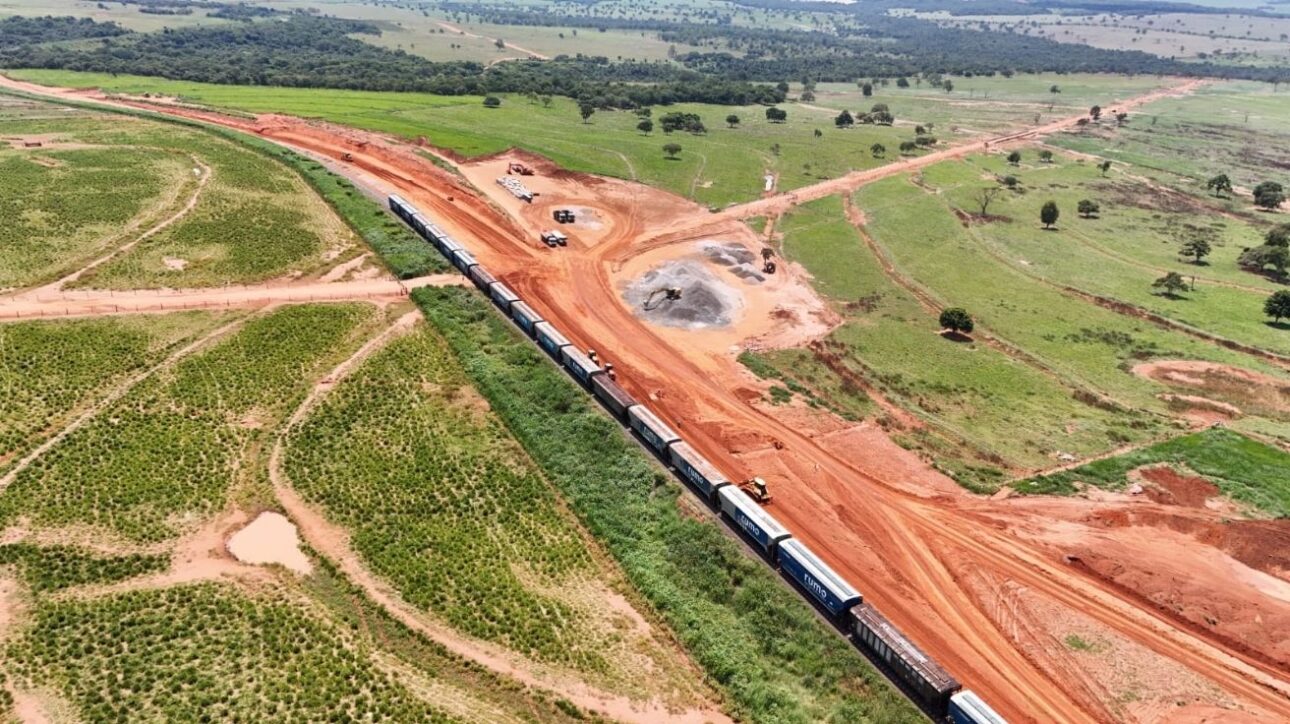
State Railway as a Symbol of Planning
The decision from Mato Grosso goes beyond infrastructure: it is an assertion of autonomy and strategic planning.
Instead of depending on bureaucracies and federal obstacles, the state chose to act to guarantee its own development, betting on logistical efficiency as a competitive differential.
The Mato Grosso agribusiness, responsible for a significant portion of the state GDP, demands quick and robust solutions — and the railway emerges as a symbol of this new stance.
Industry analysts see the project as a watershed moment for railway transport in Brazil, which still accounts for only 20% of the national logistics matrix.
In the medium to long term, the Senator Vuolo Railway could attract new investments in industrial hubs, distribution centers, and even railway tourism, given the magnitude of the structure under construction.
Model May Inspire Other States
With the opening provided by the new federal legislation and the successful example from Mato Grosso, expectations are growing that other regions in Brazil will also adopt the model of state railways.
States such as Goiás, Minas Gerais, and Maranhão are already studying similar projects, keeping an eye on the economic and logistical advantages provided by autonomy in infrastructure.
The question remains: will the success of the Mato Grosso railway inspire a new railway era in Brazil, based on state prominence and private initiative?






Seja o primeiro a reagir!