





 Portuguese
  English
  Spanish
 4 min of reading
  0 comments


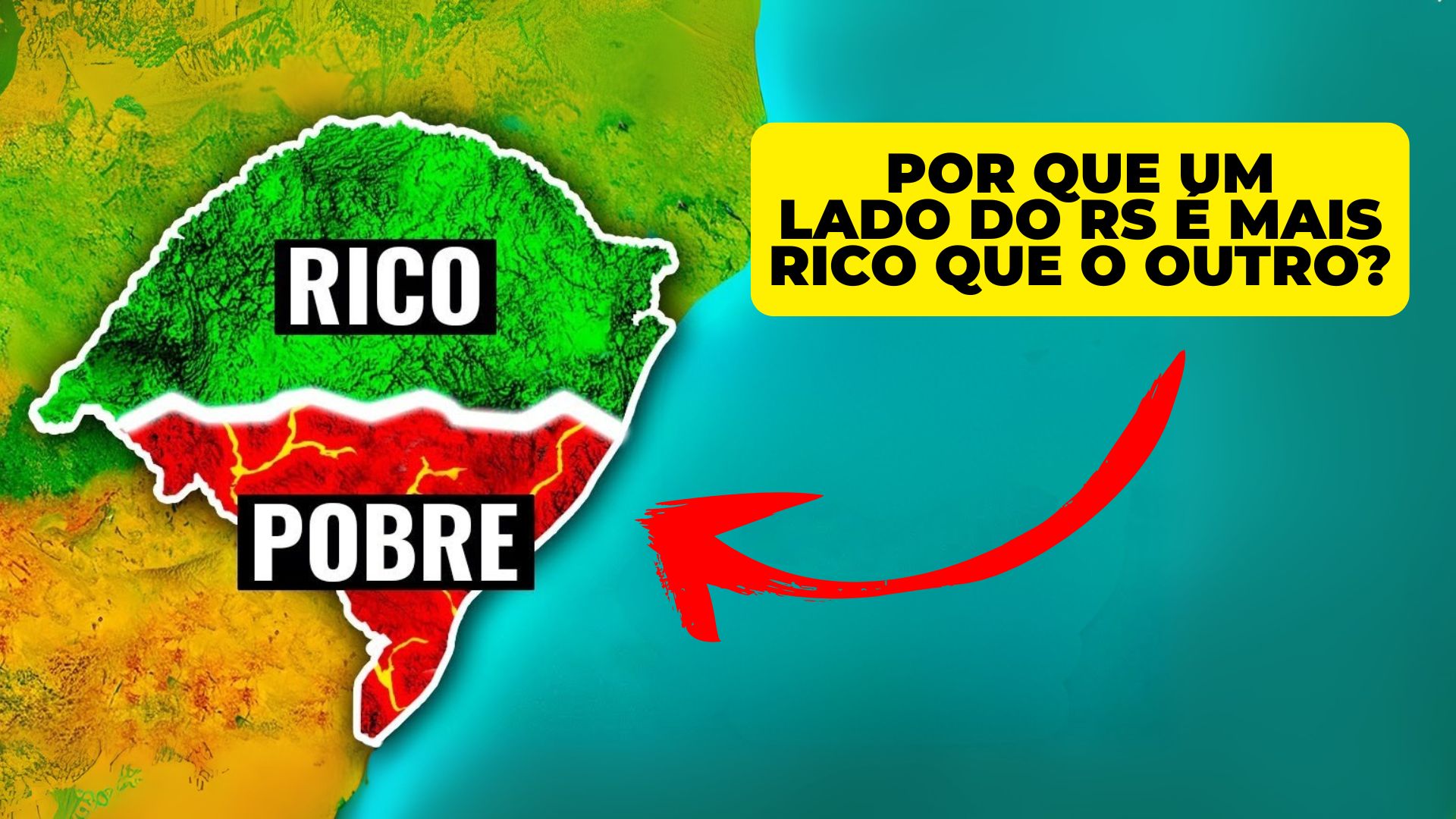
Economic Inequality Divides Rio Grande do Sul Into Two Realities, With the North Standing Out for Industrial and Agricultural Dynamism, While the South Faces Historical Development Challenges. Understand the Factors and Impacts of This Regional Difference.
Rio Grande do Sul, nationally recognized for its strong European cultural presence and relevance in agribusiness, occupies a prominent position among Brazil’s state economies.
With a Gross Domestic Product (GDP) estimated at over R$ 600 billion, according to 2024 data from the Brazilian Institute of Geography and Statistics (IBGE), the state presents a marked regional disparity: while the North stands out for economic dynamism, agricultural innovation, and high urbanization, the South faces challenges such as low growth, population exodus, and limited productive diversification.
According to a video from the channel Sem Economês, the explanation for this difference necessarily involves the historical, geographical, and economic analysis of the two regions.
-
The Federal Revenue issues a good alert for Brazilian taxpayers: 60.9% are already using the pre-filled tax return, automatic refunds via Pix reach millions, and the government plans for a fully automated income tax in the coming years.

-
India announces a plan of $3.06 billion to bring aviation to forgotten regions: 100 new airports, $1.07 billion in subsidies, and regional routes guaranteed for 10 years, from 2026 to 2036, away from the centers.
-
Brazil blocked a proposal from the United States at the WTO that would make the exemption from tariffs on digital products like streaming and ebooks permanent, favoring American tech giants at the expense of developing countries.

-
IPTU exemption for seniors in 2026: see how to secure the benefit.


In the North, cities such as Passo Fundo, Erechim, Caxias do Sul, Bento Gonçalves, and São Leopoldo concentrate the main industrial hubs, logistical, financial, and agro-industrial activities of the state.
On the other hand, in the South, municipalities such as Pelotas, Rio Grande, and Bagé remain more dependent on extensive livestock farming and less diversified economic sectors, which limits local development and the potential for income and job generation.
Historical Formation of Inequality in Rio Grande do Sul
To understand the reasons why the North of Rio Grande do Sul is richer than the South, we must look back to the formation of the gaucho territory, especially from the 19th century, when the Brazilian government encouraged European immigration, mainly from Germans and Italians.
These immigrants were directed to areas in the North of the state, where they engaged in family agriculture on small properties, promoting production diversification and the emergence of new market niches.
According to the channel, the organization into cooperatives, such as Cotrijal, Aurora, and Copermil, allowed agricultural production to quickly integrate with local industry and export.
Meanwhile, the South remained true to the traditional occupation model, characterized by large estates intended for livestock farming, favored by flat topography and vast pasture areas.
The livestock model, characterized by low productivity and little labor demand, contributed to the maintenance of low population density and limited economic dynamism.
This scenario hindered the diversification of economic activities and restricted the emergence of relevant industrial sectors in the region.
Agriculture, Industry, and Economic Growth in the Northern Region
Starting in the 1970s, the so-called Green Revolution drove technological advancement in the field, especially in the Northern and Northeastern regions of the state.
New technologies, access to rural credit, and the growing international demand for grains stimulated the production of soybeans, corn, wheat, and beans.
The Northern region, benefiting from small family properties and a strong cooperative presence, led the expansion of agricultural production, adding value with food processing, dairy, meats, and beverages.
The accelerated urbanization of these inland cities, combined with population growth, promoted investments in infrastructure, such as roads, schools, energy, and logistics.
Thus, according to the aforementioned channel, the region experienced significant improvements in social indicators, quality of life, and access to public services.
In the South, the pace of modernization was slower.
The economy remained dependent on extensive livestock farming, which not only requires little labor but also offers low value addition to the local production chain.
The lack of diversification and technological innovation hindered the integration of the South into industrial chains and the dynamics of international markets.

Data and Impacts of Regional Inequality
According to studies by IBGE and the Foundation for Economics and Statistics of Rio Grande do Sul (FEE), since the early 2000s, the North and adjacent regions, such as Serra, Planalto Médio, and Hortênsias, account for over 37% of the state GDP, excluding the capital Porto Alegre and the metropolitan region.
At the same time, the Central-South, Campanha, and Fronteira Oeste regions, all in the South, represent just over 13% of the state economy.
Moreover, population growth in the North exceeded by more than 60% that observed in the South between the 1930s and the 1980s, reflecting the greater economic dynamism of these areas.
The increase in municipal revenue and investments in infrastructure solidified the North’s position as the economic engine of the state, with highlights in sectors such as food, metallurgy, wines, furniture, and textiles.
The proximity of the North to the country’s main logistical corridors, especially the South, Southeast, and Midwest regions, facilitates productive integration and export to national and international markets.
In contrast, the South, despite having strategic ports such as Rio Grande, has not managed to convert its logistical structure into robust economic diversification.



-

Uma pessoa reagiu a isso.