





 Portuguese
  English
  Spanish
  4 min of reading
  4 comments


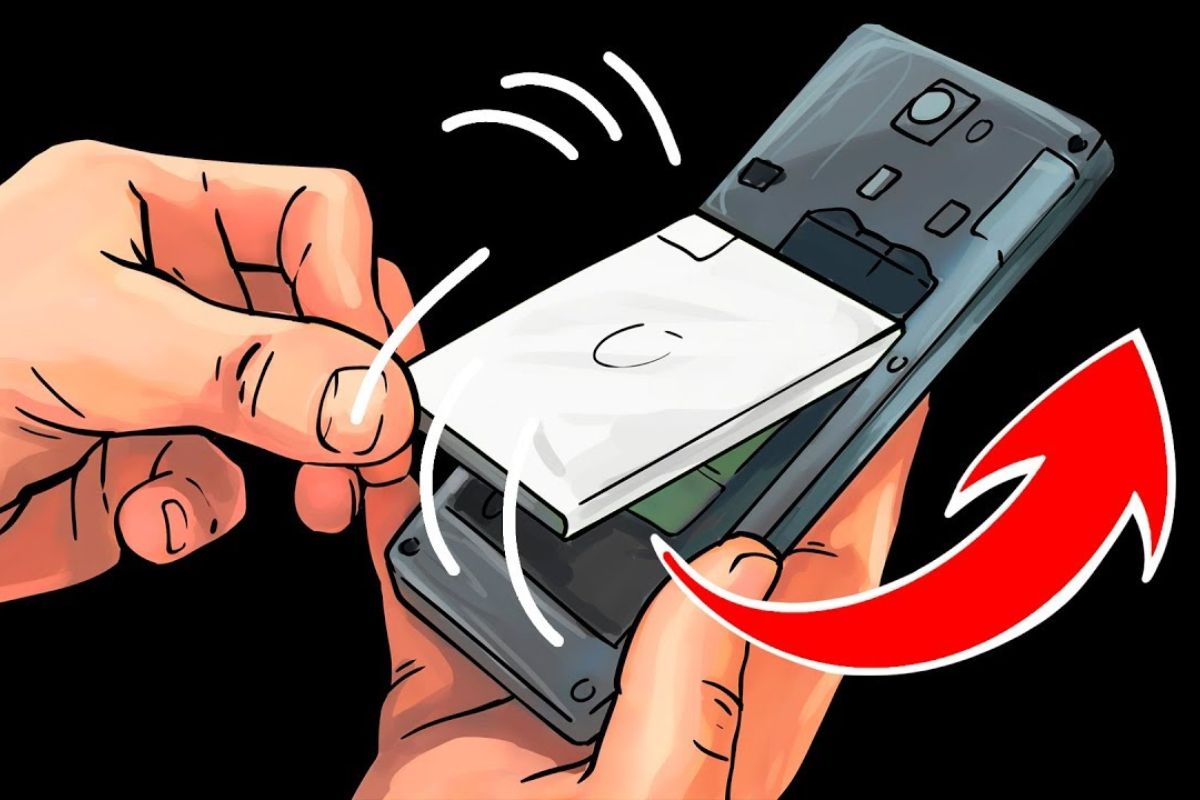


The Search for Thinner Design, Water Resistance, and Control Over the Consumption Cycle Explains Why Cell Phones Lost Removable Batteries and Now Force You to Change Devices When the Charge Barely Lasts a Whole Day
For years, changing the battery was the simplest and most economical gesture to solve a common problem: the charge that didn’t last. All it took was to open the back cover, fit a new one, and continue the day. But over time, cell phones lost removable batteries and became increasingly sealed, fragile, and difficult to repair.
What seemed like an evolution in design, and partly really is, also transformed the relationship between user and manufacturer. The battery, once an accessible component, became a symbol of planned obsolescence. Understanding why this happened helps comprehend how the smartphone market began to dictate the pace of device replacements and how energy autonomy became one of the industry’s main challenges.
Design and Efficiency as Justification
The first argument from manufacturers was aesthetics. Eliminating the back cover allowed for the creation of thinner, lighter, and more elegant phones.
-
With over 14 million baskets of earth moved, an ancient North American metropolis built a monumental pyramid of 30 meters and established a city with 20,000 inhabitants nearly a thousand years ago.

-
A 1,900-year-old treasure emerges from a Roman house destroyed by fire and sealed since antiquity in Romania, with coins and metals fused among the ashes.

-
The Brazilian colonial city that stopped in time and shares territory with a rocket launch base.

-
79-year-old woman challenges limits, visits 193 countries in the world after 56 years of planning and reveals the behind-the-scenes of a global journey that few have managed to accomplish.


Without the need for a removable compartment, the internal space became more compact, enabling the inclusion of more advanced cameras, powerful speakers, and more discreet cooling systems.
Additionally, the complete closure of the housing brought technical benefits.
Fixed batteries help make the device more resistant to dust and water, two natural enemies of modern electronics.
This feature, which was once limited to premium models, has now become a market standard.
The minimalist aesthetic and the appeal of “waterproof” convinced consumers that it was worth giving up the practicality of a removable battery.
Security and Control Over the User
Another rarely debated point is security. With internal batteries, manufacturers have managed to reduce the risk of shorts and leaks, especially in cases of drops or using batteries of questionable provenance.
It also became harder for thieves to remove the battery to disable tracking, a relevant advancement in preventing theft.
However, in practice, the change strengthened companies’ control over the lifecycle of devices.
When the battery starts to lose capacity, which happens on average after two years, the user is faced with two options: pay for an expensive repair or buy a new smartphone.
This logic sustains the economic model based on rapid replacement and recurring consumption.
Short Lifespan and the Incentive to Replace
Every battery has a limited number of charge cycles. Even lithium-ion batteries, widely used in modern smartphones, degrade over time.
After about 500 full recharges, the capacity can drop to less than 80%, which forces the user to charge the phone more times a day.
In devices with removable batteries, it was just a matter of replacing the component.
Today, the process requires special tools, complete disassembly, and in many cases, loss of warranty.
This discourages repair and accelerates the decision to purchase a new model.
The result is a fast-moving market that generates tons of electronic waste and an increasing dependence on annual upgrades.
Environmental Impact and the Debate Over the Right to Repair
The discussion around non-removable batteries has already reached governments and regulatory agencies.
In the European Union, there are proposals to require manufacturers to facilitate battery replacements in the name of sustainability and the right to repair.
The argument is simple: if the user cannot replace an essential component, the product becomes disposable by design.
The industry, however, resists. The dominant argument is that reversing this standard would increase the cost of developing new models and could compromise the structural integrity of the devices.
The conflict between convenience and sustainability exposes the central dilemma of modern technology: the more integrated it is, the more dependent it becomes on its producers.
How to Extend Battery Life

While public policies do not change, individual measures remain.
Reducing screen brightness, turning off Bluetooth and Wi-Fi when not in use, avoiding extreme temperatures, and keeping the device between 40% and 80% charge are simple strategies that help extend battery life.
It is also essential to monitor which apps consume the most energy and limit the use of background functions, such as automatic updates and push notifications.
Small conservation routines can delay the inevitable moment of seeing the phone depend on the outlet or the next release.
At the current pace, battery evolution still does not keep up with the performance leaps of processors and screens.
The industry promises advances in graphene batteries and new lithium chemistries, but until then, the consumption cycle remains the same: more power, less duration.
The trend is for design to continue prioritizing total integration, which means less physical access and more technological dependence.
What started as an aesthetic choice has solidified as a business model. The battery has ceased to be removable, and with it, part of the consumer’s autonomy.
And you? Do you think cell phones should return to having removable batteries or does modern design compensate for the loss of this practicality?








Será que não seria possível, ter a opção com ou sem bateria removível,? mesmo que tivesse que abrir mão de algumas funções,e estética.
Essa de quê a bateria removível almenta o espaço interno é conversa pra **** dormir.
Uso smartphones desde que foram viabilizados no Brasil. O que uso nesta mensagem é de 2019. Nunca passei po lá necessidade de trocar de aparelho em função de bateria. A obsolescência é de hardware. Posso citar: Samsung, Xiaomi, Nokia, Infinix, entre outros.