





 Portuguese
  English
  Spanish
  3 min of reading
  0 comments


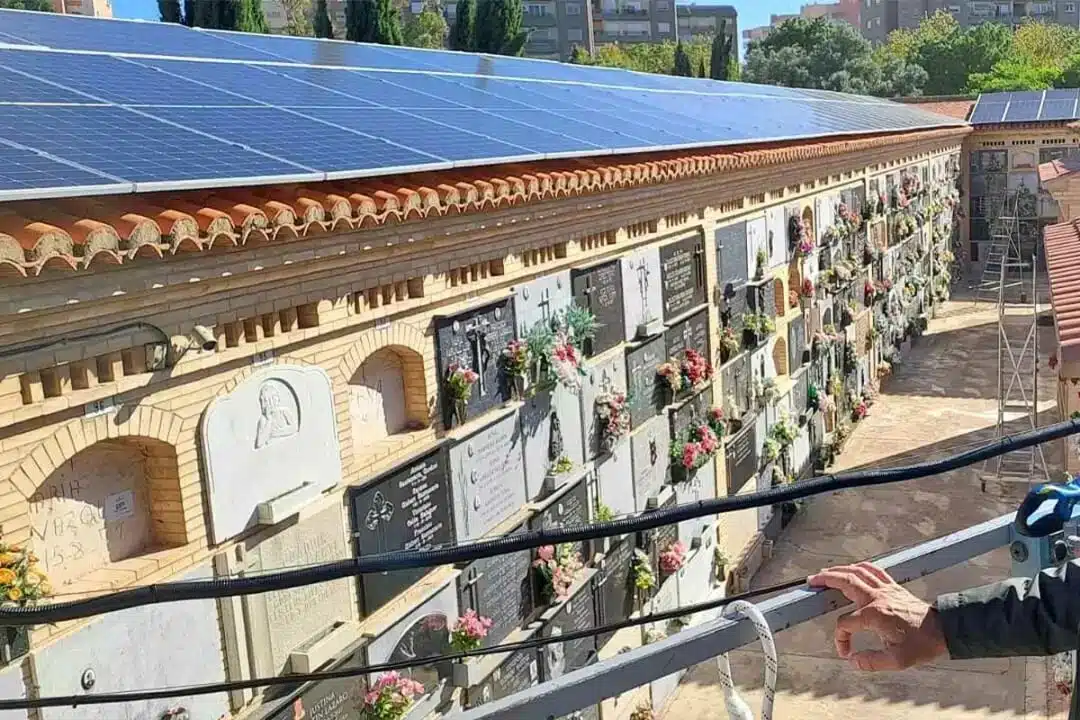
Municipal Cemeteries Are Becoming Spaces for Solar Energy Generation. But Why Is This Initiative Becoming Popular? Discover the Reasons and Benefits of This Sustainable Strategy!
The need for clean energy sources has never been more urgent. The world is seeking sustainable alternatives to reduce dependency on fossil fuels and combat the effects of climate change. Because of this, even cemeteries are being used.
Several cities around the globe are investing in solar energy as part of their plans to achieve carbon neutrality by 2050.
However, one of the major challenges of this transition is the occupation of valuable spaces, such as agricultural land and vulnerable ecosystems.
-
If Ormuz closes, the world freezes: the 1,200 km Saudi Petroline transports oil from the Gulf to the Red Sea, operates near 7 million barrels/day, and becomes a geopolitical weapon in the crisis with the US.

-
Scientists restore seagrass meadows in the open sea.

-
Scientists find about 1 million giant live eggs hatching in an active underwater volcano, discover a natural furnace on the ocean floor, and reveal one of the most unlikely nurseries ever seen in the ocean.
-
Scientists launched a bait camera to the bottom of the Pacific Ocean and saw something that no one expected.


In light of this dilemma, the city of Valencia, Spain, has implemented an unusual solution: installing solar panels in municipal cemeteries.
The initiative, called Requiem in Power (RIP), aims to balance the growth of renewable energy with environmental preservation, without compromising productive spaces or natural areas.
The RIP Project: How It Works?
The RIP project aims to transform five cemeteries in the city into true urban solar parks. The initiative received an investment of 3.2 million euros and has the potential to generate up to 3,388 MWh of electricity per year. To achieve this, 6,658 photovoltaic modules will be installed by the first half of 2025.
The cemeteries involved in the project are:
- General
- Cabanyal
- Grau
- Campanar
- Benimàmet
Progress of Installations
Implementation work is progressing as scheduled. In the cemeteries of Grau, Campanar, and Benimàmet, the installation of solar panels has already been completed, and the first units are expected to begin operating soon.
- Campanar Cemetery: equipped with 375 solar panels, with a capacity of 161.25 kWc over an area of 800 m².
- Grau Cemetery: houses 176 photovoltaic panels, occupying 319 m².
- Benimàmet Cemetery: has 259 solar modules in an area of 564 m².
As a result, the cemeteries in Valencia will play a fundamental role in renewable energy generation.
Respect for Funeral Spaces
One of the main questions regarding the project is the impact on burials and respect for the deceased and their families.
However, Valencia authorities assure that solar panels will be installed only on the roofs of the most recent funeral niches, so as not to interfere with the graves.
This approach minimizes the visibility of the modules and avoids any visual or emotional impact for visitors and families. The idea is for the installation to be discreet and harmonious, becoming almost imperceptible from the ground.
Benefits for the Community
The RIP project goes beyond environmental sustainability. With a total capacity of 2,800 kWc, the electricity generated will be distributed as follows:
- 75% will be directed to municipal buildings, reducing public costs for energy.
- 25% will benefit low-income families, ensuring access to clean and affordable energy.
Carlos Mundina, responsible for managing the cemeteries of the Valencia City Council, emphasizes that this initiative will transform the city into a reference in urban solar energy.
According to him, the project will result in the largest urban photovoltaic plant in Europe, consolidating Valencia as a model of innovation and sustainability.
The Future of Urban Solar Energy
The experience of Valencia may pave the way for other cities to implement similar solutions. Utilizing underutilized urban spaces for the installation of solar panels can be an effective strategy to expand the capacity for generating clean energy without harming agricultural or natural areas.
With this, the RIP project stands out as a smart and creative alternative to address today’s energy and environmental challenges.
For those seeking innovative solutions, it is worth following the developments of this initiative and considering ways to adapt it for other regions of the world.
The transition to renewable energies requires creativity and planning. The Valencia initiative is an example of how sustainability can go hand in hand with respect for the history and heritage of cities. After all, the energy of the future can indeed arise in unexpected places.







-

Uma pessoa reagiu a isso.