





 Portuguese
  English
  Spanish
  5 min of reading
  0 comments


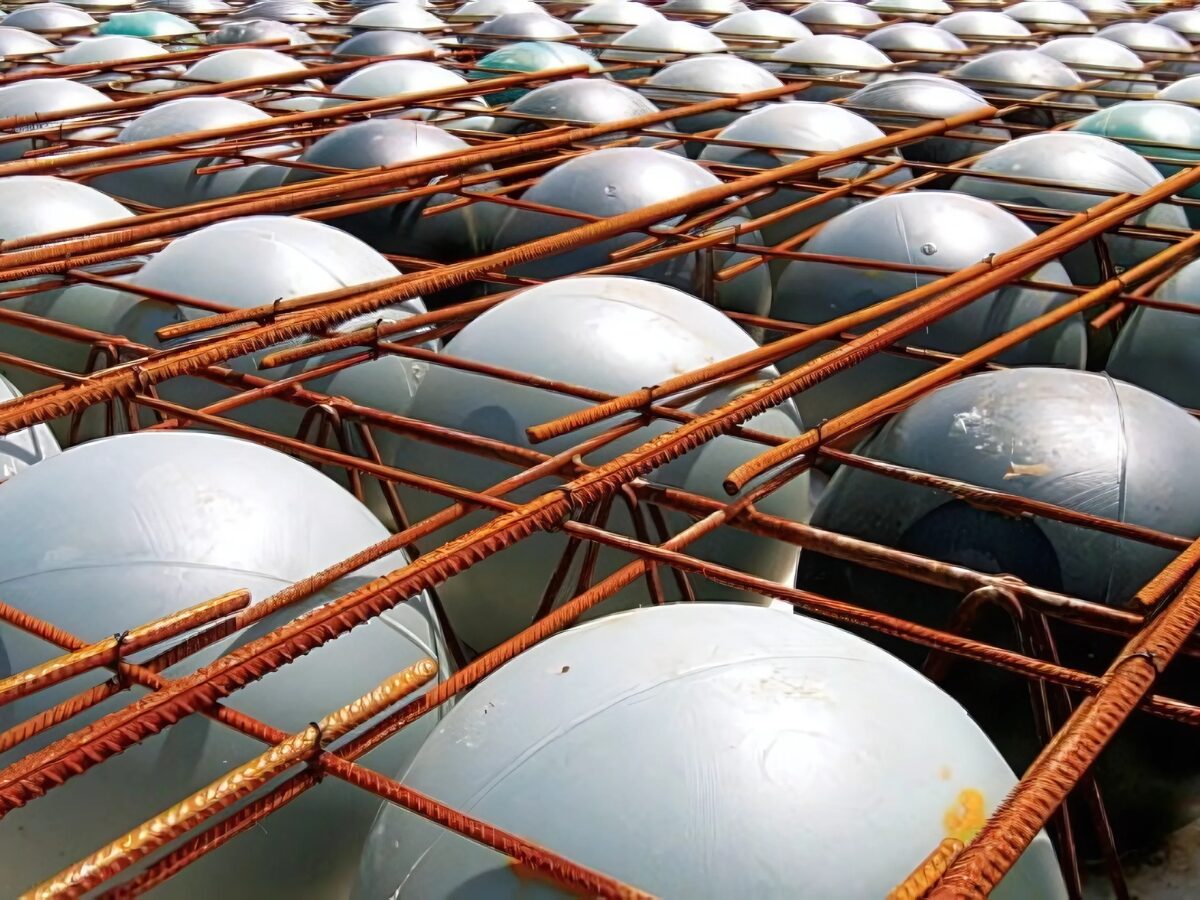
Created by a Danish engineer in the 1980s, the BubbleDeck slab emerges as an efficient and sustainable alternative to traditional slabs.
An innovative system that combines sustainability, lightness, and structural efficiency has been gaining prominence in the civil construction sector: it is the BubbleDeck slab, a solution developed in Europe that promises to optimize resources and modernize architectural projects.
By using recycled plastic spheres inside, the technique aims to reduce concrete consumption, providing lighter and more environmentally responsible constructions.
Although it did not win the innovation competition for which it was created, this slab has already collected awards and is becoming an interesting alternative for projects that require material rationalization.
-
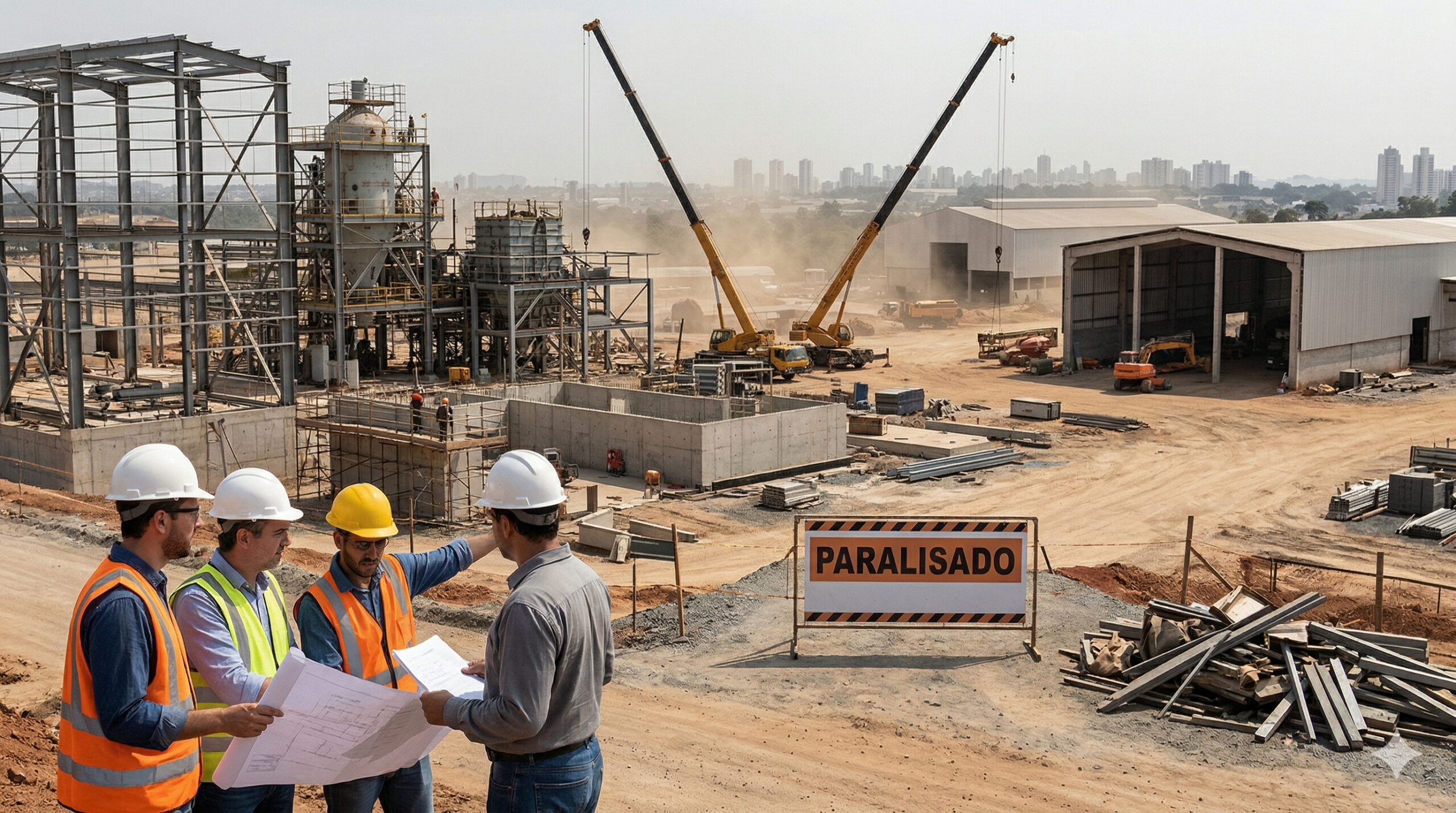
The lack of welders, electricians, and operators becomes a structural threat in 2025, with the construction industry and manufacturing already suffering from delays, cost pressures, and labor shortages in Brazil.
-
Brazil and Paraguay are just 46 meters away from a historic union on the bioceanic bridge that promises to revolutionize trade between the Atlantic and the Pacific.

-
With 55 km over the sea, a cost of US$ 20 billion, and enough steel to build 60 Eiffel Towers, China’s largest project has connected Hong Kong, Zhuhai, and Macau in a colossal bridge that defies the logic of engineering.

-
A trick with joint compound transforms a Styrofoam ceiling into a plaster-like ceiling: leveled panels, wires and mesh at the joints, sand, paint, and change the environment while spending little today.

What Is the Origin of the BubbleDeck Slab?
The BubbleDeck slab was conceived during an initiative promoted by the Danish government in the early 1980s, aimed at identifying construction solutions that were simultaneously economical, ecological, and viable on a large scale.
Engineer Jorgen Breuning developed the concept while participating in a competition that encouraged sustainable ideas for civil construction.
Although it did not win the competition, Breuning’s proposal attracted attention for its practical and ecological approach, becoming an international reference in structural engineering.
Today, the system is already used in various countries and is beginning to attract the interest of Brazilian professionals.
How Does the BubbleDeck Slab Technology Work?
This structural solution consists of a composite slab where spheres made of recycled plastic are placed between metal meshes, exactly in the areas of the slab where concrete does not play an essential role in terms of mechanical resistance.
As a result, unnecessary use of concrete in these zones can be eliminated without compromising the safety of the structure.
The concept is similar to ribbed slabs, which also seek to remove material in less stressed areas.
In the case of the BubbleDeck slab, the difference lies in replacing concrete with recycled spheres, which provides weight relief and sustainability gains.


What Is the Importance of Plastic Spheres?
Although they do not directly contribute to the structural resistance, the spheres play a fundamental role: occupying the space that would otherwise be filled with concrete. This allows for a significant reduction in the amount of material used.
These spheres are produced from recyclable plastic waste, and their color can vary according to the type of repurposed material.
They are designed according to the required thickness for the slab and the expected loads in the project. Their installation is done between the upper and lower layers of the metal reinforcements.
What Are the Available Construction Formats?
The BubbleDeck slab can be executed in different ways, depending on the construction method adopted:
Modular System: Involves the use of temporary molds and application of concrete in two stages on-site.
Pre-Slab: In this model, concrete is poured all at once, without the need for additional forms.
Pre-Fabricated Panels: Produced in an industrial environment, these panels arrive on-site ready to be positioned and integrated into the structure.
Each method offers specific advantages in terms of speed, quality control, and project adaptation.
What Benefits Does the BubbleDeck Slab Offer?
1. Reduction in Material Consumption
The main advantage of the system is cost savings. Since concrete is used only where structurally necessary, there is a significant decrease in the use of cement, steel, and supports, which directly reflects in lower construction costs.
2. Greater Design Freedom
The technology allows for the creation of larger spaces with fewer intermediate columns, enabling the execution of large spans without resorting to more complex techniques like prestressing. This is especially useful in commercial, institutional, and industrial constructions.
3. Lighter Structure
By eliminating a significant amount of concrete, the BubbleDeck slab can be up to one third lighter than a conventional slab. This weight reduction implies less robust foundations and may represent savings across the entire structural chain.
4. Environmental Sustainability
The use of recycled plastics and the lower CO₂ emissions associated with concrete production make the system environmentally advantageous. The technology has already received international recognition for its contribution to sustainable construction and is considered a solution with low environmental impact.
What Challenges Limit the Application of the BubbleDeck Slab in Brazil?
Despite all its benefits, the adoption of the BubbleDeck slab still faces obstacles in the national scenario.
Lack of Local Regulations
As it is a solution still little disseminated in Brazil, there are no national technical standards specifically addressing this technology. This forces engineers to rely on international regulations to design safely, which can create insecurity in certain contexts.
Need for Technical Qualification
The correct application of the BubbleDeck slab requires specific training. Investing in professional education is essential to ensure the proper execution of the technology and compliance with project parameters.
Supply Logistics
The manufacturing and distribution of plastic spheres depend on a supply chain still developing in the country. It is necessary to count on suppliers who can produce the plastic elements in the required dimensions and characteristics, which may pose an initial challenge in medium and large-scale projects.
Is the BubbleDeck Slab Viable for the Future of Brazilian Construction?
The answer is yes, as long as technical and logistical barriers are gradually overcome. The BubbleDeck slab offers economic, environmental, and functional advantages that make it a strategic option for modern civil construction.
With the advancement of regulations and the growth of the recyclable materials market, this solution has the potential to become increasingly common in Brazilian projects, especially those seeking innovation with environmental responsibility.








Seja o primeiro a reagir!