





 Portuguese
  English
  Spanish
  6 min of reading
  0 comments


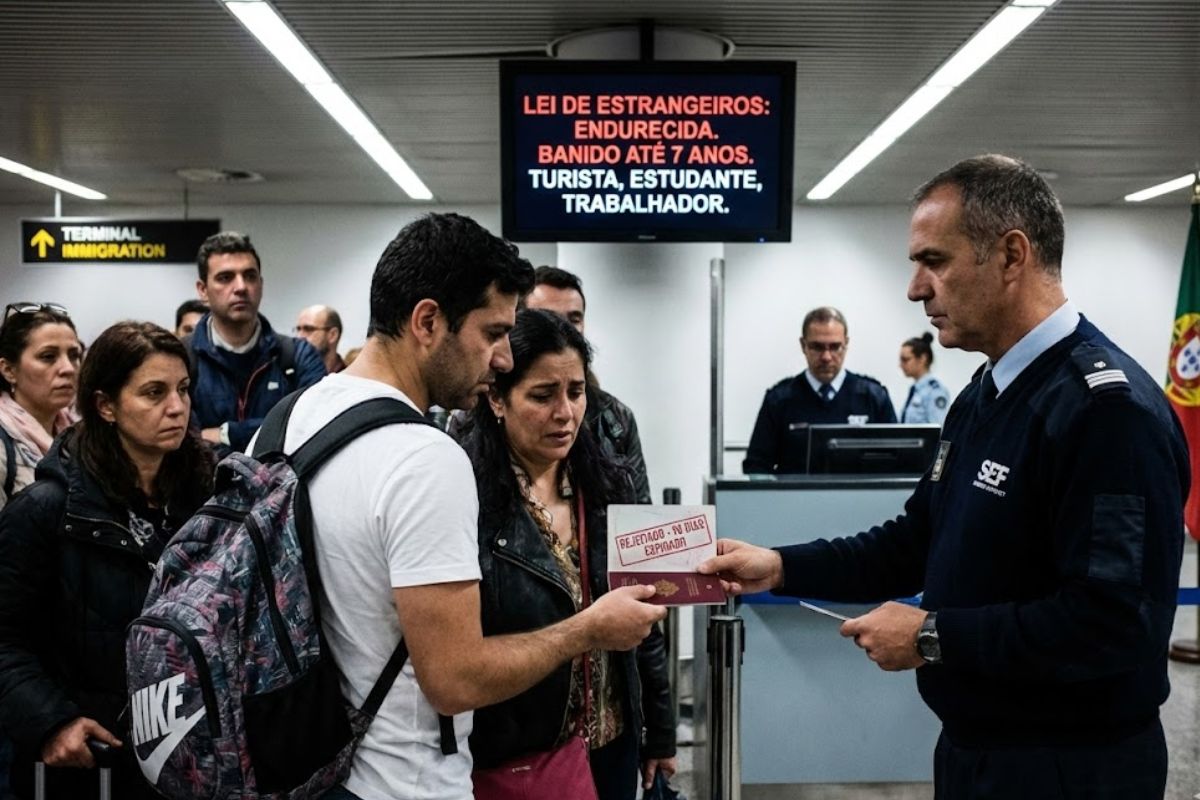
Update to the Foreigners Law, Published in October, Allows Portugal to Block New Visas and Regularizations for Up to Five Years, or Seven in Cases of Security Risk, Affecting Tourists, Students, Workers, Families and Companies Amid a Record Number of Immigrants and Backlogged Processes Due to Documentary Failures, Ignorance of the Rules
Portugal has entered a new phase of immigration policy following the update to the Foreigners Law, published in October, which toughens penalties for those overstaying 90 days in an irregular situation. According to the portal VEJA, published in December 2025, it raised an alert among immigrants, tourists, students, and companies living or intending to live in the country. The legislation, considered one of the strictest since 2007, turns delays that were previously seen as mere bureaucratic problems into a concrete risk of being banned from obtaining new visas.
Those who remain irregular for more than 90 days may be prevented from obtaining new visas for up to five years, extending to seven if there are indications of threats to public order or security. In a scenario where, according to the OECD, more than 138,000 immigrants arrived in the country in 2024, the Public Security Police estimates that tens of thousands are already in an irregular situation, often due to documentary failures, ignorance of the rules or administrative delays, which increases the potential impact of the change in Portugal.
What Changed in the Foreigners Law in Portugal
In practice, the update to the Foreigners Law redefines the consequences of staying in Portugal beyond the authorized period. The rule published in October establishes that any stay beyond 90 days in an irregular situation may result in a blocking of visa or regularization requests for up to five years, which includes new processes and future attempts for legal entry into the country.
-
Brazil Ignores Trump’s threats to BRICS, Buys 42 tons of gold and reduces the Dollar’s share by 6.45% in international reserves.

-
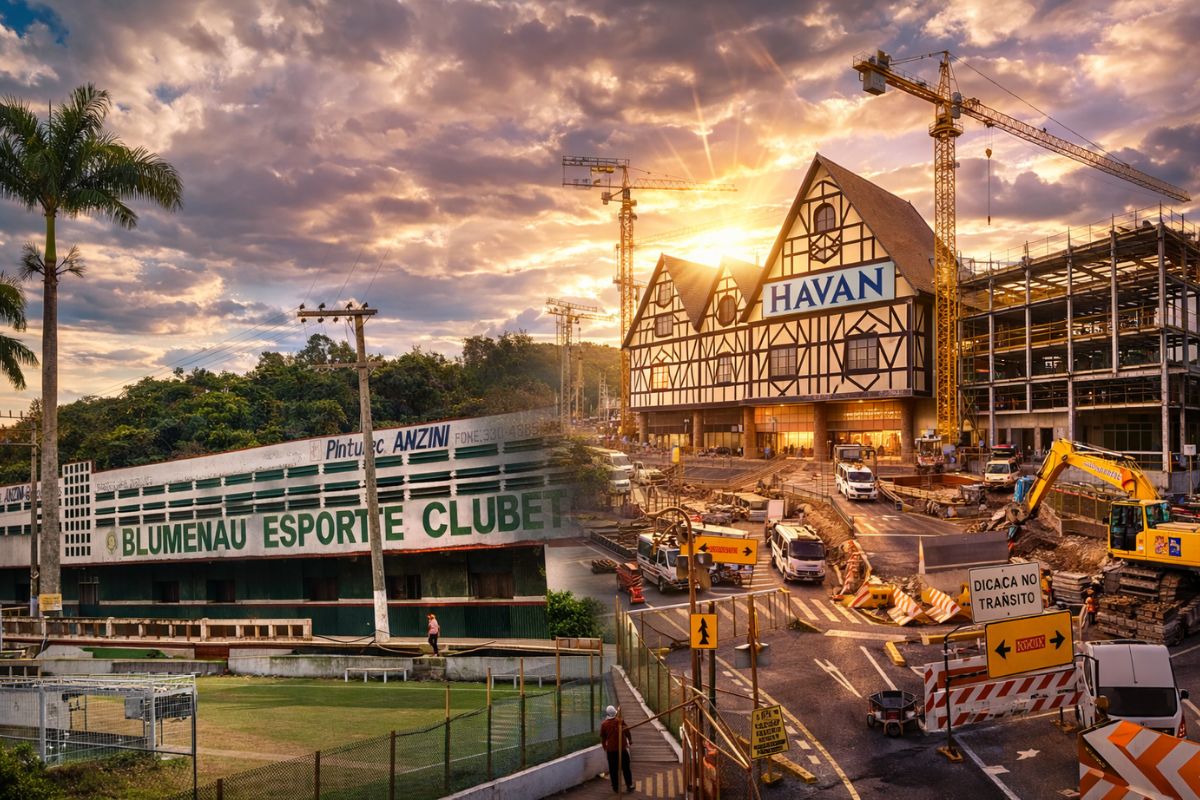
Havan buys historic football land in Blumenau for a million-dollar amount protected by a confidentiality clause and is already planning to change even the layout of streets to build a megastore in half-timbered style costing 80 million reais.
-
Mercado Livre “opens the vault” and announces a record investment of R$ 57 billion in Brazil in 2026, a value 50% higher than the previous year, with an expansion plan that includes 14 new logistics centers, totaling 42 units in the country and hiring an additional 10,000 employees.

-
How investment in technology can revolutionize the national economy and enhance industrial gains, according to a study that highlights the direct impact on productivity, innovation, and wealth retention within Brazil.


The text also provides for a stricter threshold for cases classified as sensitive by the State. If there are indications of threats to public order or security, the blocking period increases to seven years, making the punishment one of the most severe recorded since 2007 in Portuguese immigration policy.
This framing can affect not only individuals under investigation but also profiles that come to the attention of authorities for internal security reasons.
Migration specialists remind us that until now, part of the delay situations was dealt with more leeway for regularization throughout the administrative process.
With the new regime, the risk of turning a simple oversight of deadlines into a prolonged departure from Portugal significantly increases, necessitating a change in behavior for those already in the country or planning to enter.
How the Five or Seven-Year Block Works in Practice
The central point of the change is the 90-day deadline. Once a person exceeds this limit in an irregular situation, they run the risk of being unable to request any visa or regularization process for years.
This applies both to those who entered Portugal legally and let their permit expire, as well as to those who never formalized their situation.
According to the new configuration of the law, the block can affect different types of requests: student visa, work residency permit, family regularization, or even new attempts for entry after returning to the country of origin.
In cases related to public safety, the ban for seven years effectively functions as a long-term removal from Portuguese territory.
Lawyer Luciane Tomé, a specialist in Portuguese nationality, summarizes the impact of the deadline: “The 90-day period is not symbolic. Those who exceed it may be unable to request any visa for years,” she states.
Her reading reinforces the idea that the new legal framework transforms the management of dates into an essential condition for anyone planning to stay in Portugal.
Tourists, Students and Workers Targeted by New Rules
Although many associate the issue with classic irregular migration, the new Foreigners Law also affects tourists, students, workers, and families awaiting administrative decisions. Tourists who arrive with the intention of a short stay but extend their stay without formalizing their situation may exceed the 90-day deadline and fall directly into the visa blocking category.
In the case of students, the risk particularly arises for those relying on the renewal of permits or a change in visa type.
Students who believe they are protected simply because they initiated a process, without tracking deadlines and required documents, may belatedly discover that they are irregular in Portugal, paving the way for a temporary ban on new applications.
Workers and families also feel the weight of the new scenario. Hired professionals awaiting permit renewal, spouses in family reunification processes, or individuals transitioning between visa types face a reduced margin for bureaucratic errors.
Any documentary failure or delay in response can push the immigrant into irregularity and, from there, activate the clock of critical 90 days.
Companies in Portugal at Risk with Irregular Employees
The new legislation does not target individuals alone. Companies that employ workers in irregular situations now face tangible consequences, going beyond public relations risks.
Employment contracts may be suspended, and the professional may lose the right to exercise their activity, which directly affects operations in sectors that rely on foreign labor, such as tourism, construction, technology, and services.
Additionally, employers who tolerate or fail to detect the irregularity of their employees may be held accountable by the Portuguese authorities.
This compels companies, offices, and startups to review internal human resources practices, check the validity of residence permits, monitor renewal deadlines, and document each step of immigration processes.
Ignoring these precautions in Portugal now poses risks not only for the worker but also for the company itself.
The impact is greater for organizations that hire large numbers of foreigners or depend on global talent, such as technology hubs, universities, and specialized service companies.
In these structures, a documentation management error can lead to the temporary loss of key professionals, in a context where visa blocking hinders quick replacements with the same profile.
Record Number of Immigrants, Backlogged Processes and Increasing Vulnerability
The change occurs at a time of intense pressure on the immigration system. More than 138,000 immigrants arrived in Portugal in 2024, according to the OECD, solidifying the country as one of the most sought-after destinations in Europe.
At the same time, the Public Security Police estimates that tens of thousands of foreigners are currently in irregular situations, often due to reasons beyond individuals’ direct control.
Documentary failures, difficulty accessing reliable information, long queues for appointments, and delays in administrative responses create an insecure environment.
Immigrants who believed they were protected while awaiting renewal or regularization decisions now discover that merely staying in the country beyond the deadline can lead to long-term blocking.
The result is a climate of apprehension in foreign communities and among families planning to settle in Portugal.
How Immigrants Can Protect Themselves from the New Rules in Portugal
In light of the new rigor, the guidance from specialists is clear. Those living in Portugal or intending to travel need to closely follow all deadlines related to visas, residency permits, and regularization processes.
This includes noting expiration dates, keeping proof of entry and exit, tracking application protocols, and not assuming that opening a process alone guarantees automatic protection.
Another key recommendation is to seek specialized guidance whenever there is a doubt. Lawyers, immigrant associations, and support entities can help interpret the specific situation of each person, identify risks, and indicate the best time to renew documents or adjust the type of permit.
Given the possibility of blocking for five or seven years, every decision about staying in Portugal becomes strategic.
Finally, those planning to migrate from their country of origin need to adjust their expectations. It is essential to understand that Portugal is tightening the squeeze on irregular stays and that relying on “workarounds” or bureaucratic improvisations can be costly.
Preparing documentation in advance, simulating scenarios, and allowing for margins of safety in administrative processes has become an indispensable part of migration planning.
In your opinion, is Portugal merely protecting itself with the new Foreigners Law or has it gone too far in tightening the rules for immigrants and companies?









-

-

-

4 pessoas reagiram a isso.