





 English
  Francês
  Alemão
  Italiano
  Japonês
  Norueguês
  Portuguese
  Spanish
  3 min of reading


Biogas Plants May Soon Be Negotiated Equally in the Natural Gas Market, Increasing Sugarcane Production and Its Inputs for Consumption Also in the Export Market
Brazil has the potential to produce between 19Mm³ / d (million cubic meters per day) and 43Mm³ / d of biogas from sugarcane derivatives (vinasse and filter cake) by 2030, according to projections. Presented on Thursday (05) at a biogas forum by the director of oil and gas research of the energy research company EPE, Heloísa Borges, the higher value is more than double the natural gas that the country imports from Bolivia (19Mm³ / d).
Borges estimates that Brazilian sugarcane production could grow 1.5% per year over the next decade, reaching 802Mt by 2030. In the same period, the production of vinasse and filter cake may reach 471 billion liters and 33Mt, respectively, she stated.
One of the potential markets for biogas derived from sugarcane is the agricultural sector, which may demand up to 11.4Bm³ (billion cubic meters) by 2030 – equivalent to 6.3Bm³ of biomethane, which can replace the same amount of diesel.
-
While Russia dominates the global wheat market, Brazil emerges as an unexpected competitor in the Cerrado, offering grain available in July and August when stocks in the Northern Hemisphere are at their lowest point of the year.

-
China returned almost 20 Brazilian ships with soybeans, but now everything could change: the country that buys 80% of the grain is considering relaxing regulations after impurities held up shipments of thousands of tons and caused million-dollar losses.
-
Chinese giant worth nearly R$ 4 billion that manufactures cables for electric cars, solar energy, and robotics wants to open a factory in SC.

-
Many employers do not know, but the law guarantees domestic workers a 25% increase in salary during trips, 50% for overtime, 20% for night shifts, and 17 additional benefits that can lead to labor lawsuits if not paid.


The amount represents between 45% and 70% of the estimated diesel consumption of the sector for 2030.
“The agricultural sector consumes between 12% and 15% of national diesel demand, and Brazil is a net importer of this fuel,” said Borges.
According to EPE, Brazil produced 294 tons of oil equivalent to biogas in 2019, which represented 0.09% of the total energy supply and 2% of the country’s electricity generation.
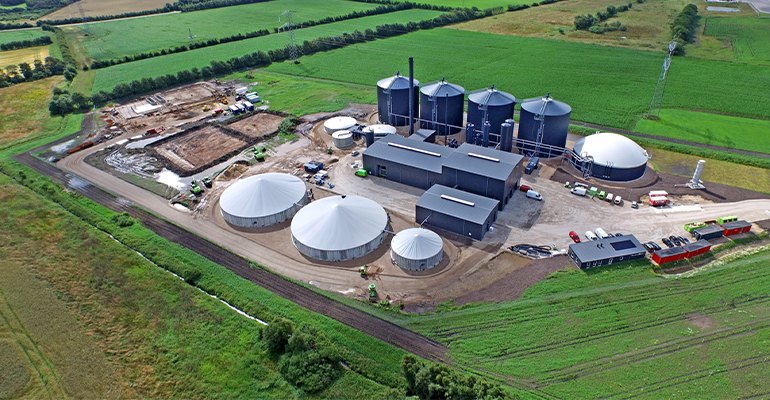
Last year, the country had 533 biogas plants in operation, being restructured or refurbished, with a combined production capacity of 3.8Mm³ / d. The plants are mainly concentrated in the southeast and south regions.
The production units that replace diesel with biogas will have the right to increase their environmental energy efficiency and acquire decarbonization credits, known as CBIOs, through the federal program RenovaBio, José Mauro Ferreira, Secretary of Petroleum, Gas and Biofuels of the Ministry of Mines and Energy ( MME ), said at the event.
A gas bill, which is expected to be voted on soon in the Senate, stipulates that any type of gas that does not fit the definition of natural gas will be entitled to equal treatment as long as it meets the quality specifications of the regulatory agency for oil and gas ANP, Ferreira said.
“This allows biomethane to be traded in the natural gas market,” he added.
The “Rural Pre-Salt”
In October, Brazil became home to the world’s largest sugarcane biogas plant. Located in the state of São Paulo, the Geo Energética da Raízen has the capacity to generate 138,000 MWh / year, enough to supply 62,000 households.
The head of energy transition and renewables at the company, Raphaella Gomes, said that in the future the plant will be more than a plant for sugar, biogas and will become an integrated refinery, utilizing ethanol, bioenergy from sugarcane bagasse, biogas, and cellulosic ethanol, among other inputs.
“From time to time we will reach biomaterials, biochemicals. It’s a big shift from what we do today with fossil fuels to biomass,” said Gomes, adding that biogas is like Brazil’s “rural pre-salt,” but closer to consumers.
Borges, Ferreira, and Gomes participated in the 7th edition of the biogas forum of the local gas association Abiogás.






Seja o primeiro a reagir!