Portuguese
  Spanish



Biogas, “It’s the Country Pre-salt”, Says Minister of Mines and Energy, Referring to the Oil and Natural Gas Reserve Found by Petrobras
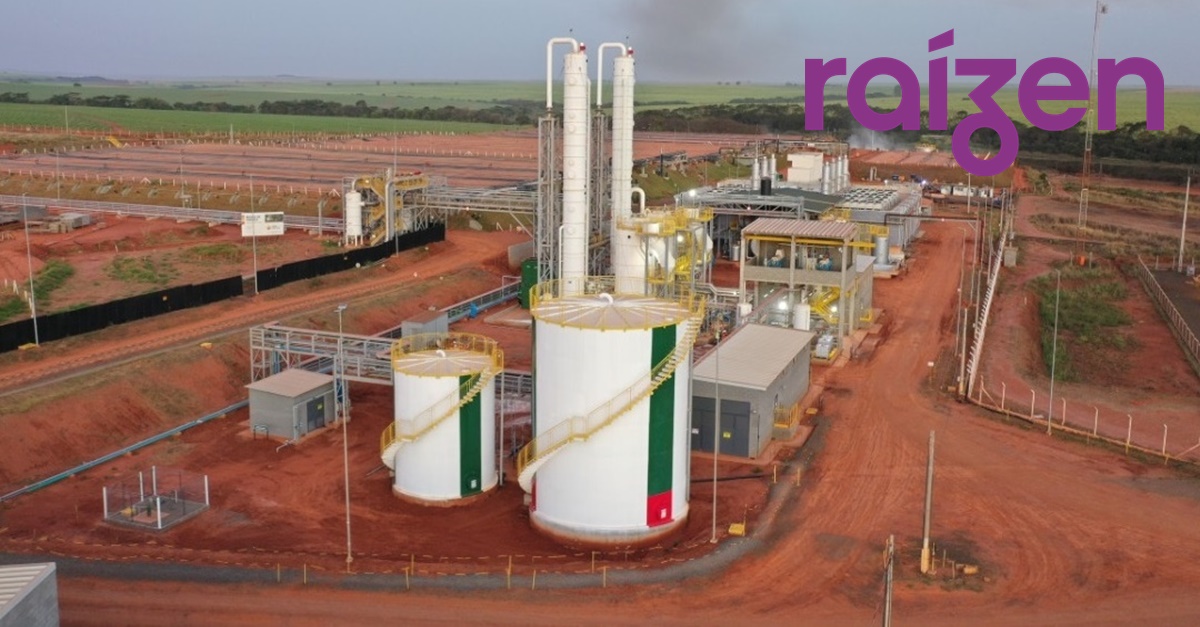
The largest biogas plant using agricultural raw materials in the world was inaugurated last Friday (16) by Brazil’s giant ethanol producer, Raízen. The facility was dubbed the ‘country pre-salt’ by the Minister of Mines and Energy, Bento Albuquerque, who attended the ceremony. Take advantage and subscribe, as Raízen opened positions for candidates without experience seeking their first job!
Read Also
- Andrade Gutierrez Construction Company Calls for Vacancies in Civil Construction Works for Professionals with Incomplete Elementary Education, High School and Higher Education
- Offshore Recruitment and Selection in Macaé to Work on Petrobras Platforms, Demand for Job Vacancies for Middle School Level Today
- Looking for a Job? Danone Calls for Candidates Without Experience Newly Graduated in All Areas for Intern and Trainee Positions; Salary up to 6.2 Thousand Reais!
Located in Guariba (SP), 340 kilometers from São Paulo, Raízen’s biogas plant based on by-products of sugarcane is capable of producing electricity to supply a city of 150,000 inhabitants for a year. The plant estimates a production of 138,000 megawatt-hours (MWh) starting from the 2021/22 harvest, with a start planned for April.
According to Raízen, of the total energy generated, 96,000 MWh will be sold under a contract negotiated in an auction held in 2016, two years before the start of the project’s construction. The remainder may be traded in the free market or in other contracts.
-
Brazil to Introduce B16 Diesel with Increased Soybean Oil Content for Trucks by 2026
-
Brazil’s July Bolsa Família Payments May Include Extra $150 and $50 for Families with Children, Pregnant Women, and Updated CadÚnico Registration

-
Brazilian Woman Buys €1 House in Sicily, Clears 50 Truckloads of Debris, and Transforms Ancient Ruin into Inspiring Life Project by 2026

-
Havan Competitor Expands in Brazil with 170 Stores, Offering Everything from Stationery to Asian Food and Focusing on Affordable Products to Attract Shoppers



The fuels used for energy generation will be vinasse and filter cake, originating from the sugarcane fields, which will be utilized throughout the harvest, while the filter cake will be used during the off-season. The annual processing of sugarcane at the plant in Guariba is 5 million tons.
In the production process, bacteria will convert the by-products into biogas. Then, the produced gas is transported through pipelines to generators, where it will be burned and converted into electricity.
Country Pre-salt
The hidden treasure in Brazil’s interior, referred to as ‘country pre-salt’ by the minister, involves biogas, a renewable and abundant energy source produced from agricultural waste and has the advantage of being near productive hubs scattered across the country, but still under-explored.
The Minister of Mines and Energy, Bento Albuquerque, labeled the operation as ‘country pre-salt’, alluding to the oil and natural gas reserve found by Petrobras more than seven thousand meters below the Brazilian seafloor, in 2006.
“Biogas and biomethane, besides being used for electricity generation, can also replace diesel oil used in buses, trucks, and agricultural machines. Or even, in the case of biomethane, being generated in the gas pipeline network (…) It’s the country pre-salt,” he stated.
In Brazil, 521 biogas plants were operational in 2019, according to a survey by the Brazilian Biogas Association. Of these, most generate energy through pig farming, followed by landfill and sewage waste, and also from sugarcane derivatives, such as straw.