





 Portuguese
  English
  Spanish
  8 min of reading
  1 comment


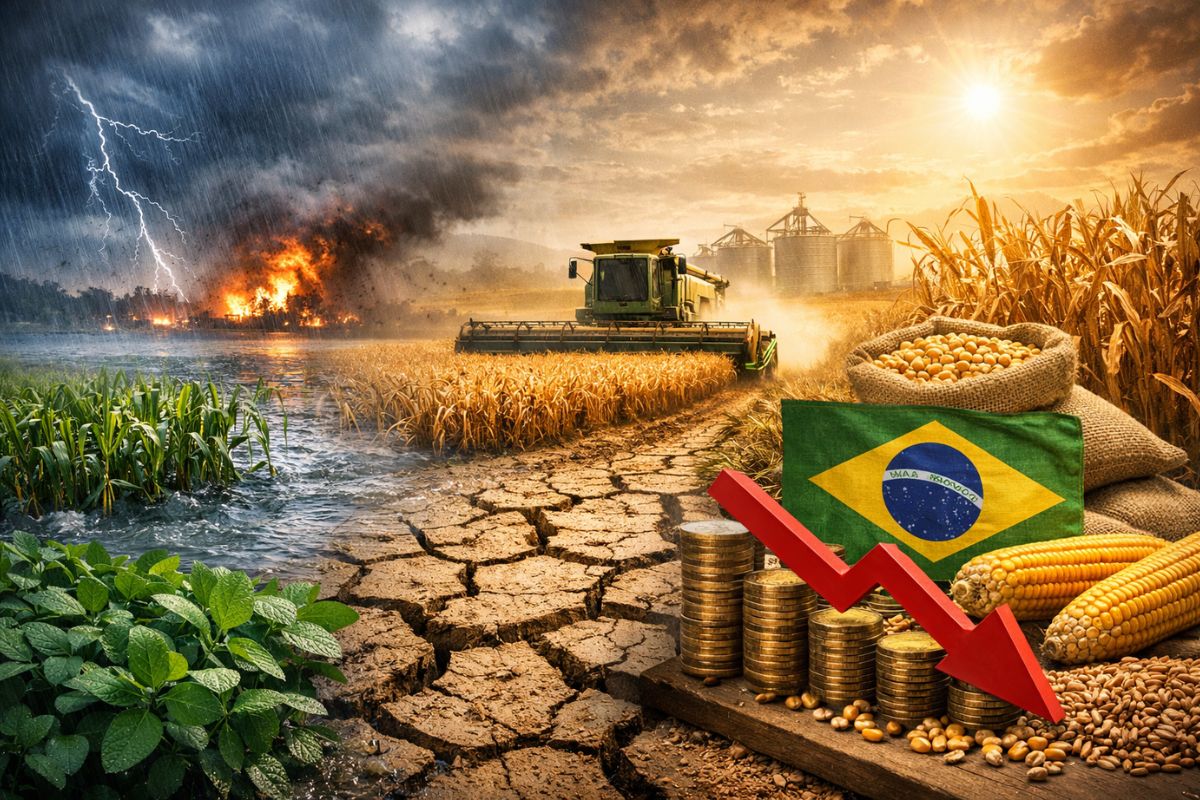


With Brazil Heavily Dependent on Commodities and Regional Activities, the Brazilian Economy May React Differently to a Possible El Niño, Increased Rainfall, and a Less Severe Winter, Altering Harvests, Exports, Services, Local Reconstructions, Food Security, and Costs Felt in the Daily Lives of Brazilian Families.
The Brazilian economy enters 2026 looking to the sky with the same attention dedicated to the market. When rain, temperature, and ocean circulation change, the impact is not restricted to the fields: it reaches production, shipments, domestic supply, and the prices of foods consumed daily. This is why climate has ceased to be merely an environmental issue and has come to occupy a central space in the country’s economic reading.
This weight is not theoretical. In 2025, the country’s economic activity grew by 2.3%, with agriculture advancing by 11.7% over the year, in a performance also favored by climatic conditions favorable for crops such as corn, orange, cotton, and wheat. The decisive point for 2026 is simple: when the weather helps, the pace accelerates; when it hinders, losses spread from the producer to the consumer.
Why Does Climate Have Such Power Over the Brazilian Economy?
The relationship between climate and economic activity is especially strong in Brazil because a significant part of income generation, export flow, and domestic supply depends on agribusiness. Soybeans, corn, wheat, coffee, and other commodities do not just represent large-scale production: they support transportation, storage, marketing, and shipping chains. When a harvest goes well, the positive effect is not contained within the farm gate.
-
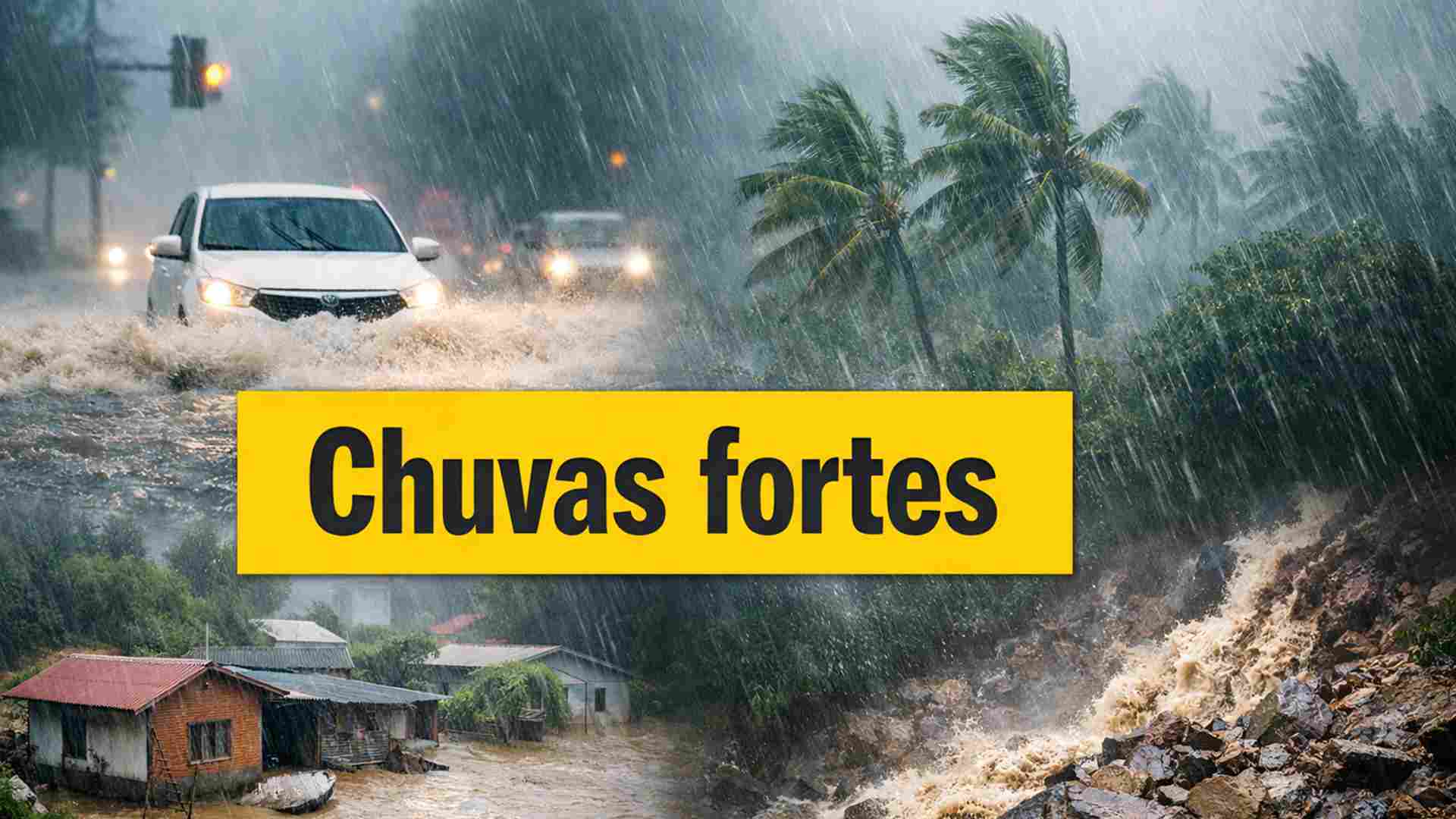
Rain gains strength in April, potentially exceeding 150 mm, placing the North, Northeast, and the coasts of the South and Southeast at the center of the heaviest forecast of the week.
-
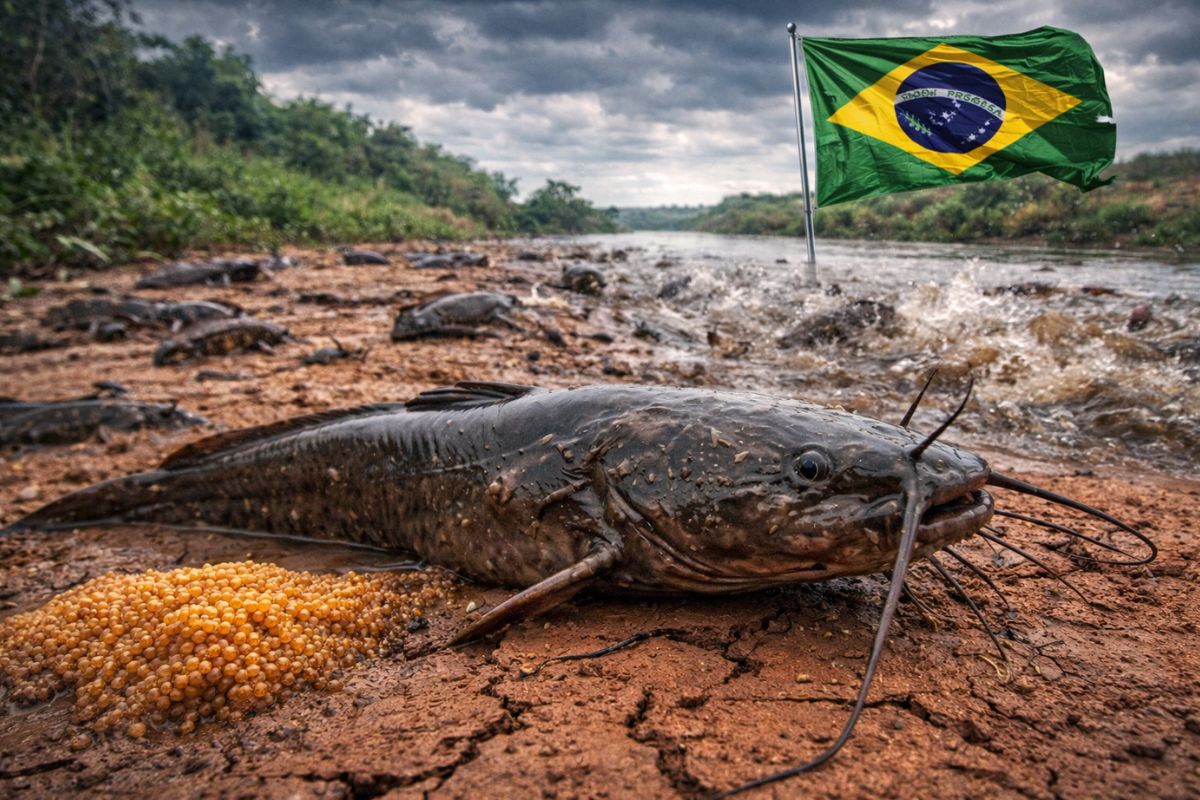
A fish that survives out of water, crawls on land until it finds another river, and whose female lays 80,000 eggs at once is infesting rivers and lakes in Brazil, and no one can stop this invasion.
-
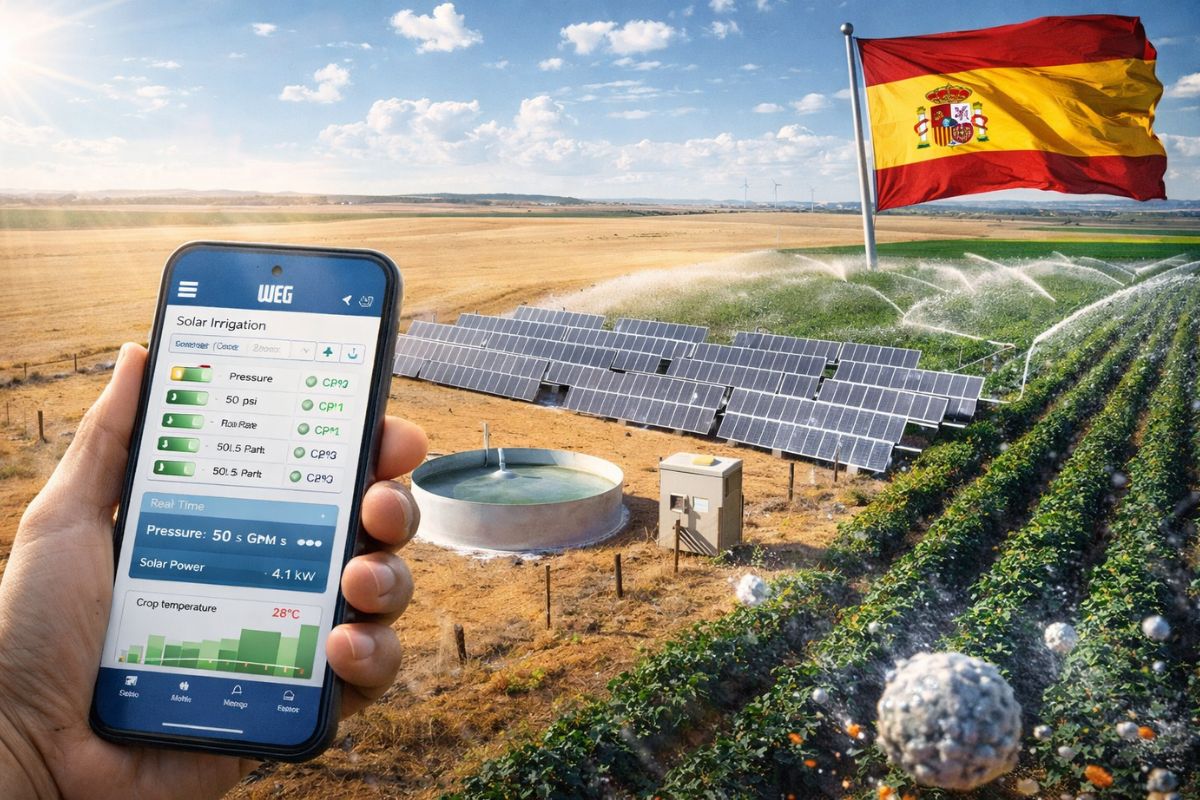
WEG took its technology to Spain to create a solar irrigation system that operates independently without needing an electrical grid, and now farmers control everything remotely via their mobile phones.
-
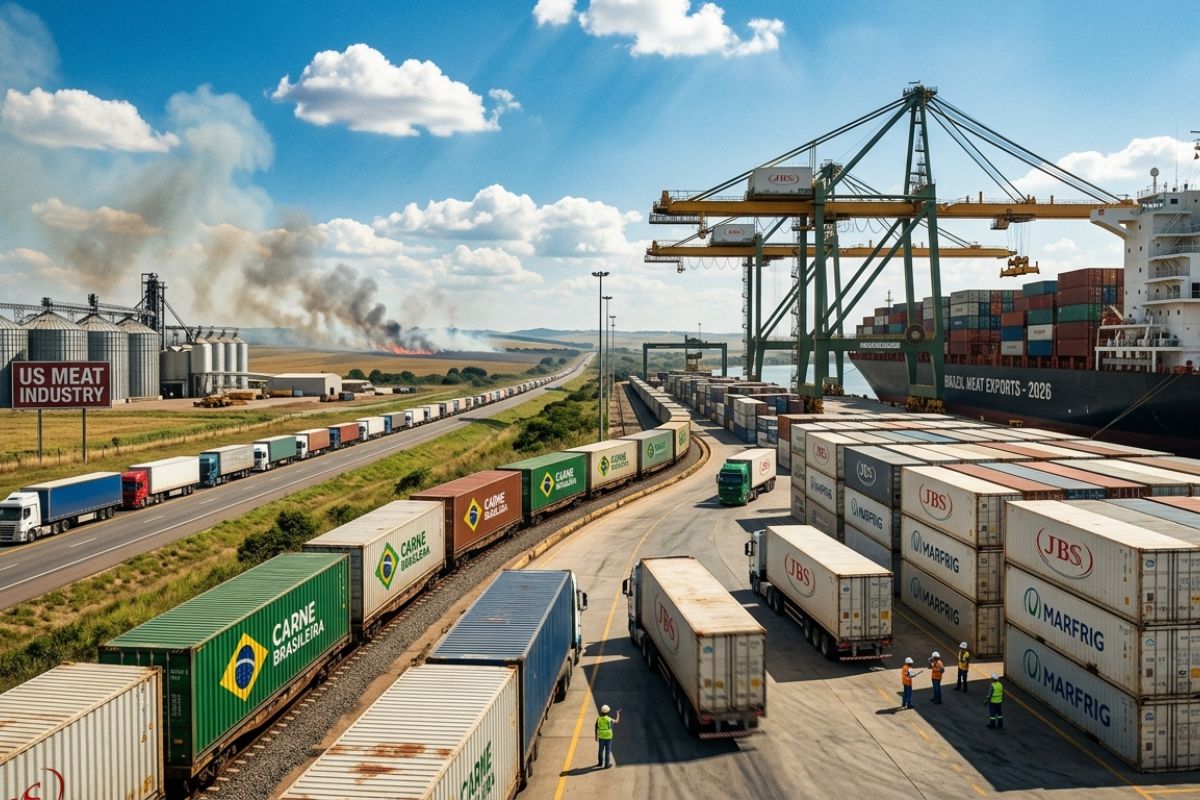
The US faces a meat crisis with fires, pests, and strikes, consumption rises and supply falls to the lowest level since 1952, creating a billion-dollar opportunity for Brazilian exports to grow in 2026.

This helps to understand why the Brazilian economy can quickly feel any significant climatic change in 2026. If the country produces more, exports more, and maintains more balanced prices, the momentum spreads across different sectors.
However, when there is a drop in productivity, excessive rain, or unusual temperature changes, pressures arise on supply, logistics costs, regional income, and consumption. In this context, climate acts as a factor that accelerates or slows down entire sectors.
The economic assessment also considers the fact that Brazil has commodities as one of its main external fronts. In an international scenario that may favor Brazilian exports, the performance of the agricultural sector gains even more importance. However, this potential relies on one basic condition: production needs to respond well. Without favorable weather, even a positive external environment loses some of its strength.
For this reason, 2026 should not be seen merely as another agricultural year. It may be a period in which the Brazilian economy will feel more clearly how weather behavior interferes with growth, income, and even the perception of the cost of living. What happens in the fields, in cities hit by storms, or on the coast affected by rains can reach, sooner or later, the rest of the economy.
El Niño, Warmer Winter, and the Risk to Strategic Crops

Between June and August 2026, the Equatorial Pacific Ocean is expected to undergo warming, creating the possibility for El Niño’s occurrence. The likelihood of the phenomenon gradually increasing may exceed 60% between August and October.
At the same time, the expectation for Brazil is a milder winter, warmer than in previous years, with an increase in rainfall frequency. This set alone is enough to put the production sector on alert.
The effect is not uniform across crops. Some crop yields may respond differently, with distinct outcomes for fruits and grains. Products like apples, blackberries, and blueberries fall into this map of climate sensitivity, but wheat stands out as one of the most delicate points.
This occurs for a very direct reason: wheat is not only a commodity of production interest but also affects daily consumption, price, and quickly shows its impact on families.
If temperature affects wheat production, the Brazilian economy may feel this impact more clearly in everyday life.
Unlike crops whose fluctuations may seem distant for some of the population, wheat is closely related to dietary routines and tends to attract attention when there are changes in supply and price. It is at this moment that a climatic phenomenon stops being an abstract news item and becomes supermarket, bakery, and kitchen table conversation.
In the case of corn, the signal is even more strategic. In 2025, corn gained prominence due to record exports and its significance in food and production chains linked to the external market. This demonstrates how much the Brazilian economy can gain when the weather favors production. However, it also reinforces the opposite side: if 2026 brings greater instability, key commodities for export may lose yield, increase operational costs, and reduce part of the expected momentum for economic activity.
When Extreme Rain Moves from the Climate Map into the Economic Activity Equation
The impacts are not limited to harvests. Extreme events in urban and regional areas disrupt work, commerce, the movement of people, services, and productive reconstruction. Minas Gerais experienced a dramatic example of this, with rains causing at least 72 deaths and requiring an emergency response.
The announced package for those affected, with early salary bonuses and extra unemployment insurance payments, is expected to mobilize around R$ 175 million in benefits. This data shows that a climate disaster also reorganizes public spending and immediate priorities.
However, the economic impact goes beyond relief efforts. When a city needs to be rebuilt, part of local productive energy is diverted to reconstruction, repair, and minimal resumption of activities. This slows down progress, delays business, compromises income, and impacts regional supply.
In such situations, the Brazilian economy first feels a localized shock, but not necessarily a small one. Depending on the productive weight of the affected area, the problem may extend beyond municipal borders and have broader repercussions.
Rio Grande do Sul had already shown, at another time, how climate disasters can alter the speed of economic recovery. The logic is similar: loss is not just material, as it also interrupts chains, raises recovery costs, and temporarily weakens activity. Every time a region stops to rebuild, someone stops producing, selling, transporting, or hiring.
Even when the national impact is not immediate, there is a very concrete regional effect. Reduced local supply, decreased economic circulation, damage to businesses, and pressure on infrastructure make up a scenario that tends to repeat whenever extreme rain destroys more than the urban system can absorb. In 2026, this risk needs to be monitored with the same seriousness reserved for agricultural projections.
São Paulo, Tourism, and the Silent Weight of Losses in Services
São Paulo also experienced a period of heavy rains since December, with 19 recorded deaths between December 10 and February 23.
Between late February and early March, the São Paulo coast faced at least three cities under a state of emergency decree. These episodes help to highlight an important point: the Brazilian economy does not only depend on agriculture to feel the climate; it also responds to what happens in services.
On the coast, productive activity is strongly linked to tourism. When heavy rain drives away visitors, disrupts travel, and compromises safety perception, the damage affects accommodation, food, local commerce, transport, and leisure. The impact appears in layers: first, movement declines, then revenue decreases, and then the region feels the effects on employment, consumption, and tax revenue.
This type of loss often receives less attention than an agricultural drop, but it is crucial for many regional economies. A season harmed by storms does not just mean fewer tourists; it means fewer occupied hotel rooms, fewer meals served, fewer contracted tours, and less income distributed among small businesses.
In areas where tourism is a central cog, excessive rain disrupts the flow that sustains much of the activity.
Therefore, when discussing climatic extremes and the Brazilian economy, it is a mistake to look only at agriculture. The services sector also counts, especially in regions with a strong reliance on seasonality, travel, and in-person consumption.
The climate affects both crop production and the movement of people, and both dynamics have real power to impact economic performance.
Food Prices, Food Security, and Infrastructure: Where Impact Reaches Faster
One of the most sensitive consequences of climate phenomena is the pressure on food security and food prices.
When natural disasters or significant changes in temperature and rainfall reduce production, hinder transportation, or disrupt supply, consumers tend to feel this effect more quickly. This is especially true for items frequently present in daily routines, such as wheat derivatives, but also for chains that depend on seasonal regularity and logistics.
The Brazilian economy, in this scenario, does not only feel a production shock; it also absorbs a change in the perception of the cost of living. When food prices rise, economic discussions cease to be technical and become domestic.
The impact enters family conversations, purchasing decisions, and the feeling of budget tightness. This is one of the points where climate intersects most clearly with daily life.
At the same time, there is the infrastructure front. Roads, bridges, and buildings can suffer significant damage in extreme events, requiring substantial investments in repair and reconstruction. This affects the transportation of goods, regional mobility, service delivery, and the speed of economic recovery.
It is not just about rebuilding what was lost, but about re-establishing the minimum conditions for activities to resume.
This is precisely why climatic extremes produce a chain effect. Rain may hit the city, but the reflection appears in commerce; temperature changes may affect agriculture, but the result appears in prices; damage to a road may seem local, but it impacts shipping and costs.
The Brazilian economy feels the climate because the climate intersects production, consumption, logistics, and income at the same time.
What 2026 May Reveal About the Pace of the Brazilian Economy
If 2025 showed how favorable conditions helped boost agriculture and, with it, the country’s growth, 2026 emerges as a test of economic sensitivity to a more uncertain climatic environment.
The possibility of El Niño, warmer winter, increased rainfall, and the recurrence of extreme events in specific regions create a scenario that demands constant attention. Brazil may even find support in a favorable external scenario for exports, but this does not eliminate internal vulnerability to weather.
In the end, the central question is not just whether it will rain more or whether the winter will be milder. The question that truly matters is how these changes may reshape production, prices, services, and regional reconstruction throughout the year.
It is at this point that climate ceases to be a backdrop and begins to act as a concrete economic variable, influencing everything from agribusiness to tourism, from ports to local markets, from exports to daily bread.
In your region, have you noticed excessive rain, unusual heat, or changes in tourism and food prices affecting daily life?
Share in the comments what is happening in your state and which sector you think may feel these effects the most in 2026.







O que podemos fazer atualmente é aguardar a confirmação se realmente se confirmará a atuação do fenômeno climático El Nino, caso se confirme haverá mudanças em toda produção alimentar que temos que estar preparados pra enfrentar essas mudanças