





 Portuguese
  English
  Spanish
  4 min of reading
  1 comment


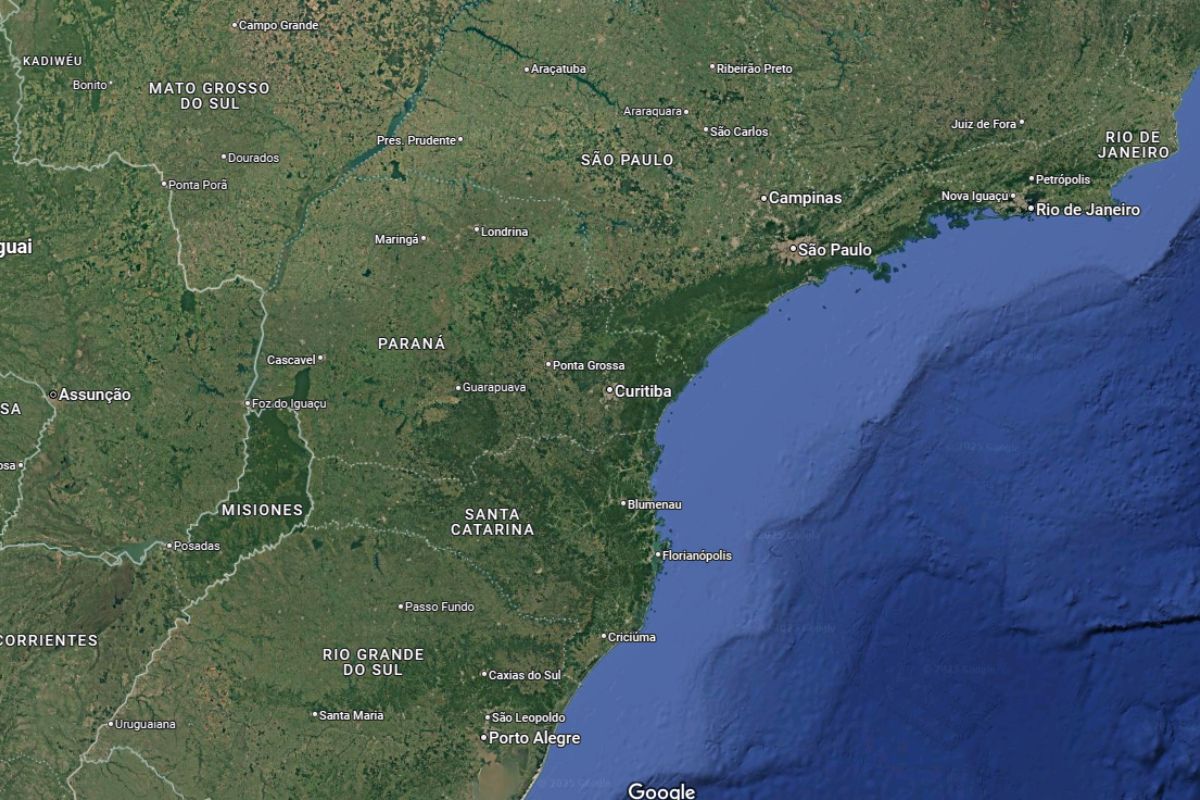

Paraná and Santa Catarina Experience Economic and Population Boom, but Face a Water Crisis, Pressure on Services and Infrastructure, Raising Alerts About a Challenging Future and the Possibility of a Serious Systemic Crisis.
The states of Santa Catarina and Paraná stand out for their strong economic and demographic growth. Driven by robust tourism and significant migratory flows, both from foreigners and Brazilians, these states are warming up the economy, increasing revenue and jobs, as seen in February 2025. However, this progress masks concerning signs and a new crisis.
The population density and economic activity exert pressure on natural resources and existing infrastructure. A severe water crisis is already affecting Paraná, compromising agriculture, industry, domestic supply, and Sanepar management, while rapid urban expansion, such as in Maringá, and pressure on health and education generate concern.
The Southern Magnet
Santa Catarina has solidified its position as a tourist destination. In January 2025, it received 198,720 international tourists, a 71% increase from January 2024 (116,209). This performance led the state, in February 2025, to the second highest tourist growth in the country (13.7%). Research by Fecomércio SC (summer 2025) showed a predominance of visitors aged 41 to 60 years (54.4%) and an average expenditure per group of R$ 9,349 (+41%). Argentinians made up 28.8% of the total (45.5% in Florianópolis), spending 35% more, driven by favorable exchange rates. However, this dependence signals vulnerability.
-
Larger than entire cities in Brazil: BYD is building a 4.6 km² complex in Bahia with a capacity for 600,000 vehicles per year, but the discovery of 163 workers in conditions analogous to slavery has shaken the entire project.

-
With an investment of R$ 612 million, a capacity to process 1.2 million liters of milk per day, Piracanjuba inaugurates a mega cheese factory that increases national production, reduces dependence on imports, and repositions Brazil on the global dairy map.

-
Brazilian city gains industrial hub for 85 companies that is equivalent to 55 football fields.

-
Peugeot and Citroën factory in Argentina cuts production by half and opens a layoff program for more than 2,000 employees after Brazil drastically reduced purchases of Argentine vehicles.


Paraná also stands out. In 2024, it experienced a 13% growth in the arrival of international tourists (over 894,000). February 2025 saw Paraná tourism lead growth in Brazil (+6.5% over January; +9.9% over Feb/2024). In the first quarter of 2025, Paraná welcomed over 426,000 international tourists (+18% vs the previous year), with 42% being Argentinians (179,000+) and 36% Paraguayans (154,000). Together, they represent 78% of visitors, highlighting interdependence and sensitivity to instabilities.
In Addition to Tourism, the States Attract New Residents

In Paraná, data from SISMIGRA (1st half of 2024) indicated 175,902 resident migrants; 196 municipalities host 195 nationalities. Between 2018 and 2022, it was the second state in growth in formal hiring of immigrants. In 2022, it led in absolute volume (8,379 people, 23.4% of the national total). Main formal nationalities in 2022: Venezuelans (14,507), Haitians (9,156), Paraguayans (6,475), and Argentinians (1,038). Jorge Calado (IPARDES) notes immigrants from crisis-hit countries and developed nations, reflecting investments. Santin Roveda (Secretary of Justice) states that the government offers support.
Santa Catarina led the growth in formal hiring of immigrants between 2018 and 2022 (net of +29,639).
The internal migration of Brazilians to Paraná, according to the premise of the analysis, is motivated by opportunities, quality of life, and security. A study by IPEA indicates that qualified professionals seek career and quality of life, with Curitiba being a hub. Security is a plausible factor, but lacks direct data as a primary driver.
The Fruits (and Costs) of Growth
The population influx and dynamic business environment generate economic dividends but also foreshadow a possible Management Crisis.
Paraná led growth in economic activity in Brazil in February 2025, with an increase of 8.1% over the previous month (IBCR/Ipardes), double the national average (4.1%). In Santa Catarina, robust tourist growth and high spending by visitors indicate significant economic stimulation.
In Paraná, 39,176 new formal jobs were created in February 2025 (CAGED), the third largest national volume. In the first quarter of 2025, the state generated 60,757 new vacancies. Santa Catarina and Paraná also stand out in hiring immigrant labor.
Paraná authorities attribute the performance to fostering policies. Ulisses Maia (Secretary of Planning of PR) highlights the role of the private initiative and actions such as deregulation, tax incentives, and investments in infrastructure. Jorge Calado (IPARDES) relates performance to attracting workers and investments. However, official optimism contrasts with emerging challenges, such as the water crisis, which are less emphasized.
Water Crisis and Emerging Urban Pressures
Paraná faces a critical water crisis. The agricultural sector suffered billion-dollar losses: R$ 1.5 billion in 2024 and over R$ 360 million at the beginning of 2025 due to drought. In cities, the impact is felt. Ponta Grossa has faced supply issues since January 2025 (7-10% reduction). Other cities such as Curitiba and Londrina also report cuts.
Sanepar attributes the crisis to heat and high consumption, reporting investments and future projections. Starting in May 2025, tariffs were adjusted by 3.7753%, raising the average basic rate to R$6.83/m³, which worries the population. Critics like Deputy Arilson Chiorato attribute responsibility to lack of investment and poor management by Sanepar and the government, not just climatic factors. The water crisis appears to be a combination of climate, governance deficiencies, and infrastructure issues, exacerbated by growth.
Pressures on Urban and Social Fabric
The urban expansion of Maringá in 2024 (with approval for more than 1,200 hectares, not the 3,400,000 ha mentioned in the premise) generated controversies. The Executive Power partially vetoed the measure due to concerns about the impact on sewage treatment areas, environmental preservation, lack of mobility and sanitation studies, and the risk of increased public service costs.
The massive arrival of new residents overloads public services such as health and education, especially in smaller cities. The real estate market heats up, with appreciation in cities in Santa Catarina (Balneário Camboriú, Itapema) and Paraná (Curitiba). Although the Gini Index for 2023 is positive for both states (PR with 0.463; SC with 0.418, the lowest in the country), studies indicate high racial and economic segregation in cities like Curitiba and Florianópolis, suggesting that the benefits of growth may not be distributed equitably, potentially amplifying a social crisis.





Maringa receber uma expansão urbana nem com os quatro centros mil habitantes não solucionaram caótico enchentes quando chove problemático anacrônico de infraestrutura,certo poder executivo ter vetado da cidades,si for por esta administração pública a cidade cresce populacional mais esvai a perda de qualidade
Londrina/PR