





 Portuguese
  English
  Spanish
 4 min of reading
  12 comments


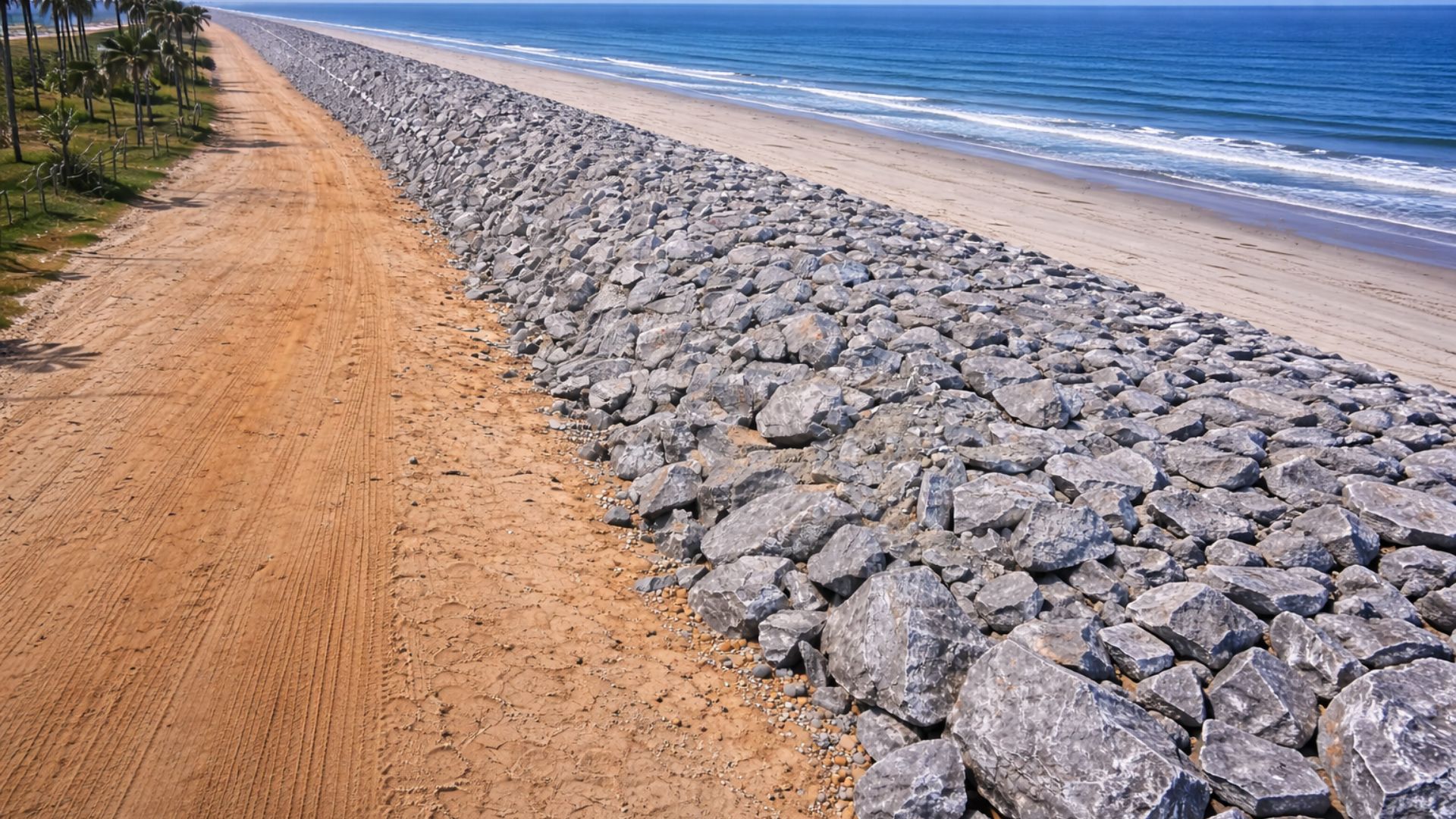


Emergency Work on São Paulo South Coast Installs 200-Meter Rock Embankment at Barra do Una in Peruíbe with Large Boulders to Contain Coastal Erosion.
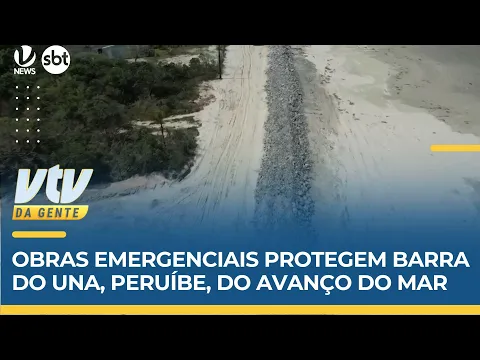
A rock embankment approximately 200 meters long has begun to be installed at Barra do Una in Peruíbe, on the south coast of São Paulo, as an emergency action by the state government to curb erosion and protect the access road to the community.
Using large boulders, some reaching up to three meters in height, the structure was designed to reduce wave energy in the most vulnerable section, where the sea approached the roadway and increased the risk to circulation, nearby houses, and structures.
Coastal Erosion and Immediate Risk on Access Road
In official communications, Semil describes a scenario of beach loss, pressure on the restinga vegetation, and the advance of the sea towards areas used daily by residents, which led to the decision for a quick and visible intervention.
-
The lack of welders, electricians, and operators becomes a structural threat in 2025, with the construction industry and manufacturing already suffering from delays, cost pressures, and labor shortages in Brazil.
-
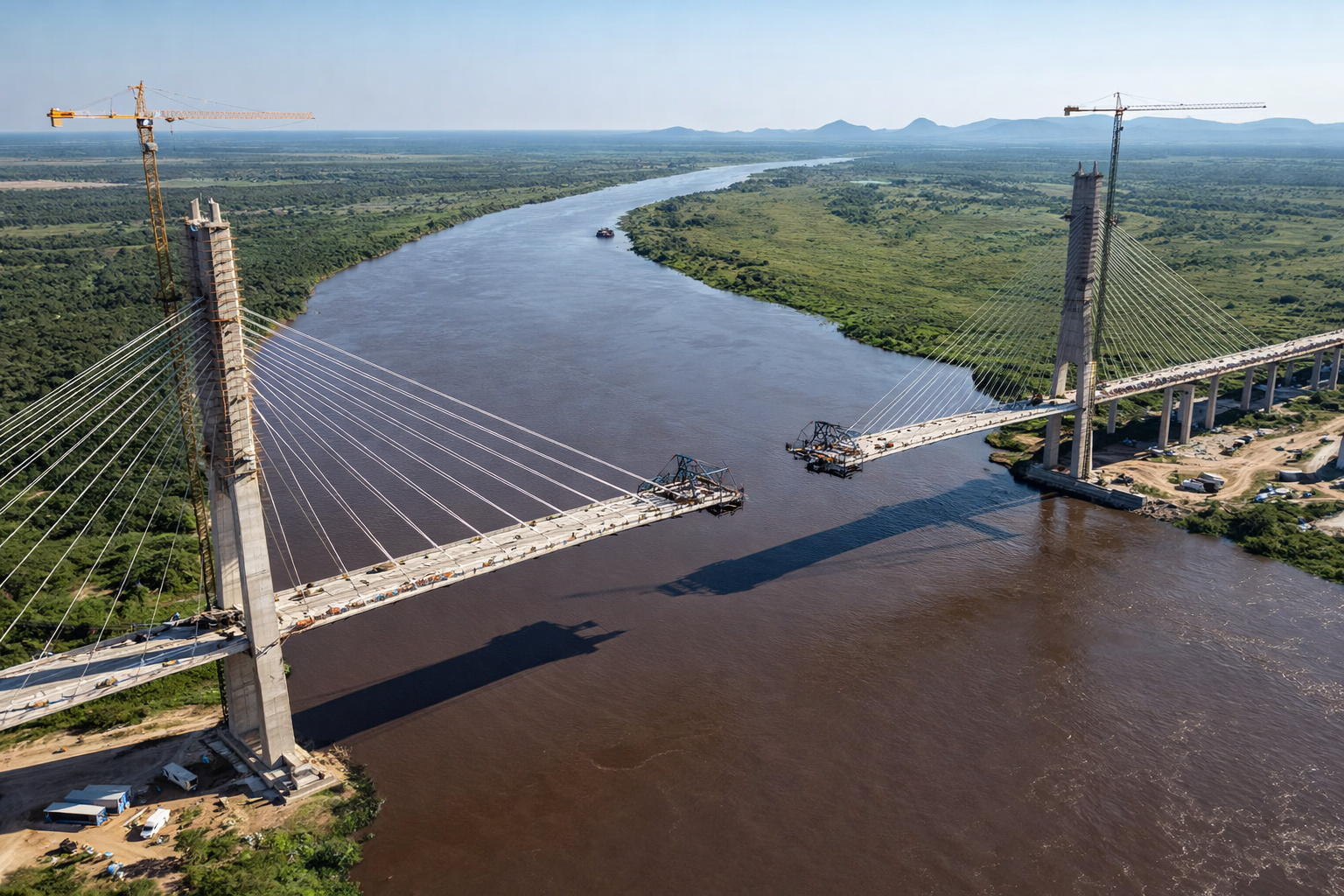
Brazil and Paraguay are just 46 meters away from a historic union on the bioceanic bridge that promises to revolutionize trade between the Atlantic and the Pacific.
-
With 55 km over the sea, a cost of US$ 20 billion, and enough steel to build 60 Eiffel Towers, China’s largest project has connected Hong Kong, Zhuhai, and Macau in a colossal bridge that defies the logic of engineering.

-
A trick with joint compound transforms a Styrofoam ceiling into a plaster-like ceiling: leveled panels, wires and mesh at the joints, sand, paint, and change the environment while spending little today.

In this context, the road serves as a transportation axis for services and supplies, in addition to ensuring connectivity with other areas of the municipality, which is why the state treats this section as a priority for protection while monitoring continues.
Although the work draws attention due to its size, the government presents the embankment as a containment measure aimed at reducing the immediate exposure of the most fragile point, rather than solving the problem definitively in the short term.

Sustainable Development Reserve and Environmental Care
Barra do Una is part of a Sustainable Development Reserve, linked to the mosaic of conservation units of Juréia-Itatins, which imposes additional care and places the intervention under scrutiny as it occurs in a sensitive coastal environment.
In addition to the risk to infrastructure, the local dynamics involve restinga, estuaries, and the mouth of the river, and any alteration in the waterline tends to impact the distribution of sediments that support the beach itself, according to the state’s technical approach.
The Forest Foundation appears as support for the traditional community and is responsible for environmental monitoring actions, with the perspective of restoring sections of restinga after the necessary interventions to protect people and structures.
Mouth of Rio Una do Prelado and Sediment Redistribution
One of the key points raised by the government is the migration of the mouth of the Rio Una do Prelado to the north, described as the main factor associated with the observed erosion, as river mouths are dynamic and tend to change over time.

By relocating the mouth, the system alters the flow and the way sand is redistributed, which can also displace the most exposed section to wave impacts and accelerate sediment loss in specific areas.
This change helps to understand why the debate is not limited to a “wall” against the sea, as the behavior of the mouth interferes with the river’s flow, the accumulation of sand at the mouth, and the interaction between freshwater and seawater.
Technical Monitoring and Logistics for Rock Installation
Alongside the installation of the rocks, Semil states it is conducting surveys and evaluations to support measures aimed at readjusting the river’s flow in the mouth region, with mappings that include bathymetry and the use of drones.
SP Águas, responsible for execution, also reported that it made prior improvements to the road to allow traffic and the logistics of transporting the stones, an essential step considering the size of the blocks used in the embankment.
As the interventions progress, the monitoring is treated as ongoing, with participation from agencies such as Civil Defense and the city hall in observing risks, as the behavior of the sea and river may require adjustments in response.
In subsequent updates, the state government reported that the emergency works have entered their final phase, maintaining coastal erosion as a natural phenomenon affecting coastal-marine areas and indicating that the south coast of São Paulo faces similar processes.
Impacts on Local Routine and Debate About the Future of the Beach

Public interest has increased because the structure directly affects local routine, as the road is vital for transportation, services, and supply arrival, and any interruption amplifies the vulnerability of those living in the community and surrounding areas.
At the same time, the fact that the work occurs in a protected area requires attention to the effects on restinga and sediments, as alterations in the coastline can have repercussions beyond the point where the stones were placed, even when the intention is to reduce immediate damage.
In reports and communications, the barrier is also described as a “string of stones” that marks the edge along the road, reinforcing the visual character of a solution that imposes itself on the landscape and becomes a reference for other sections under erosion.
However, as the sea’s pressure combines with the instability of the river’s mouth, the outcome will depend on monitoring and technical decisions regarding the flow, as well as promised environmental recovery actions after the intervention.
If Barra do Una combines a threatened road, nearby homes, sensitive restinga, and a transforming mouth, to what extent can a “wall” of stones contain the immediate risk without shifting the problem to the river and the beach itself?








Em Atafona, São João da Barra-RJ, o mar levou tudo. Casas, prédios e barragens de concreto. Isso me faz pensar que essa obra acima terá o mesmo destino.
Façam o óbvio, retirem a comunidade para outro lugar mais seguro.
Não adianta em nada, vocês quererem controlar a natureza!!!
Tudo que for feito será paliativo!