





 Portuguese
  English
  Spanish
 4 min of reading
  0 comments


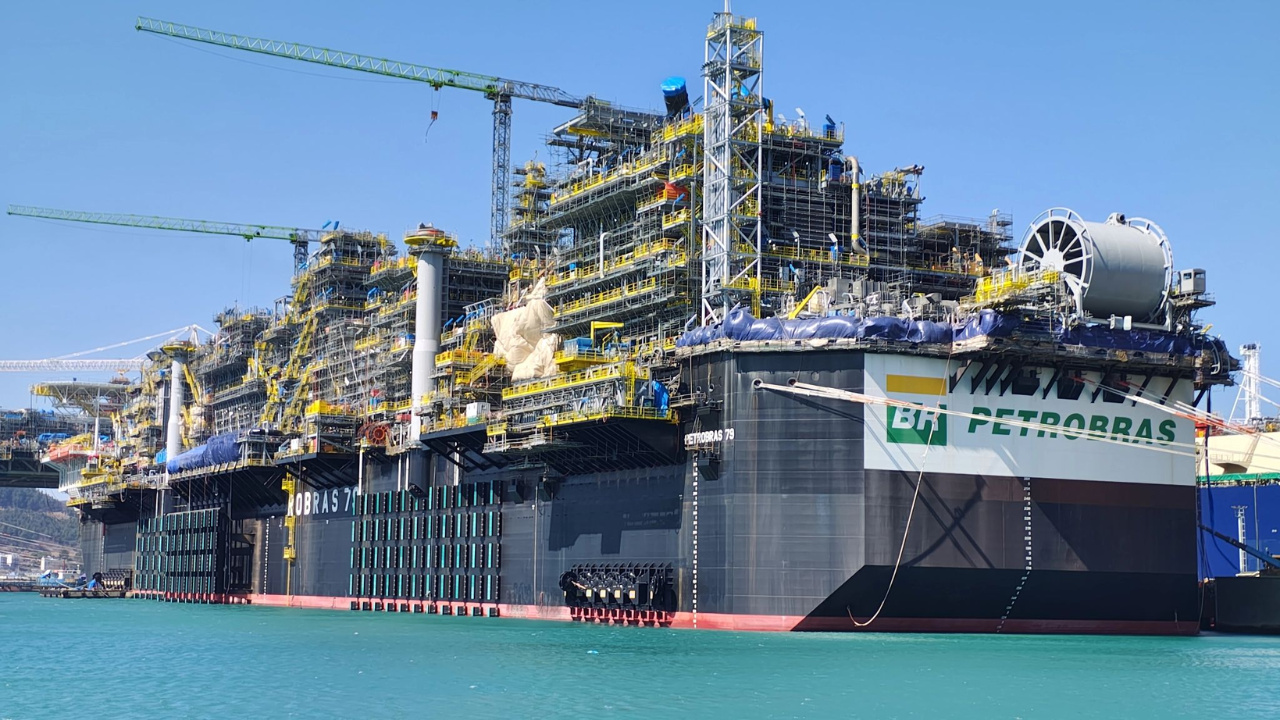
ANP Authorizes Petrobrás to Start Operations of FPSO P-78 in the Búzios Field, in the Pre-salt, Expanding Oil and Natural Gas Production in Brazil.
Oil production in Brazil is expected to see a new leap in the coming months with the authorization granted by the National Agency of Petroleum, Natural Gas and Biofuels (ANP) for the operation of the FPSO P-78 platform. The unit, installed in the Búzios Field, in the Pre-salt of the Santos Basin, will allow an increase of up to 180 thousand barrels of oil per day, in addition to 7.2 million cubic meters of natural gas per day.
The ANP’s decision was announced on Monday (22) and marks another advancement in the exploration of oil in deep waters. The Búzios Field is located about 180 kilometers off the coast of Rio de Janeiro and is considered strategic for the expansion of national production.
FPSO P-78 Expands Petrobrás Production Capacity
The FPSO P-78 follows the model of a floating unit for production, storage, and transfer of oil and gas, a technology widely used in offshore operations in deep and ultra-deep waters. This type of platform allows for greater logistical and operational efficiency, especially in large fields like Búzios.
-
A major turn in the Justice system suspends tax increases and directly impacts oil and gas companies in Brazil by affecting costs, contracts, and financial planning, leaving uncertain what could happen to the sector if these costs had increased.

-
Brava Energia begins drilling in Papa-Terra and Atlanta and could change the game by reducing costs in oil while increasing production and strengthening competitiveness in the offshore market.

-
Petrobras surprises the world again by announcing a new discovery in the pre-salt with excellent quality oil.

-
Offshore industrial demand in Macaé skyrockets with the recovery of oil and gas and could grow by up to 396% by 2026 in the Campos Basin.

With the entry of the new unit, Petrobrás strengthens the role of the Búzios Field as one of the main assets of the Pre-salt. Currently, the field is already recognized as the largest in deep waters in the world and, this year, recorded production of 1 million barrels of oil per day, consolidating itself as the largest producer in the country.
Flare System Follows International Environmental Standards
Among the highlights of the FPSO P-78 is the adoption of a flare system considered more advanced from an environmental perspective. The technology is designed to minimize impacts, as it promotes the burning of gases and combustible vapors in a sealed chamber, instead of releasing them openly into the atmosphere.
This practice follows the best international standards of the oil and gas sector and meets Brazilian regulatory requirements. The adoption of the system was analyzed in the authorization process and is part of the operational safety conditions established by the ANP.
Approval Process Involved Technical and Safety Analysis
The authorization to start operations was decided on Saturday (20), after the ANP completed the evaluation of the Operational Safety Documentation presented by Petrobrás. The regulatory agency also analyzed compliance with safety conditions, in addition to approving the platform’s project and authorizing the use of measurement systems.
The entire process involved technical audits and detailed verifications, ensuring that the unit is capable of operating within the standards required by the oil sector in Brazil.
Platform Construction Involved International Shipyards
According to information released by Agência Brasil, the construction of the FPSO P-78 followed an international schedule. “The hull of the P-78 was built in shipyards in Yantai and Hayang, China, and in Ulsan, South Korea. The blocks were integrated in South Korea before heading to Singapore, where the modules were assembled, including one built at the Seatrium shipyard (formerly Brasfels), in Angra dos Reis, on the coast of Rio de Janeiro. ANP audits were also conducted in Singapore.”
The modular construction model allowed for the integration of different stages in various countries, a common strategy in large offshore oil industry projects.
Búzios Has Seven Platforms in Operation
With the arrival of the FPSO P-78, the Búzios Field now has seven platforms in operation. The unit joins the P-74, P-75, P-76, P-77, Almirante Barroso, and Almirante Tamandaré platforms.
This structure reinforces the relevance of Búzios in the national and international energy landscape, especially in the context of the Pre-salt, which accounts for a significant share of Brazilian oil production.
Authorization Occurs Amid National Strike of Oil Workers
The release of the new platform comes at a sensitive moment for the sector. The category of oil workers is on a national strike, a movement that reached eight days on this Monday (22).
According to the Single Federation of Oil Workers (FUP), negotiations with Petrobrás show “significant advances regarding the three axes of the claim campaign.” Nevertheless, the mobilization continues to be comprehensive.
According to the entity, nine refineries, 28 offshore production platforms, 16 operational terminals, four thermoelectric plants, two biodiesel plants, and ten operational land installations have joined the strike, demonstrating the scope of the movement within the oil and energy sector in the country.








-

Uma pessoa reagiu a isso.