





 Portuguese
  English
  Spanish
  4 min of reading
  0 comments



Attention, Drivers of São Paulo! The Paulista Government Wants to Raise R$ 200 Million Per Year with Tolls on Highways. The Charging Will Be Barrier-Free, with Automatic Payment, on One of the Busiest Roads in the State. Get Ready to Pay and Await the Impacts of This Great Change Starting in 2027. Do Not Miss!
In a move that promises to directly impact drivers, the São Paulo government projects revenue of at least R$ 200 million per year with the implementation of tolls on the Luiz de Queiroz Highway (SP-304).
The amount will be generated through toll charges at three specific points along the road, one of the most important in the State.
The expectation is that the revenue generated by the toll will boost the development of local road infrastructure, as well as ensure maintenance and improvements in traffic conditions on the road.
-
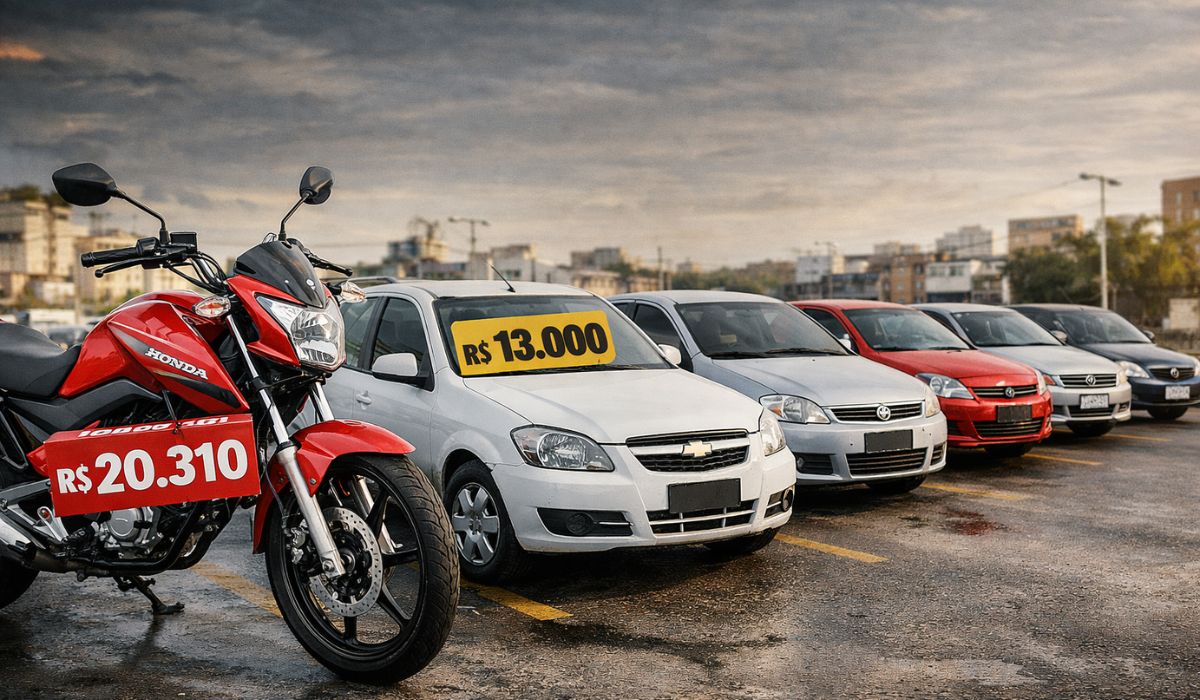
5 cheapest used cars than a Honda CG 160 Titan 0 km, with options starting at R$ 13,000 for those who want to trade their motorcycle for a car and escape the rain, sun, and risks of riding.
-
Oil surged to $115 a barrel due to the war in the Middle East, and diesel in Brazil has already risen to R$ 7.45 per liter, while the United States…

-
Around R$ 24,000: 4 used Ford SUVs with up to 253 hp, V6 engine, all-wheel drive, 7 airbags, panoramic sunroof, and a complete package that surprises with its price and performance in Brazil.

-
A brand new car starts at around R$ 75,000 in Brazil, but what stands out the most is seeing streets filled with SUVs and expensive sedans in a country where millions remain in debt.


How Will the Charging Work and What Is the Format?
Drivers will have a new experience in the toll charging system, which will be done through a model known as “free flow”.
This format, which does not require vehicles to stop, uses technology to register payment without needing physical barriers or toll booths.
Instead, payment will be made through tags, vehicle identification systems that connect automatically with the driver’s account.
This model is seen as a more modern and efficient way to charge tolls, promoting traffic flow and reducing congestion during peak hours.
The expectation is that the free flow charging system will start being implemented on the highway in May 2027.
Toll Rates: How Much Will Drivers Pay?
According to the plan, the State of São Paulo will implement tolls at three strategic points on the Luiz de Queiroz Highway.
Drivers of standard passenger cars will have to pay:
- R$ 3.48 in Americana (km 122);
- R$ 1.83 in Santa Bárbara d’Oeste (km 144);
- R$ 2.78 in Piracicaba (km 154).
These rates are calculated for passenger vehicles and vary according to the type of vehicle, with adjustments expected to occur annually.
Revenue in the first year is expected to reach R$ 205 million, with a reduction to around R$ 200 million in the second year of operation.
It is projected that revenue will gradually increase in the following years.
Mogiana Route: Tolls Also on the Old Tupi Road
The Margarida da Graça Martins Highway (SP-135), also known as the Old Tupi Road, is part of the Mogiana Route and will have two toll collection points.
Although the revenue projections for this road are more modest, with around R$ 9 million in the first year, the measure reflects the importance of this road for the region.
On the Old Tupi Road, drivers will pay R$ 1.26 at kilometer 2, in Santa Bárbara d’Oeste, and R$ 2.06 at kilometer 16, in Piracicaba.
These rates will also be adjusted annually.
What Changes for Drivers?
In addition to the innovative technology for toll collection, the free flow system offers benefits such as the Frequent User Discount (DUF).
Users who pass through the same tollgate 11 to 20 times per month will receive a 10% discount, while those who pass between 21 and 30 times per month will be eligible for a 20% discount.
This benefit will only be valid for passenger vehicles with registered TAGs.
For drivers who do not yet have a TAG, the system will read the vehicle’s license plate, and the amount will be sent to the owner, who will have 48 hours to make the payment through a platform provided by the concessionaire.
Additionally, a 5% discount will be granted to those using tags such as Sem Parar.
Expectations for the Coming Years
The implementation of tolls on the Mogiana Route is expected to revolutionize traffic in the region.
The government’s expectation is that the model will bring a significant reduction in congestion and an increase in road quality.
Regarding the SP-304, this highway is considered the most strategic, as it connects important cities and has high traffic volume for both cargo and passenger transport.
The revenue collected will be used for pavement recovery and maintenance of the roads, with investments of R$ 189 thousand for the SP-304 and R$ 1.2 million for the SP-137, as part of the initial improvements.
The concession process for the Mogiana Route also includes a schedule of activities, with the launch of the bidding notice scheduled for June 2025 and the auction in September.
The winning company will sign the contract in April 2026 and will have 30 years of concession to manage toll collection and road maintenance.
The Economic Impact
This measure may seem like a burden for drivers, but it is important to consider that, in addition to contributing to the maintenance and improvement of roads, the revenue collected could also help reduce other indirect costs for drivers, such as accidents and vehicle damage due to poor road conditions.
According to urban mobility experts, the use of the free flow system is expected to optimize travel time and reduce the environmental impact, as continuous traffic prevents congestion and the emission of pollutants, typical of constant stops and starts at toll booths.
Investments and the Future of São Paulo Infrastructure
The Paulista government is prioritizing investments in infrastructure to ensure smooth transportation and safety on highways.
In addition to tolls, the proposal includes a strong road recovery plan that is already underway, with plans for further investments and structural improvements in the coming years.
The question remains: what do you think about the tolls on the Luiz de Queiroz Highway? Do you think the benefits are worth the cost?







Seja o primeiro a reagir!