





 Portuguese
  English
  Spanish
  6 min of reading
  0 comments


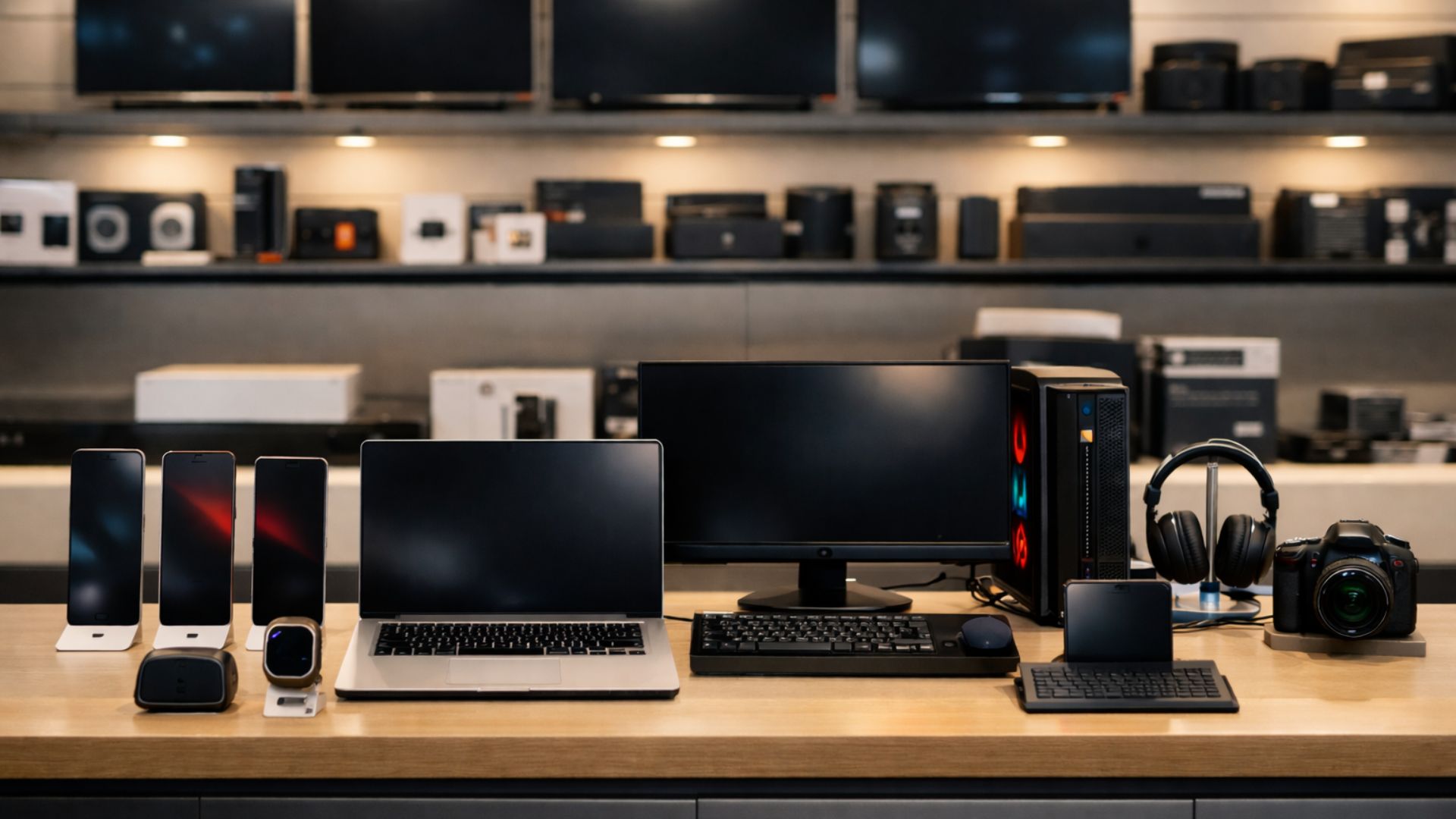
Global Memory Chip Shortage Pressures Electronics Industry, Raises Production Costs, and Leads Manufacturers to Pass On Increases or Rethink Smartphone and PC Configurations, According to IDC Analyses on the Impact of Artificial Intelligence Demand.
The global memory chip shortage is already affecting the electronics supply chain and could result in more expensive devices starting in 2026.
The assessment comes from IDC analysts, who relate the scenario to the combination of limited component supply and a significant increase in demand for memory used in artificial intelligence infrastructure, according to a report published by Forbes magazine.
With data centers consuming growing volumes of DRAM, smartphone and computer manufacturers have started competing for lower stocks.
-
Returning to the Moon now costs a billion-dollar bill and reignites the competition between the USA and China for science, technology, and rare minerals on lunar soil.

-
While the world looks at oil, the war with Iran is already disrupting helium supply from Qatar, affecting car and iPhone chips, threatening AI expansion, and putting pressure on aluminum packaging at the highest value in four years.

-
Global warming will expose a treasure hidden under the ice of Antarctica and may spark an international dispute over gold and valuable minerals.

-
A street vendor from Praia Grande built a robot made of scrap from scooters and washing machines that pulls his popcorn cart on the beach, emits sounds, and interacts with customers, becoming an attraction on the coast of São Paulo.

This movement occurs alongside a recent rise in the prices of these chips, as reported by the market monitored by the consultancy.
According to Francisco Jeronimo, IDC’s VP for client devices, the appreciation of memory has intensified in recent weeks.
He stated that the impact tends to be greater for companies operating with reduced margins.
In the executive’s view, the increase in costs raises the pressure to pass it on to the end consumer.
This pass-through, according to IDC, should occur mainly in the entry-level and mid-range segments, where there is less capacity to absorb increases without adjusting prices.
Memory Chip Shortage and Production Bottleneck
IDC analysts point out that the current pressure differs from previous cycles in the semiconductor sector.
At this moment, the central factor identified by the consultancy is the realignment of industrial capacity.
Memory manufacturers are said to be directing a larger portion of production to higher value-added components aimed at data centers and artificial intelligence applications.

This group includes technologies such as HBM and enterprise versions of DDR5.
At the same time, there is a relative reduction in the availability of chips aimed at consumer electronics.
As a result, larger suppliers have also begun to operate with tighter inventories, according to Forbes magazine’s investigation.
According to the consultancy, when supply decreases and demand remains high, prices usually react first.
Subsequently, the effect reaches the specifications of the final products offered to the consumer.
Smartphone Prices Expected to Rise More in the Entry-Level Segment
In the more conservative scenario outlined by IDC, the average prices of smartphones could rise by about 8% in 2026.
The impact, however, is not expected to be uniform across the different market segments.
The report indicates that the increases will be more pronounced in the lower-priced models.
This is the group where margins have historically been tighter.
In light of this context, manufacturers are considering alternatives such as full pass-through of costs or adjustments in device configurations.
Experts consulted by the consultancy warn that reducing memory and storage may affect performance over time.
This effect becomes more relevant in a scenario where operating systems and applications demand more hardware resources.
In this context, Jeronimo mentions a recurring issue reported by users.
“We all know that the main reason most phones lag is due to lack of memory or storage,” he stated in an interview reproduced by Forbes magazine.
According to him, the trend is one of worsening as new software updates increase the technical demands on devices.
Apple and Samsung Face a Scenario with Greater Financial Protection

Among the major global manufacturers, Apple and Samsung appear, according to IDC, to be in a relatively more favorable position to weather the shortage period.
The consultancy attributes this condition to higher cash reserves and pre-arranged memory supply contracts.
In some cases, these agreements have a horizon of up to two years.
Still, IDC assesses that even these groups are not completely protected, as Forbes magazine also pointed out when analyzing the impact of the memory crisis on large manufacturers.
The projection is that next year’s top models will maintain 12 GB of memory.
The expectation of an upgrade to 16 GB may be postponed due to current cost and supply conditions.
For industry analysts, the combination of higher prices and limited availability tends to slow down the evolution of technical specifications.
This movement would occur regardless of market interest in more powerful devices.
PC Manufacturers Under Greater Pressure in 2026
In the personal computer market, the scenario is described by IDC as more sensitive, especially for smaller manufacturers.
According to Jeronimo, executives in the sector express concern over business continuity amid rising costs.
“I spoke with PC manufacturers — smaller brands — this week, and they were saying: ‘we don’t know if we’ll survive this crisis’,” he stated.
The consultancy’s projections indicate that the average prices of PCs could also rise by about 8% in 2026.
At the same time, the impact on demand is expected to be negative.
The estimated decline is 9% in shipments in a scenario considered more adverse by IDC.
This combined effect is especially problematic for companies with less bargaining power in the supply chain.
Market reports mention even higher adjustments in certain contracts.
According to Jeronimo, some suppliers are facing increasing resistance from customers in light of significant increases.
“We’re not talking about 1% or 2%, but increases of 15%, 20% in some cases,” he said.
End of Windows 10 Expands Impact on the Corporate Market
The memory crisis occurs alongside a significant cycle of PC renovations.
The end of support for Windows 10, set to close in October 2025, has prompted companies to reevaluate their machine parks.
This process has accelerated purchase decisions or system migrations.
The movement has increased demand for new equipment at a time of component restrictions.
According to analysts, the combination of higher prices and the need for technological updates complicates negotiations.
The impact is more pronounced in large-volume corporate contracts.
The competition for memory with data centers and the trend towards PCs with more RAM in premium segments reinforce the instability projected for 2026, as highlighted by Forbes magazine when addressing the issue.


Memory Production Is Not Expected to React Quickly
Industry experts assess that the situation is not likely to be resolved in the short term.
Expanding production capacity requires significant investments and long timelines.
Building and operating new factories involves several years of planning.
Additionally, manufacturers are showing caution amid uncertainties about the duration of demand associated with artificial intelligence.
Jeronimo states that decisions of this nature depend on medium- and long-term prospects.
“This type of supplier does not immediately announce that they will spend billions building and buying factories, wafers, and everything else if they are not sure there will be a market to sell that production in two or three years,” he stated.
According to him, the current focus is on catering to the AI segment, which is considered more profitable than consumer electronics.
Recent IDC projections indicate that global DRAM and NAND supply growth in 2026 is expected to fall below historical averages.
This occurs even with high demand.
For the consultancy, this mismatch could prolong the effects on prices and product configurations.
The scenario influences decisions of both manufacturers and consumers.
With more frequent adjustments and potential technical limitations in some launches, the market is entering a phase of greater caution.
To what extent will consumers and companies be willing to accept more expensive devices or those with less memory when planning their next smartphone or computer upgrade?






-

-

-

-

-

-

15 pessoas reagiram a isso.