





 Portuguese
  English
  Spanish
 3 min of reading



São Paulo City Hall Partnered with Health Consortium to Enable a Project Aiming to Build a Super Solar Power Plant That Will Supply UBSs and Other Buildings of the Health and Education Departments.
The Mayor of São Paulo, Ricardo Nunes, signed a Public-Private Partnership (PPP) with the Sol da Saúde consortium last Tuesday (14). The project plans the implementation, operation, and maintenance of São Paulo’s first ‘solar farm.’ The generation of this renewable energy will benefit around 80 basic health units (UBS) and will allow the City Hall to reaffirm one of its main commitments to sustainability and the promotion of effective actions in reducing environmental impact, according to the 2021/2024 Goals Program and as outlined in the 2030 Municipal Agenda.
Read Other Related News
Installations of the New Solar Power Plant in São Paulo
The solar panels that will be installed on the roofs of the facilities will be responsible for generating enough electricity to supply the UBSs during the day, ensuring total safety and sustainability.
This will result in an energy saving of 56%, equivalent to R$ 2.05 million per year, which could reach around R$ 65 million over the next 25 years of the project.
-
Renewable energy advances over protected areas in Brazil, and a survey by the Energy Transition Observatory reveals silent impacts that challenge environmental conservation and pressure sensitive traditional territories.

-
Rio Grande do Sul accelerates energy transition: State invests in renewable technologies and consolidates decarbonization strategies and pathways to attract billions in new industrial investments.

-
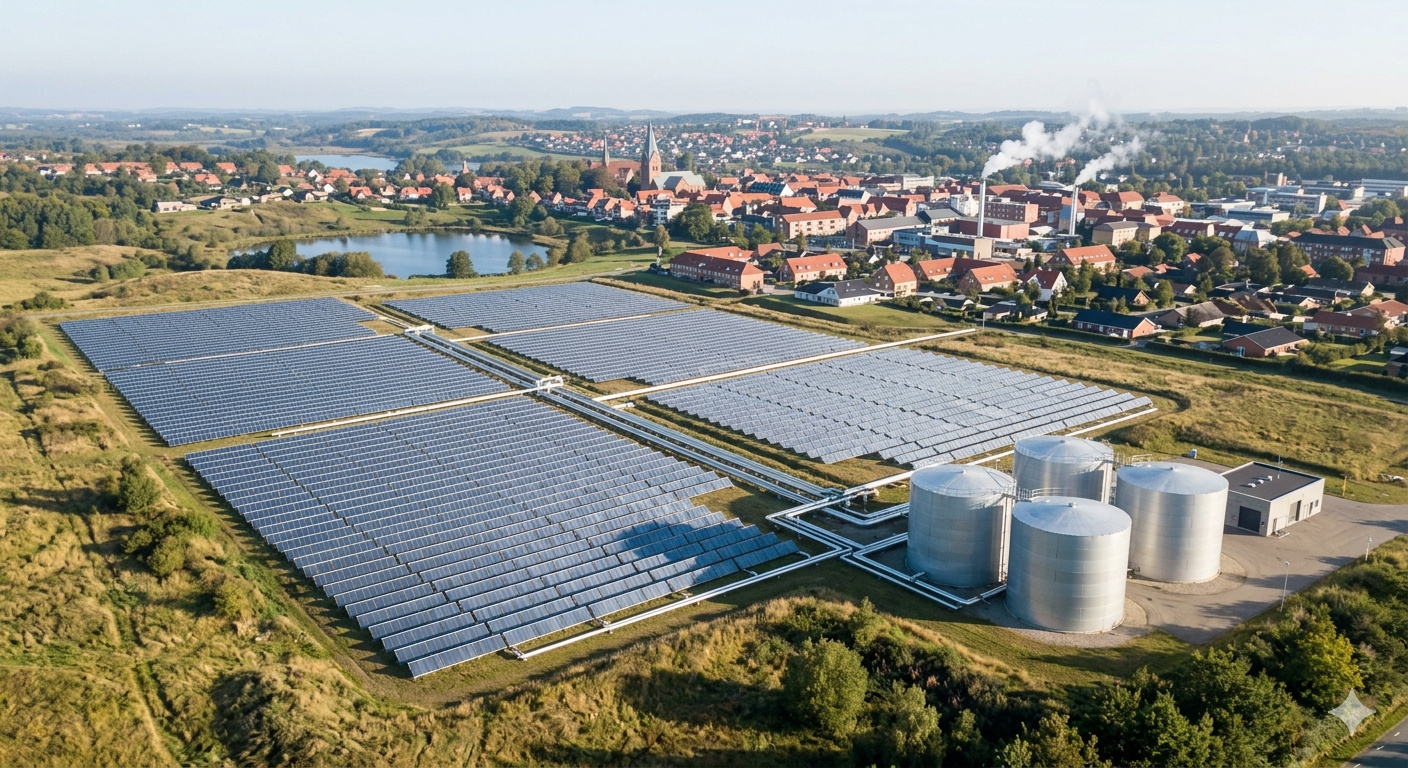
With 160,000 m² of collectors, an area larger than 20 football fields, Silkeborg, in Denmark, hosts a solar thermal plant that heats 19,500 homes and could become the largest solar heating plant in the world.
-
A study reveals the expansion of renewable energy procurement in Brazil and shows how companies are taking advantage of opportunities to reduce expenses, ensure energy efficiency, and strengthen strategic environmental commitments.


The Public-Private Partnership contract provides for the implementation, operation, and direct maintenance of the plants for the distributed generation of solar energy intended for the UBSs and other consumer units that are linked to the Municipal Health Department.
Economic Advantages
The Sol da Saúde consortium will also be responsible for the procedures with the distributor to make all necessary connections with the electrical grid, including the operation and maintenance services of the solar energy ‘farm.’
The energy generated by the facility will be fed into the distributor’s electrical grid and will also supply other units in the city of São Paulo that do not yet have photovoltaic solar power plants.
The City of São Paulo won the bidding process through an international competition, whose judgment criterion was to analyze and determine the best proposal and the lowest amount of monthly compensation to be paid, as the maximum limit is R$ 400 thousand per month, or R$ 4.8 million per year. According to Alex Novais, manager of New Business at Quantum Participações, another significant advantage, besides the environmental preservation issues, is that the project also aims for economic improvement.
São Paulo City Hall Creates ‘Clean Energy’ Project
To complement the Public-Private Partnership in the implementation process of the solar farm at Aterro Bandeirantes, North Zone of São Paulo, the Municipal Administration has enhanced it with the ‘Clean Energy Program’ project, where various studies aimed at the implementation, management, operation, and maintenance of solar power plants for distributed generation will be developed, in addition to the implementation of energy efficiency measures in the buildings of the Education Department.
With a focus on renewable energy sources and distributed generation through solar power plants, São Paulo City Hall aligns itself with global concerns such as climate change and is also urgent in its desire to reduce greenhouse gas emissions, as outlined in the UN Climate Conferences (COP) and the Sustainable Development Goals (SDGs).










Seja o primeiro a reagir!