





 Portuguese
  English
  Spanish
  7 min of reading
  64 comments


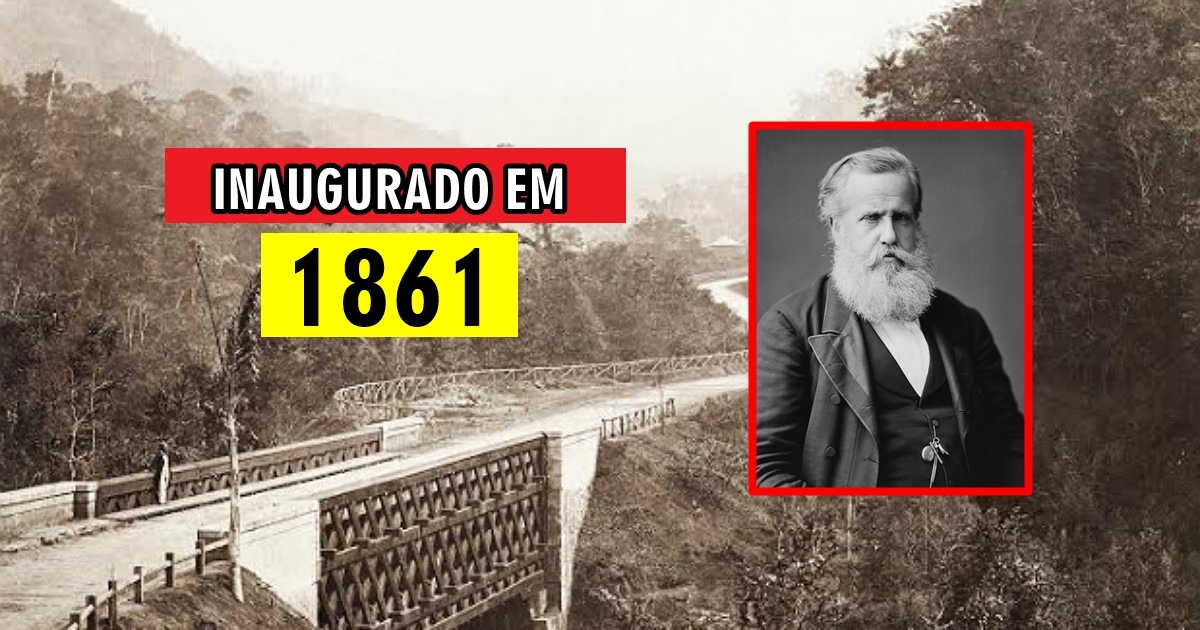


The First Paved Road in Brazil Connected Petrópolis to Juiz de Fora and Boosted Coffee, Trade, and Regional Integration.
In the 19th century, Brazil was a country of difficult paths. Transportation was done on foot, on horseback, or with mules, along trails that barely withstood the rain. But everything began to change when the first paved road for vehicles in Brazil emerged: the Estrada União e Indústria.
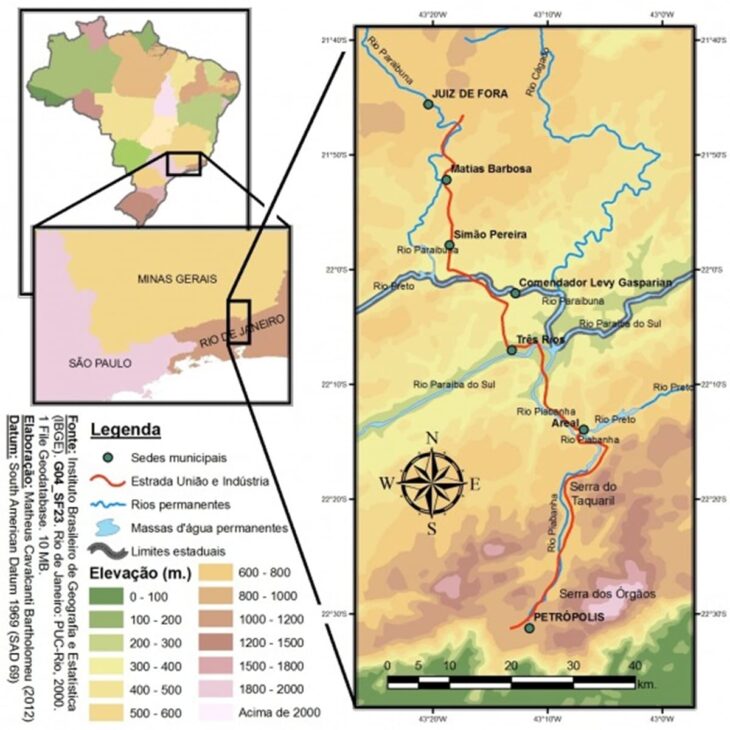
Connecting Petrópolis (RJ) to Juiz de Fora (MG), it marked the beginning of the modern era in Brazilian road transport.
The Need to Change
With the increase in coffee production in Minas Gerais and in the interior of Rio de Janeiro, the Empire needed better routes to transport the harvest to the port of the capital.
-
He started running at 66 years old, broke records at 82, and is now a subject of study for having a metabolic age comparable to that of a 20-year-old, in a case that is intriguing scientists and inspiring the world.

-
Oldest tree on the planet reappears after 130 years of searches: Wattieza, 385 million years old, was 10 meters tall and had no leaves or seeds; Gilboa fossils in New York solved the mystery in 2007.

-
A 48-square-meter house assembled in hours with 4,000 bricks made of recycled plastic that does not absorb moisture, has natural thermal insulation, and costs less than 90,000 reais in a complete kit.

-
Luciano Hang revealed that Havan’s air fleet has already accumulated more than 20,000 landings, 10,000 flight hours, and 6 million kilometers traveled, and he says that without the planes, the company would never have grown so quickly.


The existing roads were precarious, and trips took days. Mule transport was expensive and prone to losses. Something new was needed.
In the 1850s, Brazil was experiencing a moment of search for modernization. Emperor Dom Pedro II supported infrastructure and science initiatives.
It was in this context that the idea of a paved road connecting two important regions for the Empire’s economy emerged: the Fluminense mountain range and the Zona da Mata in Minas Gerais.
Mariano Procópio and the Pioneer Project
The person responsible for the idea was the engineer and entrepreneur Mariano Procópio Ferreira Lage, a native of Barbacena.
He saw the possibility of creating a modern road to connect coffee producers from the interior of Minas Gerais to Rio de Janeiro. With the emperor’s support, he obtained a concession in 1852 to build and operate the highway for 50 years.
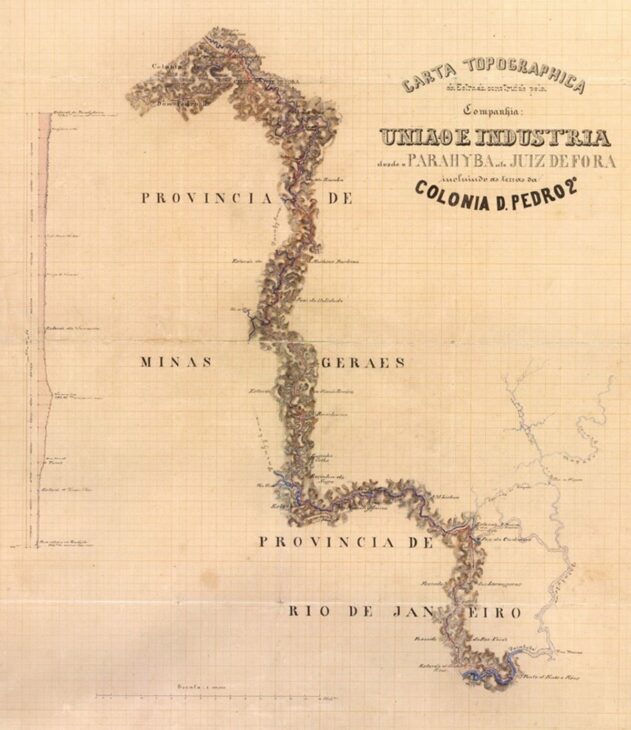
Mariano founded the Companhia União e Indústria in 1853. It was a joint-stock company, with shares purchased by large landowners interested in the project. The company would have the right to charge tolls to recover the investment. The name of the road came from this.
Dom Pedro II not only authorized the construction. He closely monitored it and personally attended the groundbreaking in 1856 in Petrópolis. The imperial support guaranteed prestige to the project and attracted investors.
An Unprecedented Technical Challenge
The construction of the road was divided into two sections. One was under the responsibility of the Brazilian engineer Antônio Maria Bulhões. The other, of the German engineer José Keller. The total length would be 144 kilometers, cutting through the mountains and the valleys of winding rivers.
The technique used was macadam, created by the Scot John McAdam. It consisted of placing layers of crushed stones compacted with heavy rollers, forming a regular and durable bed. It was the most modern technology of the time for paving.
The road had an average width of eight meters, allowing traffic in both directions. The bed was drained to withstand the rain and lasted longer than dirt paths. This revolutionized the way to travel and transport goods.
Who Built the Road
To build this structure, a large workforce was needed. Many workers were German immigrants from the Petrópolis colony. But most were composed of enslaved individuals rented from landowners, in a system called “arremate.”
These workers worked in different sections, supervised by engineers.
They excavated slopes, cut stones, and built retaining walls up to 18 meters high. The effort was immense, especially in the sections of the Taquaril mountain range and the Pedro do Rio mountain range.
The work took five years to complete. Sections were delivered gradually. In 1858, 30 kilometers were already completed between Vila Teresa and Pedro do Rio. The total completion occurred in June 1861.
The Grand Inauguration
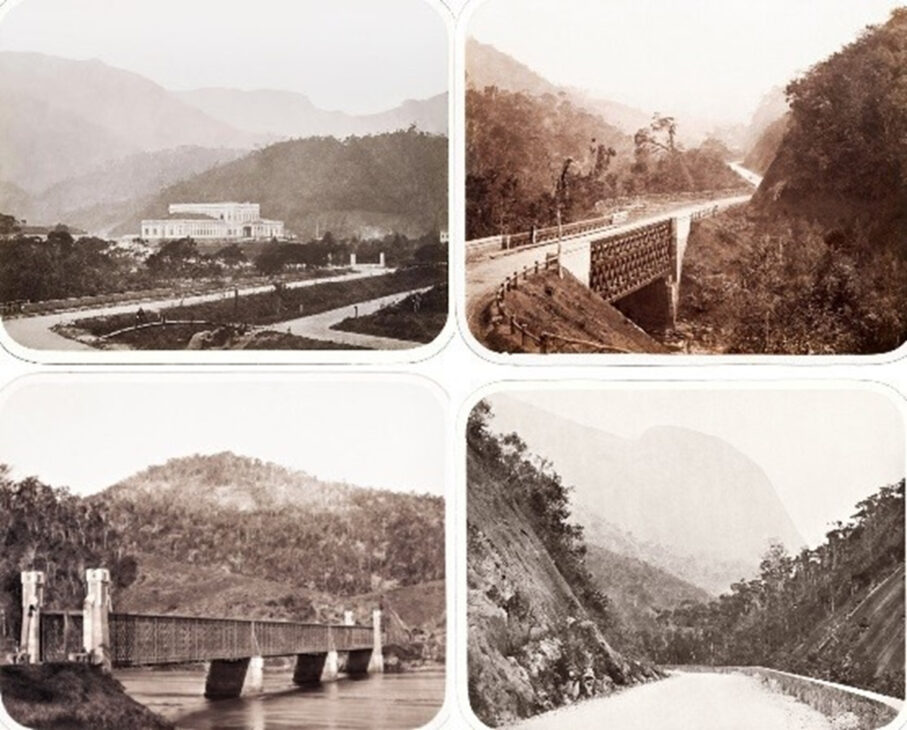
The road was inaugurated with celebration. On June 23, 1861, Dom Pedro II traveled the route by carriage, leaving Petrópolis and arriving in Juiz de Fora in about 12 hours. It was an impressive feat for the time.
The emperor stayed at Mariano Procópio’s house, who had a special palace built to receive him. The place, now a museum, was illuminated with thousands of lamps, and the city prepared honors and celebrations.
The German photographer Revert Klumb recorded the journey in historic images. He also wrote a tourist guide called Doze Horas em Diligência, describing the journey and the scenery of the road.
First Years of Operation
With the road completed, regular trips of carriages began, transporting passengers between Petrópolis and Juiz de Fora. The journey, which previously took two or three days on horseback, was now done in half a day. It was faster, safer, and less exhausting.
The Companhia União e Indústria maintained horse exchange stations, warehouses, and inns along the route. The vehicles also carried letters, goods, and small parcels. Cities like Três Rios, Paraíba do Sul, and Simão Pereira developed along this axis.
The impact was enormous. Transportation costs fell, coffee reached the port faster, and Juiz de Fora began to grow as a commercial hub. The city became a dynamic center, attracting immigrants, investments, and new activities.
Economic and Social Benefits
The road connected previously isolated regions. It increased contact between residents of Rio de Janeiro and Minas Gerais. It facilitated trade, the exchange of ideas, and the movement of people. It also aided in the interior migration of the population.
Landowners saw their profits grow. Perishable products reached markets faster. The Zona da Mata region urbanized, and Petrópolis established itself as a vacation destination and commercial center.
Moreover, the road created jobs, increased money circulation, and boosted local businesses. Blacksmiths, coachmen, innkeepers, and merchants benefited from the constant flow of travelers and goods.
The Road as a Model of Progress
The União e Indústria was the first paved road with modern technology in Brazil. It was also the first road concession in the country, operated by a private company charging tolls.
The success of the project served as an example for other initiatives. It showed that it was possible to integrate regions with safe and efficient roads. It inspired new enterprises and helped build the idea of a connected country.
Dom Pedro II, who closely followed everything, believed in progress through science and infrastructure. The road represented exactly that: technique, investment, regional and national development.
The Beginning of the Decline
Despite its importance, the road lost strength over time. From 1867, the tracks of the Estrada de Ferro Dom Pedro II reached Três Rios. The new railway offered more speed and greater carrying capacity.
Rail transport began to gain ground. By 1871, the train was already linking Rio de Janeiro to Juiz de Fora. Gradually, the use of the road decreased. It became limited to local traffic. The company experienced a drop in revenue and lost significance.
Even so, the road continued to be used. Freight vehicles and the first automobiles circulated there in the early 20th century. But its main role as a transport axis had ended.
Transformations in the 20th Century
With the arrival of the Republic and administrative changes, the road came under the control of state governments. It was maintained for many years, but without the same care as during the Empire.
In the mid-20th century, the federal government launched the road integration policy. New highways began to open with wide and straight lanes. The BR-040, built from the 1950s and completed in 1980, replaced almost the entire route of the old road.
Some stretches of the União e Indústria were incorporated into the new road. Others were abandoned or became urban streets. In cities like Juiz de Fora and Petrópolis, parts of the original layout still exist, but with different names and functions.
What Remains Today
Despite the abandonment in many stretches, the road still leaves marks. Some stone bridges, retaining walls, and support houses still exist. In Juiz de Fora, the Museu Mariano Procópio holds documents, photos, and objects from the construction.
In 2011, the 150th anniversary of the road was celebrated with exhibitions and events in Petrópolis and Juiz de Fora. The recognition as a historic heritage gained strength, and there are movements to preserve what remains of the original route.
Some stretches, like the Ponte de Santana in Areal (RJ), were restored and transformed into tourist attractions. The name “União e Indústria” is still used on avenues, neighborhoods, and signs in various cities in the region.
The Legacy That Remained
The Estrada União e Indústria was much more than a route between two cities. It was a landmark of modernization, a symbol of the connection between the Empire and the interior, and a success story in combining private initiative and public interest.
It showed that infrastructure can transform regions, integrate economies, and change people’s lives. It anticipated modern concepts such as concessions, tolls, and technical transport planning.
Even forgotten for a time, its story survives in books, in stone markers, and in the memory of the cities it helped to develop. A legacy that still deserves to be valued.








Pode-se perceber que um líder faz uma enorme diferença.
Sem a estrada nao haveria progresso. Bastou sair da concessao e ir para o Estado e ela acabou. Mas sem duvida, fez um bem enorme para a época. Hoje, estes 140 km ao invés de 5 anos, levaria 20 com o triplo do valor.
Petrópolis é uma cidade onde os habitantes ainda vivem na época do império, já que proprietários de imóveis até hoje pagam um valor considerável para a família imperial sem reino quando vendem e registram seus imóveis, uma taxa que subsistiu ao tempo e à proclamação da república.
Juiz de Fora é uma cidade conhecida por ter sido instalada a primeira usina hidrelétrica da América do Sul, sendo palco de atentado a um candidato à presidência da república, isso na história recente. Além disso abriga uma quantidade imensa de botecos e de farmácias, algo até certo ponto lógico. Quem vai muito ao boteco, frequentará a farmácia.
Desse modo, ligando duas cidades horríveis atualmente, mas muito bucólicas na época do imperador, essa estrada foi construída em um tempo onde os políticos corruptos eram raros. Caso contrário, cada Km da estrada teria 900 metros feitos de forma superfaturada, uma camada fina de asfalto que não resistiria a passagem das carruagens e carroças, tal como acontece atualmente em algumas estradas desse país.
Coincidentemente, os dois principais acervos de museus do país estão respectivamente em Petrópolis e em Juiz de Fora, cidades onde o passado insiste em assombrar seus habitantes.
Gostei da matéria e, pude ver o quanto foi difícil para a Empresa que construiu e administrou. Talvez, não tenham vislumbrado um pouco mais adiante o que poderia mudar com a modernização das Ferrovias.