





 Portuguese
  English
  Spanish
  3 min of reading
  0 comments


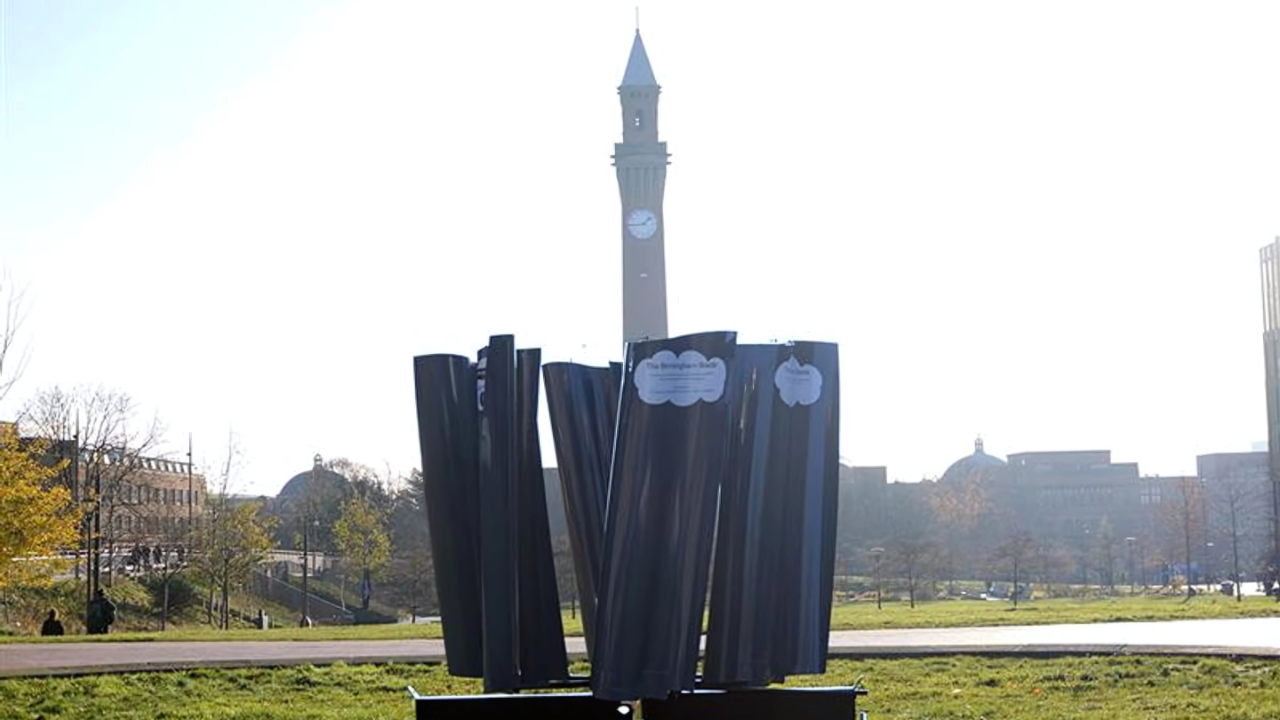
British Company EvoPhase Develops First Wind Turbine Designed by Artificial Intelligence That Transforms Energy Generation in Urban Centers.
EvoPhase, a British technology company, has developed an innovative wind turbine designed with the help of artificial intelligence (AI). This new model of wind turbine can generate up to seven times more energy than conventional turbines, especially in urban areas.
The “Birmingham Blade,” as it is called, was designed to overcome the challenges of generating wind energy in cities, where wind conditions are more challenging due to the presence of buildings.
The partnership between EvoPhase and precision metal manufacturers Kwik Fab Ltd. resulted in a wind turbine that combines artificial intelligence with advanced materials.
-
Artificial intelligence is skyrocketing energy consumption, raising emissions from tech giants and pushing Google, Microsoft, and Meta closer to natural gas.

-
Mercor paid $1.5 million per day for doctors, lawyers, and former Goldman Sachs bankers to teach artificial intelligence to do their jobs, and in 17 months, it went from zero to $500 million in annual revenue while its own contractors accelerated the replacement of their own work.

-
Casio Unveils Moflin, Robotic Pet With Artificial Intelligence Designed To Provide Emotional Comfort And Simulate A Permanent Affectionate Bond

-
Google Maps Revolutionizes GPS Navigation With Gemini Artificial Intelligence, Ask Maps Feature, and Advanced 3D Visualization for Route and Travel Planning

The wind turbine is compact and lightweight, making it suitable for installation on rooftops, an essential factor for urban environments.
This innovation not only promises to increase the efficiency of wind energy production but also improve access to clean energy in locations where conventional turbines would be unfeasible.
Challenges of Turbine Design
The production of wind energy in cities has been a major challenge to date. Wind speed is reduced due to the presence of large buildings, and wind conditions are very unstable, making it difficult to generate efficient wind energy.
In Birmingham, for example, the average wind speed is 3.6 meters per second, which is insufficient for traditional turbines to generate energy effectively.
Leonard Nicusan, CTO of EvoPhase, noted that one of the biggest challenges was to create a wind turbine that could capture weak winds while dealing with turbulence caused by surrounding buildings.
The turbine would need to be efficient even with these low winds and capable of generating more energy than traditional models.
Additionally, the turbine had to be compact enough to be installed on rooftops in cities, a limited and generally small space for this type of equipment.
How Artificial Intelligence Transformed the Wind Turbine Design?
Artificial intelligence was essential for the success of developing this wind turbine.
By using AI, EvoPhase was able to generate and test over two thousand turbine designs in just a few weeks.
This allowed for the creation of a highly efficient wind turbine capable of maximizing the specific wind conditions of Birmingham.
AI enabled EvoPhase’s engineers to push the boundaries of previous designs, which were based on older and more limited data and models.
By using artificial intelligence in the wind turbine design, EvoPhase was able to explore new design possibilities that would not have been feasible with traditional methods.
The simulations conducted by AI confirmed that the wind turbine designed by EvoPhase is up to seven times more efficient than conventional turbines, even in weaker and more turbulent wind conditions.
This increase in efficiency means that the wind turbine can generate more energy with less wind, making it a more viable solution for energy generation in cities.
The Application of Artificial Intelligence in Future Wind Energy Installations in Cities
The development of the wind turbine created with artificial intelligence represents a significant step forward for renewable energy, especially in the urban context.
The “Birmingham Blade” could be key to transforming how wind energy is generated in cities, where space is limited, and wind conditions are unpredictable.
With the wind turbine being installed on a rooftop in Birmingham for testing, it is expected to begin operations in 2025, offering a new option for generating clean energy in cities.
With information from Ciclo Vivo










Seja o primeiro a reagir!