





 English
  Francês
  Alemão
  Italiano
  Japonês
  Norueguês
  Portuguese
  Spanish
 3 min of reading


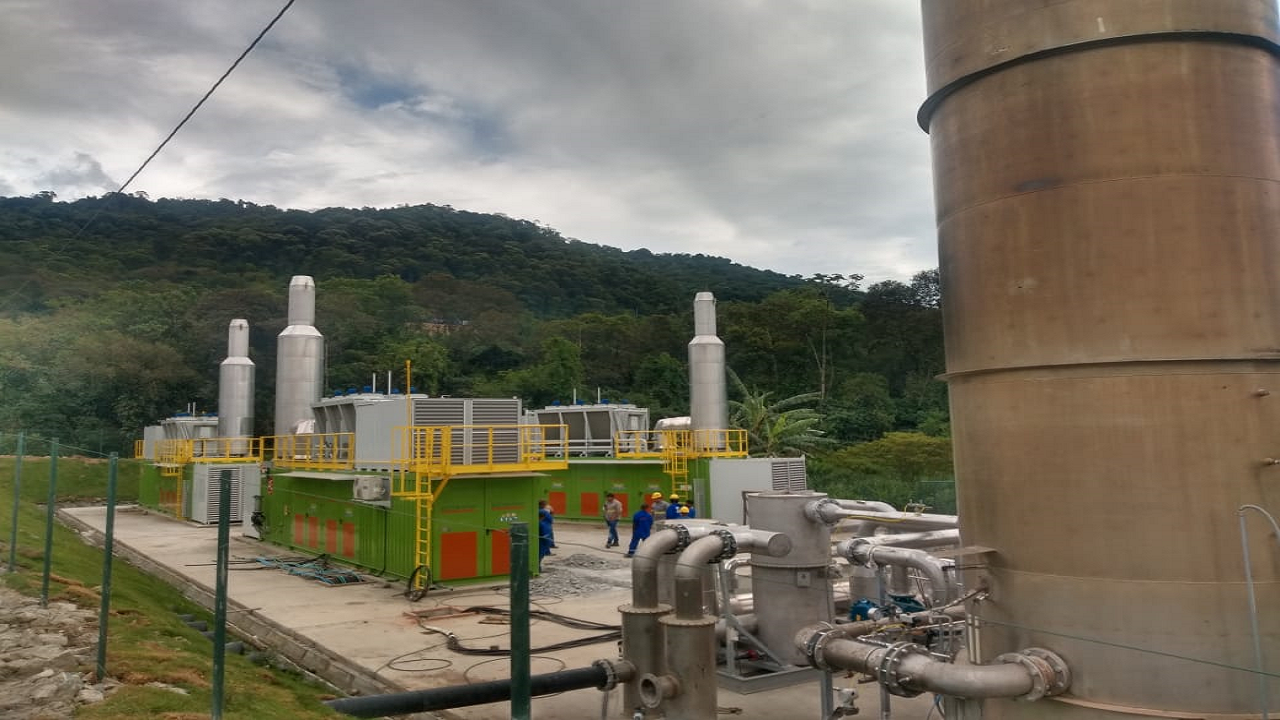
Vivo Is Inaugurating Its First Distributed Biogas Generation Plant in SP. The Construction Was Done in Partnership With Grupo Gera and Will Have a Capacity of 20,850 MWh Annually
The telecommunications company Vivo inaugurated, this December, in Santos, its first distributed biogas generation plant in the state of SP. The company’s plant was developed in partnership with Grupo Gera next to the environmental landfill and will cover an area of almost 1,500 square meters. It will produce and inject 20,850 MWh per year, energy that will serve to meet the consumption of over a thousand Vivo units, such as offices, antennas, stores, and transmission equipment located in the concession area served by CPFL Energia.
Also Read
Vivo Plans to Install 89 Distributed Biogas Generation Plants
The Vivo biogas plant in SP will utilize between 2,500 and 5,000 Nm³ per hour of biogas with a high methane content for generating carbon credits and electricity.
-
Renewable energy advances over protected areas in Brazil, and a survey by the Energy Transition Observatory reveals silent impacts that challenge environmental conservation and pressure sensitive traditional territories.

-
Rio Grande do Sul accelerates energy transition: State invests in renewable technologies and consolidates decarbonization strategies and pathways to attract billions in new industrial investments.

-
With 160,000 m² of collectors, an area larger than 20 football fields, Silkeborg, in Denmark, hosts a solar thermal plant that heats 19,500 homes and could become the largest solar heating plant in the world.

-
A study reveals the expansion of renewable energy procurement in Brazil and shows how companies are taking advantage of opportunities to reduce expenses, ensure energy efficiency, and strengthen strategic environmental commitments.

Vivo’s initiative in SP allows the biogas from the landfill, which was previously unused, to be utilized for processes that begin with its burning and have, as a final product, in addition to water vapor, carbon dioxide.

The company’s project is part of its strategy to expand its self-generated energy production through clean sources. Out of a total of 83 plants in the distributed generation program across the country, 21 are already operational, in various regions and with different partners, producing energy through solar, biogas, and hydropower sources.
Telecom Company Plans to Install Another 62 Distributed Biogas Generation Plants in 2022
Together, Vivo’s distributed generation plants already supply 7,450 consumer units of the company and generate over 187,289 MWh per year. Vivo also estimates to install another 62 biogas plants next year.
The company aims to meet about 90% of its low-voltage consumption through distributed generation, serving over 30 thousand company units spread throughout the country, generating approximately 771 thousand MWh per year of energy, enough to supply the entire consumption of a city with a population of 320 thousand inhabitants. Vivo’s project in SP generated 49 jobs during the construction phase and will create 20 more positions during the operational phase.
Rivaling Vivo, Claro Aims to Reach 80% Self-Produced Renewable Energy by 2022
Claro recently announced its new sustainability plan and, along with it, shared its goal of reaching 80% of self-produced renewable energy to supply its headquarters across the country. Additionally, the company also mentioned that it wants to expand the number of plants for this initiative, increasing from 58 solar and biogas plants to 70 during the year 2022.
Hamilton Silva, Claro’s Infrastructure Director, commented on the initiative and the company’s plans for 2022 and stated: “Today, we have 58 plants across the country for our self-consumption, covering almost 60% of low-voltage consumption. They operate with various sources, such as wind, solar, hydropower, biogas, and cogeneration. Claro’s customers have energy produced by the company itself.”
Vivo Uses 100% Renewable Energy
Vivo’s energy consumption has been entirely renewable since 2018, when the company transitioned from a scenario with only 26% of renewable energy from clean sources to 100%, through the purchase of energy certificates, which allowed the company to meet its fully clean consumption goal 12 years ahead of schedule, initially set for 2030.
This also contributed to Vivo reducing its carbon dioxide emissions by 70% compared to 2015, representing an important progress for the company in neutralizing emissions of greenhouse gases. Since 2019, the company has also become carbon neutral.









Seja o primeiro a reagir!