





 Portuguese
  English
  Spanish
  3 min of reading


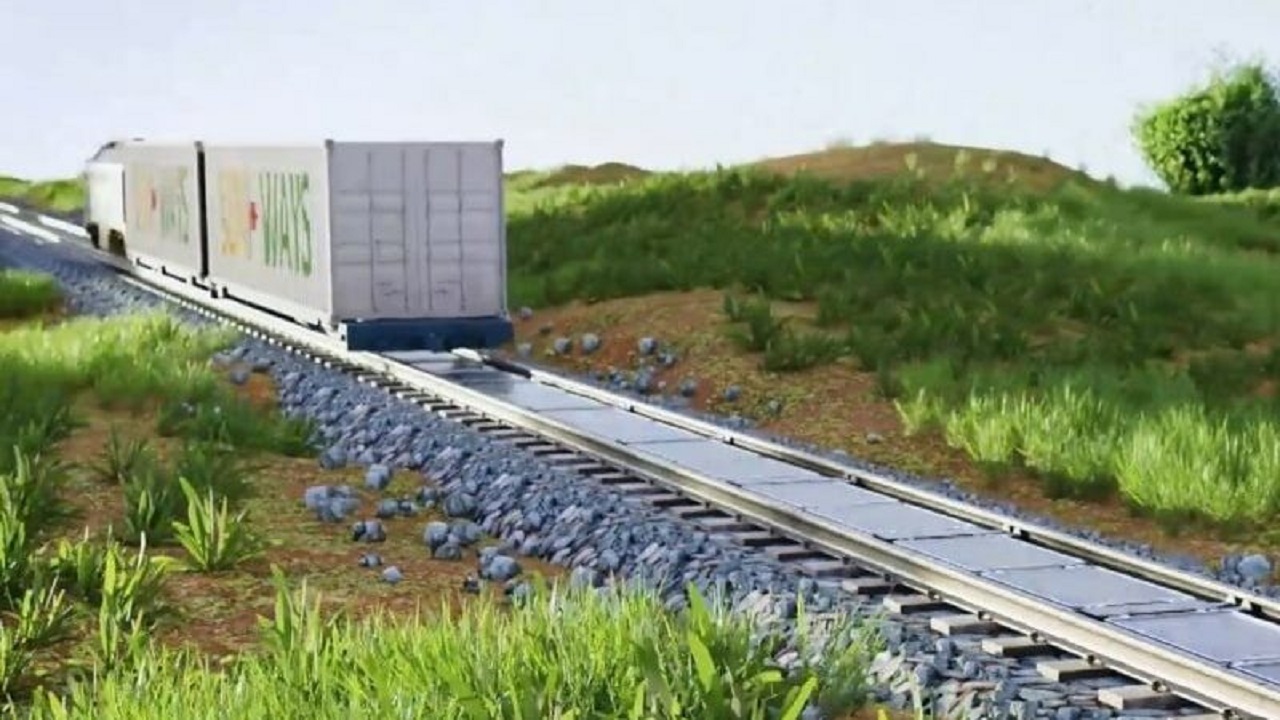
Swiss Company Develops Solar Panel ‘Carpet’ That Can Be Installed on Railway Tracks. In Addition to Generating Electricity, the Equipment Can Be Easily Removed for Maintenance.
Sun-Ways, a European startup, created a mechanical device to install removable solar panels on railway tracks to generate electricity. The innovation can be installed on half of the railway lines worldwide, according to the energy startup based in Switzerland.
‘Solar Panel Carpet’ Does Not Create Visual Impacts
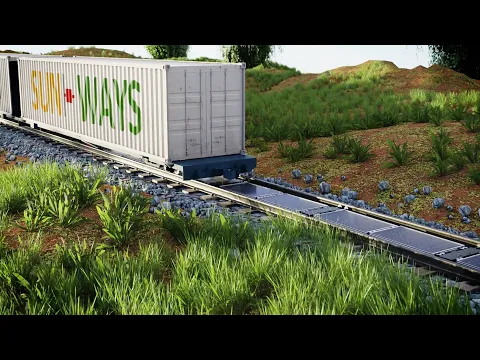

According to Baptiste Danichert, co-founder of Sun-Ways, the space between railway tracks is large enough to hold a standard-sized solar panel without hindering the passage of large vehicles. In this way, Switzerland could produce part of the electricity needed for its activities.
Large installations are difficult to build due to the lack of available space. Solar panels between tracks, on the other hand, do not create visual or environmental impact.
-
The Brazilian Air Force brings together 13 countries and over 1,200 military personnel in Campo Grande for the largest multinational natural disaster response exercise ever held in Brazil, featuring simulations of forest fires and high-complexity aerial rescues.

-
Sony is preparing the best video game in history with the PS6 expected in 2027, a native handheld running current games, a PlayGo system similar to Smart Delivery, savings of up to 70% in storage, and a new architecture based on the unified SDK 13.

-
The day when 1,825 mm of rain fell in 24 hours: a world record recognized by the WMO on Réunion Island shows how tropical cyclones and extreme terrain can produce absurd amounts of precipitation.

-
In northern Guatemala, a colossal scan revealed 964 Maya settlements and condensed this map into 417 cities, towns, and villages connected by 177 km of elevated walkways, suggesting a regional power much greater than previously thought for the Pre-Classical period.
The Sun-Ways uses factory-preassembled solar panels from Switzerland. The one-meter-wide panels are simply positioned between the railway tracks and secured to the tracks through a piston mechanism.
A train developed by Scheuchzer, a Swiss rail maintenance company, mechanically installs the solar panel carpet. The vehicle spreads the equipment along the railway tracks like a solar panel carpet that unfolds as it travels, according to the startup. The installation of solar panels to generate electricity along railway tracks is not a new concept.
Photovoltaic components mounted on railway sleepers are being tested by two companies, Greenrail from Italy and Bankset Energy from England. However, in partnership with EPFL, the Swiss Federal Technology Institute in Lausanne, Sun-Ways is the first to patent a system that can be removed.
Possible Obstacles to Overcome
Danichert claims that innovation is the ability to remove the solar panel carpet for maintenance tasks such as rail grinding. Trains continue to travel along the tracks without incidents due to rail grinding.
Electricity would be sent to the power grid and used to power homes. On the other hand, using energy for railway operations is more complicated and would require specialized technology, according to the company executive.
The company’s experimental effort still has much to prove. The International Union of Railways fears that solar panels may develop micro-cracks, increasing the risk of wildfires, or even distract train drivers with reflections. Thus, to prevent reflections from hitting the eyes of train drivers, the company claims that its panels are more durable than conventional ones.
Solar Panel Carpet Can Generate 1 Terawatt-Hour of Energy Per Year
Switzerland’s railway network has a total length of 5,317 km and, in theory, it could all be covered with solar panels. This would cover an area of approximately 760 soccer fields, disregarding tunnels and areas with limited sunlight. With the equipment, railway tracks can generate 1 terawatt-hour of solar energy per year, or about 2% of the country’s total electricity demand, according to Sun-Ways.
The startup’s goals go beyond the Alpine region, planning to expand its reach in the coming years to other regions of Europe, including neighboring countries Germany, Italy, and Austria, as well as the United States and Asia.
The company’s executive states that there are over a million km of railway lines in the world, and the expectation is that half of the world’s railway tracks can be equipped with their system.






Seja o primeiro a reagir!