





 Portuguese
  English
  Spanish
  5 min of reading
  0 comments



Toyota Prius Plug-in Hybrid 2026 Debuts With 223 Hp Engine, 69 Km Electric Range, and Sporty Design. Model Aims to Be the Brand’s New High-Efficiency Urban Hybrid.
Toyota officially presented the Prius Plug-in Hybrid 2026, the more technological and efficient version of the new generation of the world’s most famous hybrid. With a 223 hp engine, an electric range exceeding 65 km, and fast charging capability at public outlets, the new Prius PHEV is the brand’s bet to attract urban users seeking performance, economy, and the freedom to drive with or without gasoline.
With a futuristic look, focus on refined drivability, and cutting-edge technology package, the model is already available in markets like Japan, Europe, and North America. In Brazil, the PHEV version has not yet been confirmed, but there are already movements to expand the line of electrified vehicles in the country—especially in large urban centers like São Paulo and Brasília, where the charging infrastructure is advancing.
Prius 2026 With Plug-in Hybrid Powertrain Delivers Mid-size Car Performance With Compact Consumption
The new Prius PHEV 2026 represents the union of the best of both worlds: the efficiency of electric motors and the extended range of combustion engines. The mechanical set consists of a 2.0 Atkinson-cycle gasoline engine, combined with a high-torque electric motor and a new 13.6 kWh lithium-ion battery.
-
The car stored for 38 years: when opening the barn door, what appears is breathtaking and looks like a scene from a movie!

-
Fiat works miracles in the Brazilian market, lowers the price of its 0 km hatch to R$ 69,990, reestablishes the model as the cheapest car in the country, and reignites the battle against Kwid and C3.
-
Chevette with cooking gas: How the gas cylinder ends up being used in cars clandestinely and why this makeshift solution can result in leaks, explosions, damaged engines, and seized vehicles.

-
Fiat launches the new 2027 Toro hybrid with 48V, 176 hp, an electric motor of 15.5 hp, a 0.85 kWh battery, up to 7% fuel savings, 8% fewer emissions, and possible exemption from IPVA.


This configuration delivers 223 hp of combined power, a significant leap compared to previous generations. The result is an acceleration from 0 to 100 km/h in 6.7 seconds, performance comparable to mid-size sedans with turbo engines, but with an average consumption above 80 km/l in the combined cycle (considering the use of electric mode and regeneration).
The battery allows for a range of up to 69 km in 100% electric mode (WLTP cycle), perfectly meeting the daily needs of most drivers. Additionally, charging at regular outlets can be done in about 4 hours, and at fast stations, in less than 2 hours.
Prius Plug-in Hybrid Design Follows Sporty and Aerodynamic Trends
The design of the Prius 2026 has been completely revamped. The new generation bets on lower lines, fastback profile, and LED optical set with a striking visual identity. The body has become wider, and the center of gravity has been lowered, improving dynamic behavior without compromising comfort.
The rear with horizontally connected lights via an LED bar reinforces the modern look of the model. The aerodynamic coefficient (Cx) has been reduced to 0.27, contributing directly to the electric range and energy efficiency.
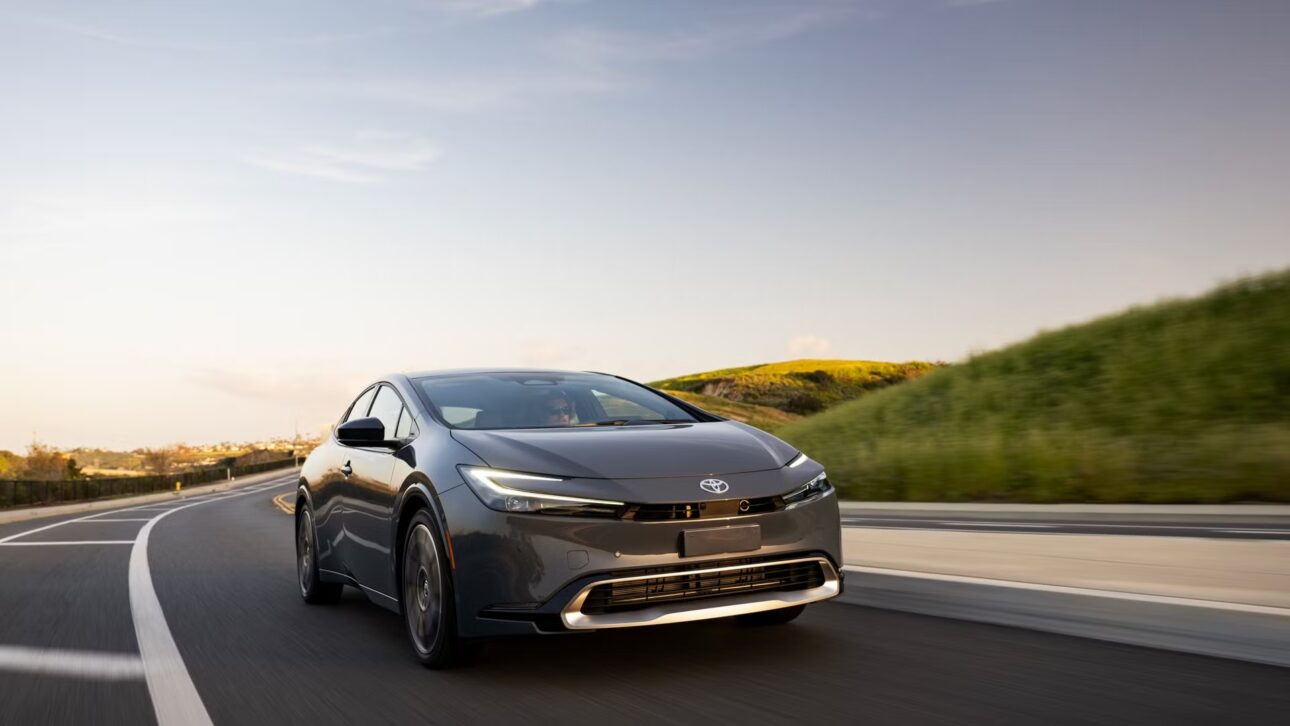
The 19-inch wheels with a closed design help reduce turbulence and reinforce the car’s futuristic character. Toyota also offers exclusive colors for the PHEV version, including pearlescent shades and glossy black finish.
Digital Interior of Prius PHEV Focuses on Technology and Functional Minimalism
Inside, the Prius Plug-in Hybrid 2026 features a completely digital interior, emphasizing functionality and connectivity. The horizontal dashboard is raised and includes a 7-inch digital display behind the steering wheel, positioned high (almost like a head-up display), in addition to the 12.3-inch multimedia center, compatible with Android Auto and Apple CarPlay wirelessly.
Interior highlights:
- Dual-zone automatic climate control system
- Ventilated and heated seats in all versions
- Interior coverings made from sustainable materials
- Ambient lighting responsive to safety alerts
- Optimized internal space thanks to the battery under the floor
The trunk, although slightly reduced due to the battery, still offers about 284 liters of useful capacity. The cabin is quiet, thanks to reinforced acoustic insulation and priority operation in electric mode.
Prius Plug-in Hybrid Features Semi-autonomous Driving and Complete Safety Sense Package
The Prius PHEV 2026 is equipped with the most updated version of the Toyota Safety Sense, a set of driving aids that enhances safety and convenience.
Standard features include:
- Automatic braking with pedestrian and cyclist detection
- Adaptive cruise control with intelligent cornering based on GPS
- Active lane-keeping assist with centering
- Traffic sign reader with automatic speed limit suggestion
- Blind spot monitor and rear cross-traffic alert
- Automatic parking with 360º view and smartphone control
The model can also be equipped with an optional solar panel, installed on the roof, which assists in charging the battery in small amounts while the car is parked—ideal for those who drive a lot in sunny areas.
Prius PHEV Is a Key Part of Toyota’s Electric Transition Strategy
The plug-in version of the Prius is a key piece in Toyota’s global electrification plan, which aims to sell over 3.5 million electrified vehicles annually by 2030. The proposal of the Prius PHEV 2026 is to provide a smooth transition for the public that is not yet ready to switch to a 100% electric car but wants to reduce emissions and save fuel in daily life.
Toyota argues that plug-in hybrids are ideal for regions where charging infrastructure is still limited, allowing for electric usage in urban routines and the use of the combustion engine on long trips—without range anxiety.
Toyota Evaluates Launch of Prius Plug-in in Brazil in the Medium Term
Although not yet confirmed, the Prius PHEV 2026 could arrive in the Brazilian market starting in 2026, depending on the evolution of charging infrastructure and the progress of tax incentives for electrified vehicles.
The model would compete with plug-in hybrids such as:
- Volvo XC40 Recharge T5
- BYD Song Plus DM-i
- Peugeot 3008 Hybrid4
- BMW 330e and 320e M Sport
- Jeep Compass 4xe (imported)
The estimated price, if launched in Brazil, would be in the range of R$ 230 thousand to R$ 270 thousand, positioned as a more efficient option with greater electric range compared to larger and less efficient models.









-

-

-

-

10 pessoas reagiram a isso.