Portuguese
  Spanish




Oil And Natural Gas Production In Brazil Reached 4.143 Million Boe/D In The Pre-Salt In September, Establishing A New Mark And Highlighting The Advances In Reserves And Sustainable Extraction
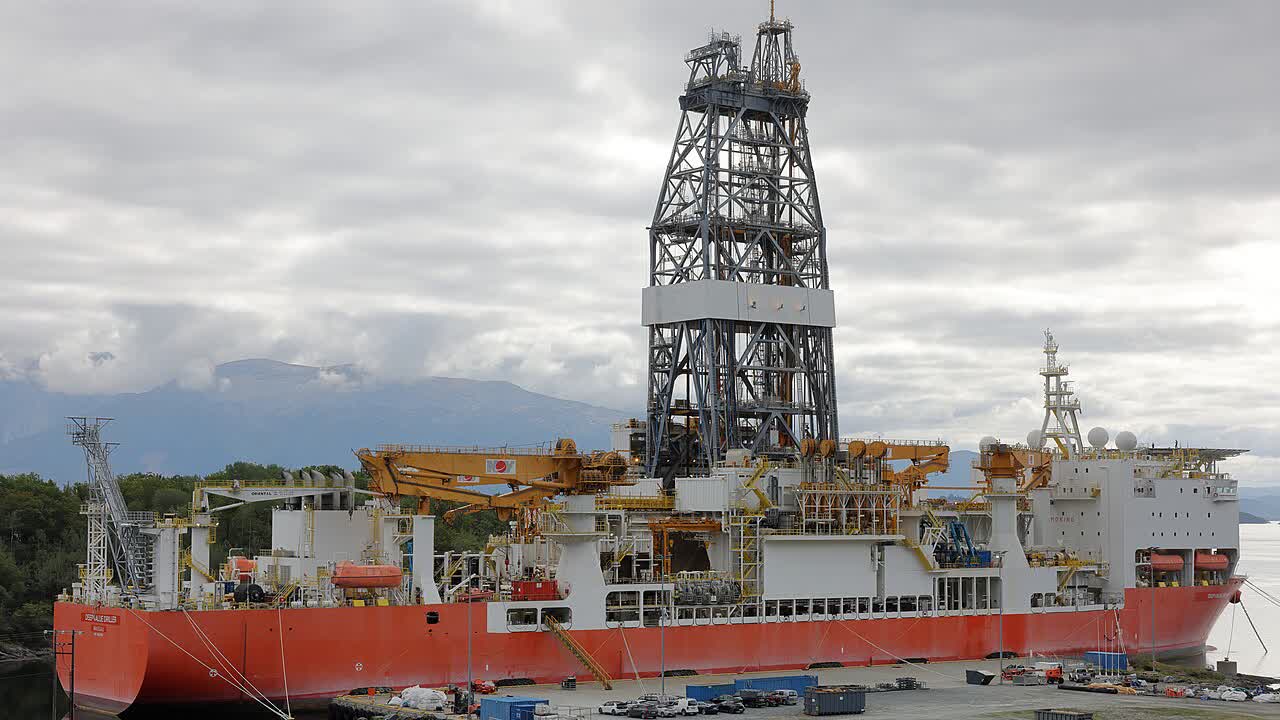
The oil and natural gas production in Brazil reached a new level in September 2025, a result that reflects technological advancement, operational scale, and the growing maturity of the pre-salt fields, according to a report published.
The monthly bulletin from the National Agency of Petroleum, Natural Gas and Biofuels (ANP) released on 3/11 indicates that extraction reached 4.143 million barrels of oil equivalent per day (boe/d) exclusively in the pre-salt layer.
This volume represents 81.1% of the national total, consolidating the critical role of this productive front. Additionally, the national total production, considering all environments, was 5.114 million boe/d in the month.
-
Qantas and Airbus Invest in Company Aiming to Convert Unsorted Household Trash into Jet Fuel

-
Brazil’s ANP Opens 86 New Oil Blocks in the Equatorial Margin, Expanding the Amazon River Mouth Frontier

-
OPEC+ Boosts Oil Supply by 188,000 Barrels per Day in July 2026, Leading to Price Drop from $112 to $89 per Barrel in Under Two Months

-
TotalEnergies Signs 20-Year Deal to Purchase 2 Million Tons of LNG from Alaska, Boosting Project Viability


These numbers highlight the prominence of deepwater production, efficiency in gas utilization, and operational control of offshore fields.
For those seeking to understand the current landscape of the sector, the data reveals growth in both oil and natural gas extraction, as well as the dynamics of wells, facilities, and operations of Petróleo Brasileiro S.A. (Petrobras) in consortium.
Let’s now analyze the key indicators in three fronts: production by environment, natural gas utilization, and operational origin.
Record Production In The Pre-Salt And Dominant Participation Of The Layer
The oil and natural gas production in Brazil was highlighted by the pre-salt layer, which recorded 4.143 million boe/d, an increase of 2.7% compared to August and 12.5% compared to September 2024.
The national total was 5.114 million boe/d, lower than the record of July (5.160 million boe/d).
Of that total of 4.143 million in the pre-salt, 3.209 million bbl/d refer to crude oil, and 148.37 million m³/d to natural gas.
Production was achieved through 169 wells in this layer. The pre-salt’s participation in the total was 81.1%.
This performance grants the pre-salt layer a strategic position in the national hydrocarbon matrix and highlights the effect of scale and favorable geological conditions.
The evolution shows that investments in technology and drilling in deep waters are yielding concrete results.
Utilization Of Natural Gas And Operational Efficiency
Regarding efficiency, the oil and natural gas production in Brazil also presents a natural gas utilization rate of 97.9% in September, with availability to the market of 66.24 million m³/d and burning of only 4.10 million m³/d.
Flaring decreased by 16.1% from August and increased by 12.8% compared to the same month in 2024. Natural gas production was at 190.60 million m³/d, an advance of 0.9% over August and 12.1% over September 2024.
This data reveals that in addition to extracting larger volumes, there is an intense effort to reduce waste and flaring, maximizing the economic and environmental value of resources.
Nearly complete utilization indicates operational maturity and attention to the best production practices.
Origins Of Production And Highlights Of Petrobras In Operations
This section discusses how oil and natural gas production in Brazil substantially depends on offshore operations and the prominence of Petrobras.
In September, offshore fields accounted for 97.6% of oil and 85.7% of natural gas, while operations by Petrobras, alone or in consortium, answered for 91.29% of total production.
In the month, there were a total of 6,533 wells in the country, with 524 offshore and 6,009 onshore. In the most prominent field, Tupi, in the Santos Basin, 818.08 bbl/d of oil and 40.48 million m³/d of natural gas were produced.
The largest oil production unit was the FPSO Almirante Tamandaré (222,160 bbl/d) and for gas, it was the FPSO Guanabara (12.13 million m³/d).
This structure reveals high concentration and scale in deepwater operations, as well as an almost overwhelming dominance of Petrobras in the national scenario, factors that shape the course of the hydrocarbon industry in Brazil.