





 Portuguese
  English
  Spanish
  4 min of reading


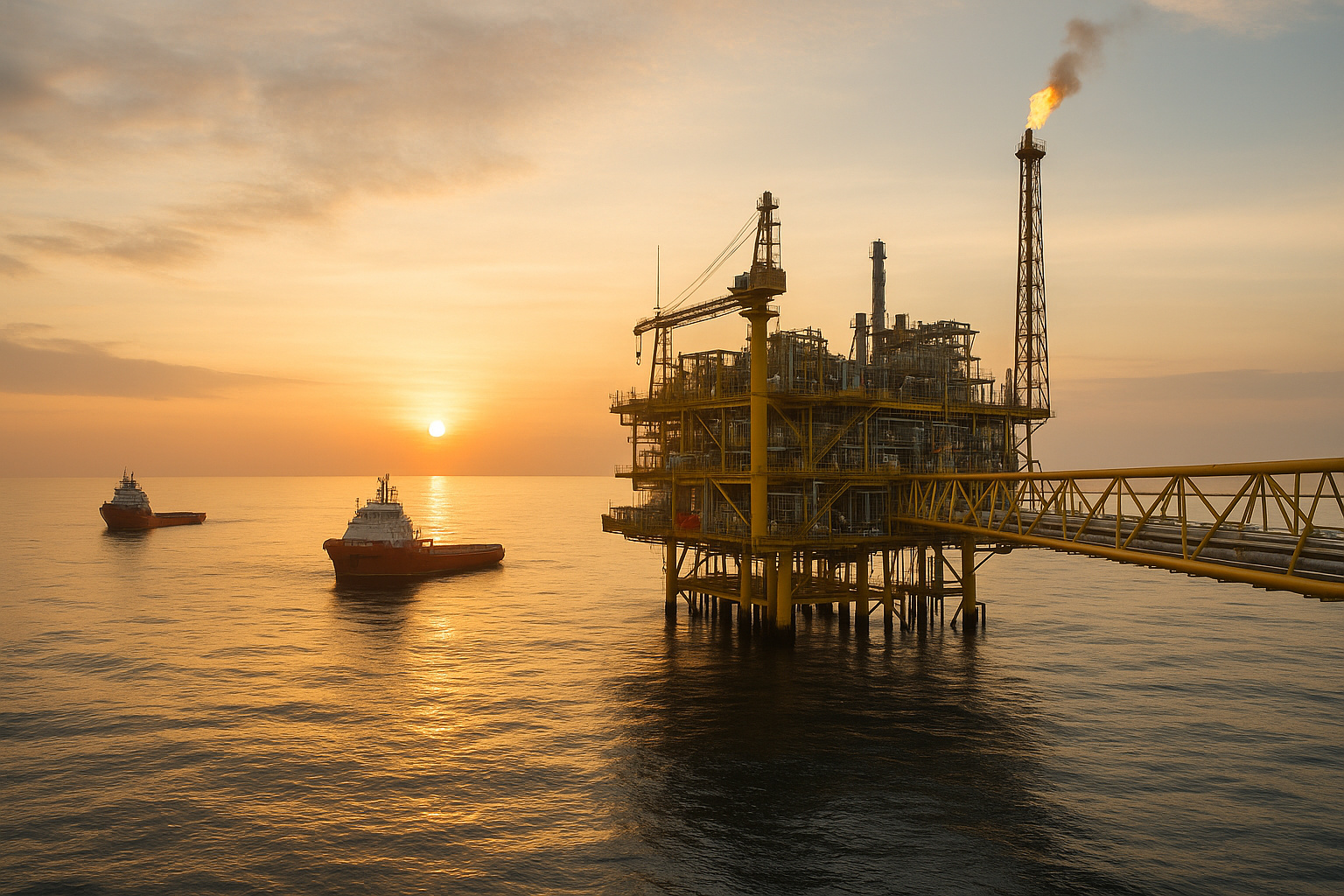
The production of oil in Brazil reached a historic milestone in October, according to the Monthly Oil and Natural Gas Production Bulletin, published by the National Agency of Petroleum, Natural Gas and Biofuels (ANP) on December 2, 2025. For the first time, the country surpassed 4 million barrels per day, consolidating a trajectory of expansion that, over the past years, repositioned Brazil among the major global producers. Although the number is directly related to the economy, it also reignites discussions on sustainability, energy planning, and the balance between exploration and environmental responsibility.
The Historical Evolution of Oil Production in Brazil
Since the 1970s, when Brazil relied on imports and faced strong vulnerability to international crises, oil shapes geopolitical decisions and national public policies. Still, only after the discovery of the pre-salt in the 2000s did the country gain autonomy and expand its international presence. Therefore, the current record emerges as a consequence of prolonged investments in technology, partnerships, and stable regulations.
According to the ANP, the total production of oil and natural gas reached 5.255 million barrels of oil equivalent per day (boe/d) in October 2025. Moreover, the volume surpassed the previous record of July, which registered 5.16 million boe/d. This steady advancement demonstrates that the sector continues on a trajectory that combines field maturation, operational efficiency, and the introduction of new projects in the pre-salt.
-
Lula reveals a masterstroke by Petrobras to undo a deal made by Bolsonaro, which involves the return of an important refinery that currently produces less than half of what was expected and makes Brazil dependent on international diesel.
-
A study confirms that the natural gas sector will reduce greenhouse gas emissions in Brazil by 0.5% and accelerate the energy transition by 2026.

-
Petrobras implements a severe adjustment and confirms a 55% increase in the price of aviation kerosene with a proposal for installment payments for the companies.

-
The rise in oil prices could ensure an extra revenue of R$ 100 billion for the Federal Government, indicates a recent economic study.


Recent Growth and Its Economic Implications
The extraction of 4.03 million barrels daily (bbl/d) represents a growth of 2.9% compared to the previous month and a rise of 23.2% year-on-year. These numbers, according to the ANP, reinforce the strength of the pre-salt areas, which continue to account for over 75% of national production. As a result, the country maintains a privileged position in the international market, especially as it adds regulatory stability and execution capability.
Additionally, the progress in the sector strengthens producing states like Rio de Janeiro and Espírito Santo, enhancing revenue from royalties and special participations. Historically, these resources drive investments in infrastructure, education, and health. However, experts remind that the fiscal dependency on oil requires caution to avoid future risks associated with commodity volatility.
The Role of Sustainability in the Current Scenario
Although growth is significant, the debate on sustainability has become a central part of the global agenda. Therefore, whenever Brazil breaks a production record, it also intensifies reflections on how to balance economic expansion and climate commitment. After all, the energy transition, discussed at events such as the COP30, reinforces the urgency to reduce emissions and prepare the matrix for renewable sources.
According to the federal government’s website, decarbonization and energy efficiency policies are advancing parallel to exploration. In addition, research on carbon capture and offshore technologies seeks to reduce environmental impact. Thus, the sector needs to continually modernize, maintaining competitiveness and social-environmental responsibility.
Infrastructure and Challenges in the Sector
The record production also reflects robust investments in platforms, logistics, and operational safety. However, experts warn that maintaining high levels will depend on the capacity to expand flow, storage, and processing. Moreover, according to the ANP, the country still faces bottlenecks that require integration between government, companies, and research institutions.
On the other hand, the Brazilian industry has developed innovative solutions over the past decades. The exploration of the pre-salt, for instance, has become an international reference for efficiency and depth in ultra-deep waters. Therefore, even in the face of challenges, the country demonstrates technical maturity to continue expanding.
Brazil’s Position in the International Oil Market
The registered record occurs at a time of global instability. Recent geopolitical tensions, including conflicts in Eastern Europe and uncertainties in the Middle East, pressure markets and elevate the importance of stable producers. Therefore, Brazil, with its relatively predictable regulatory environment, reinforces, according to industry analysts, its image as a reliable supplier.
Aside from gross production, the country diversifies operations, increases exports, and strengthens relationships with major consumers. Thus, it builds a strategic position that benefits the trade balance and politicizes the internal market less than in previous decades.
The Future of the Oil and Gas Sector
With production above 4 million barrels daily, new questions arise about continuity, risks, and opportunities. According to experts cited by economic publications, the sector needs to ensure regulatory predictability, stimulate private investments, and strengthen policies for a fair transition. Thus, Brazil will be able to maintain a competitive pace even with global changes in demand for fossil fuels.
Still, the outlook is optimistic. Newly installed platforms are expected to increase production in 2026 and 2027. Additionally, companies focus on efficiency and cost reduction, increasing resilience in scenarios of unstable prices.
A Milestone That Requires Responsibility
Finally, the record announced by the ANP demonstrates technical capacity and industrial maturity. However, it also highlights the need to reconcile expansion with sustainability. Thus, governments, companies, and society need to discuss the responsible use of oil, ensuring economic benefits while strengthening climate commitments.
In this way, the milestone of October does not close a cycle. It inaugurates a new stage in which efficiency, innovation, and sustainability walk together to define Brazil’s energy future.







Seja o primeiro a reagir!