





 Portuguese
  English
  Spanish
  5 min of reading
  0 comments


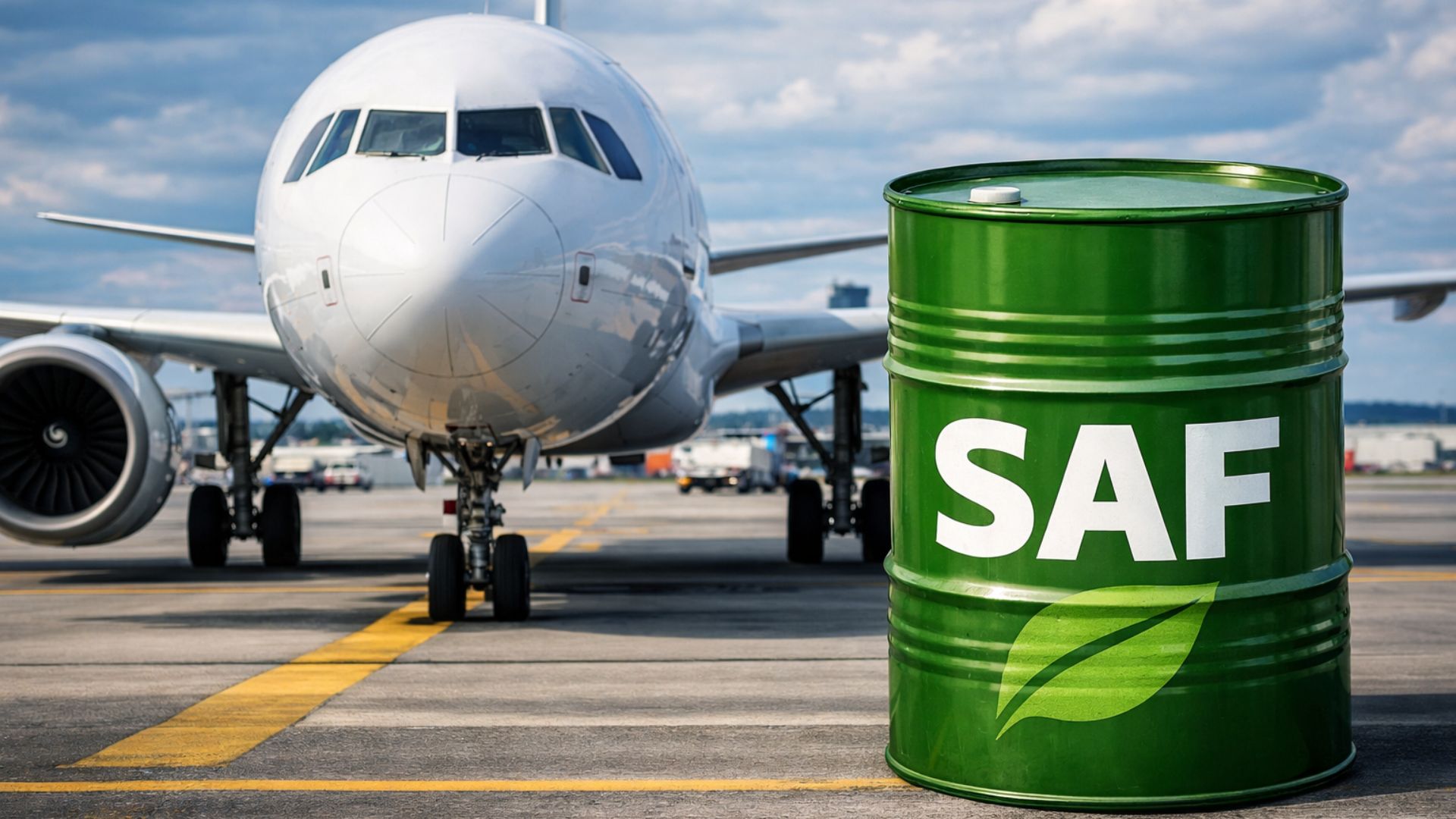
Brazil Advances in the Use of SAF by Structuring Sustainable Aviation, Increasing the Production of Sustainable Aviation Fuel, and Accelerating the Energy Transition Focused on Emission Reduction and Competitiveness
Brazil ends the year with significant advances in the energy transition of the aviation sector, advancing in technical, productive, and regulatory capacity to meet, by 2029, the national demand for sustainable aviation fuel. According to an article published by AEROIN on Monday (29), this movement reinforces Brazil’s role in the global agenda of sustainable aviation, with direct impacts on the reduction of greenhouse gas emissions and the construction of a new low-carbon industrial chain.
National SAF Production Accelerates the Energy Transition of Brazilian Sustainable Aviation
One of the main milestones of this process was Petrobras’s announcement regarding the first deliveries of SAF produced in the country. The initiative is the result of investments by the state-owned company in the development of biofuels and public policies coordinated by the Ministry of Ports and Airports (MPor), in collaboration with the Ministry of Mines and Energy. The advance represents a concrete step in the decarbonization of Brazilian air transport, a sector historically dependent on fossil fuels.
The SAF is considered the main viable alternative to reduce emissions in the short and medium term in civil aviation. Unlike other solutions, such as electric or hydrogen-powered aircraft, sustainable aviation fuel can be used in the current fleet, blended with traditional jet fuel, without requiring immediate structural changes.
-
CNPE strengthens policy and prevents imported biodiesel from being mixed with diesel, aiming to strengthen the Brazilian industry and protect jobs by reducing external dependence amid tensions in the global market.

-
Revolution in public transport: Goiânia puts into circulation the first articulated buses powered by biomethane in Brazil and promises to drastically reduce pollution on the Anhanguera Corridor.

-
From the field to the pipelines: Mato Grosso do Sul accelerates the energy transition and consolidates a new axis in renewable energy with the arrival of a giant biogas plant.
-
The Economist states that Brazil has a “secret weapon” against expensive oil and highlights how the country can reduce economic impacts even in international scenarios of high volatility.


This factor makes the SAF strategic for the energy transition of the aviation sector, allowing for environmental advancements without compromising the operation of airlines. Domestic production increases supply security and strengthens the Brazilian industry, creating a more favorable environment for large-scale adoption.
The Minister of Ports and Airports, Silvio Costa Filho, highlighted that the development of SAF is essential to position Brazil in the international agenda of sustainable aviation, aligning economic growth and environmental commitments.
Sustainable Aviation Fuel is Key in Emission Reduction
The relevance of sustainable aviation fuel is directly linked to its potential for climate mitigation. According to data released by Petrobras, the renewable fraction of SAF, derived from plant-based feedstocks, allows for a reduction of up to 87% in net carbon emissions, considering the entire lifecycle of the fuel.
This environmental performance places SAF at the center of global aviation decarbonization strategies, especially in a context of increasingly stringent targets imposed by international organizations and climate agreements.
In addition, the use of SAF helps Brazil meet commitments made under climate policy, reinforcing its image as a country capable of offering sustainable energy solutions on an industrial scale.
Sustainable Aviation Gains Institutional Support with Interministerial Forum
To structure the energy transition of civil aviation, the federal government created the Forum for Energy Transition in Civil Aviation (Fotea). The interministerial committee, coordinated by MPor in partnership with the Ministry of Mines and Energy, aims to propose public policies, coordinate actions, and monitor the implementation of SAF in the country.
Fotea operates in alignment with the Future Fuel Law (Law No. 14.993/24), which establishes guidelines for the development of low-carbon fuels in Brazil. Institutional governance is considered essential to ensure regulatory predictability, reduce risks, and attract private investments to the sector.
This structured regulatory environment is one of the pillars for consolidating sustainable aviation in Brazil, creating conditions for the market to develop continuously and safely.
Brazil Brings Together Competitive Advantages to Lead SAF and Sustainable Aviation
Brazil possesses characteristics that place it in a privileged position for the development of SAF. The country has a consolidated refining industry, extensive experience in the production of biofuels, and a large availability of renewable feedstocks, such as vegetable oils.
These factors allow for the creation of an integrated production chain, with the potential to meet both domestic and international market demands. The combination of natural resources, technical knowledge, and coordinated public policies enhances Brazilian competitiveness in the global landscape of sustainable aviation.
Furthermore, the domestic production of sustainable aviation fuel stimulates regional development, generates qualified jobs, and boosts the green economy, expanding the social and economic benefits of the energy transition.


SAF Enables Decarbonization Without Slowing Down Air Transport Growth
One of the biggest challenges of the climate agenda is to reduce emissions without compromising economic growth. In the aviation sector, SAF emerges as a solution capable of balancing these two objectives. The adoption of sustainable aviation fuel allows for a reduction in carbon footprint while maintaining the operational efficiency of airlines.
This aspect is especially relevant for developing countries, where the expansion of air transport is essential for regional integration, tourism, and trade. The energy transition based on SAF ensures that this growth occurs in a more sustainable manner.
Furthermore, the compatibility of SAF with existing infrastructure accelerates its adoption, making sustainable aviation a practical and scalable reality.
National Program Strengthens Investments in Sustainable Aviation Fuel
The development of SAF is integrated into the National Sustainable Aviation Fuel Program, which aims to stimulate investments, increase production capacity, and ensure regulatory security for the sector. Cooperation between the government and strategic companies, such as Petrobras, is seen as essential to consolidate this new market.
Regulatory predictability improves the business environment, reducing uncertainties and encouraging technological innovation. This collaborative model reinforces Brazil’s role as a reference in energy transition applied to aviation.
As such, the country not only meets domestic demands but also positions itself as a potential exporter of technology, knowledge, and, in the future, sustainable aviation fuel itself.
The Role of SAF in Brazil’s Global Positioning
International pressure for low-carbon solutions makes sustainable aviation a central theme in the global climate agenda. Countries that quickly structure their SAF production are likely to gain a competitive advantage in a rapidly expanding market.
In this context, Brazilian progress strengthens energy sovereignty and increases the country’s relevance in the global energy transition. Domestic SAF production consolidates Brazil as a strategic player in the decarbonization of air transport, aligning economic development, innovation, and environmental responsibility.
A New Chapter for Sustainable Aviation and Brazilian Energy Policy
The national production of sustainable aviation fuel marks a new chapter for the Brazilian aviation sector. By investing in SAF, Brazil is consistently advancing in the energy transition, reducing emissions and strengthening its position in the international agenda of sustainable aviation.
Based on regulatory security, competitive advantages, and institutional cooperation, the country creates conditions for sustainable growth in air transport, aligned with global environmental commitments. The movement demonstrates that it is possible to reconcile aviation expansion, industrial innovation, and the reduction of climate impacts, consolidating Brazil as a reference in clean energy applied to aviation.









-

Uma pessoa reagiu a isso.