





 Portuguese
  English
  Spanish
  3 min of reading
  1 comment


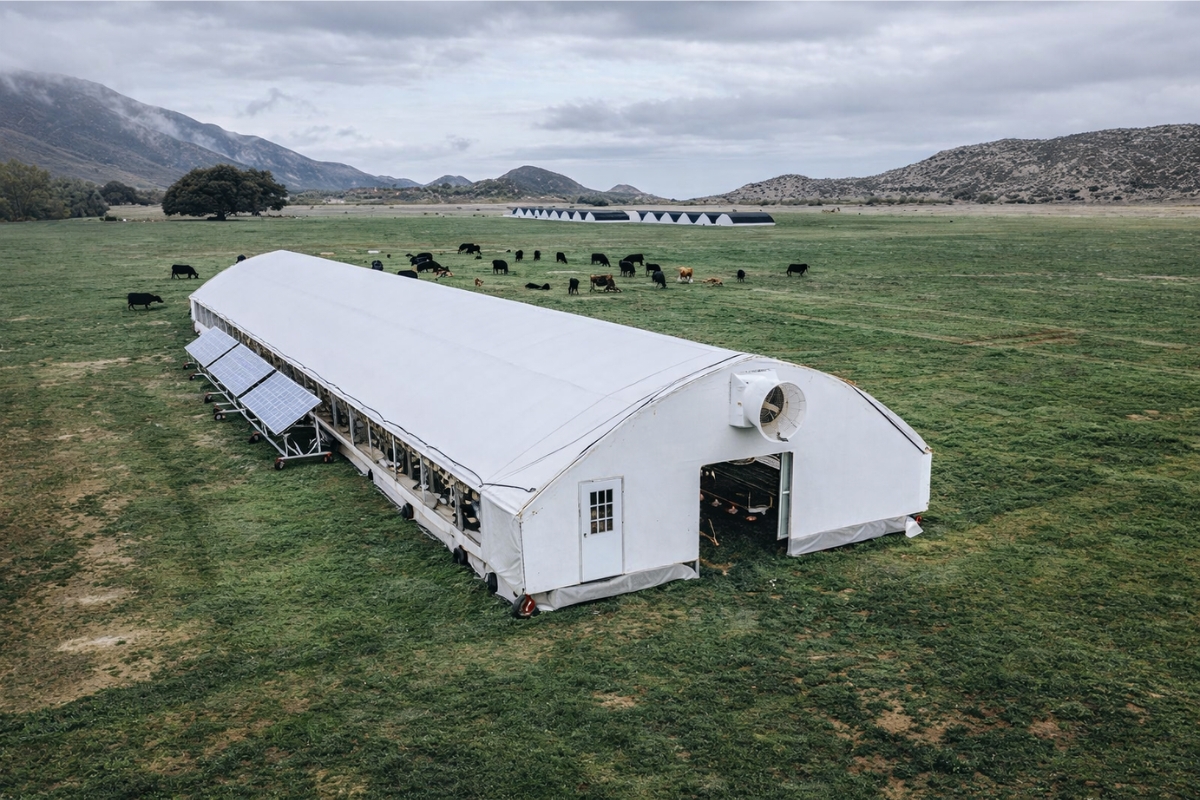


In The United States, Pasturebird Created A Mobile Shelter With 6,000 Chickens To Optimize Pasture, Reduce Daily Labor, And Attract The Attention Of Farmers
Chicken farming on a large scale received a technological boost in the United States with a mobile greenhouse-type shelter that moves over the pasture every day.
The proposal is straightforward: one person can manage up to 6,000 chickens, maintaining constant access to fresh grass and insects and eliminating the need for manual manure cleaning.
The report was published by Fast Company, a business and technology magazine. The system has also been mentioned in reports by Poultry News, an industry portal.
-
He started running at 66 years old, broke records at 82, and is now a subject of study for having a metabolic age comparable to that of a 20-year-old, in a case that is intriguing scientists and inspiring the world.

-
Oldest tree on the planet reappears after 130 years of searches: Wattieza, 385 million years old, was 10 meters tall and had no leaves or seeds; Gilboa fossils in New York solved the mystery in 2007.

-
A 48-square-meter house assembled in hours with 4,000 bricks made of recycled plastic that does not absorb moisture, has natural thermal insulation, and costs less than 90,000 reais in a complete kit.

-
Luciano Hang revealed that Havan’s air fleet has already accumulated more than 20,000 landings, 10,000 flight hours, and 6 million kilometers traveled, and he says that without the planes, the company would never have grown so quickly.


How The Mobile Shelter Moves The Flock In Just 6 Minutes And Changes The Routine
The difference begins with the movement. The shelter moves to a new pasture area, keeping the flock always over available vegetation.
With motorized wheels, the movement can occur in 6 minutes, reducing the time spent on repetitive tasks and freeing the operator for other farm duties.
This daily advancement also helps maintain a more stable internal environment, as manure does not accumulate in a fixed spot for long periods.
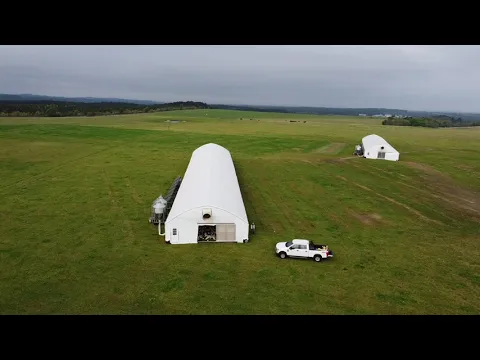

Why The Model Eliminates Manual Cleaning And Uses Manure As Fertilizer
The shelter works with direct contact with the ground, allowing the manure to be distributed in the area where the birds pass.
In practice, this reduces the need to remove waste and transforms the residue into natural fertilizer, with a positive effect on the soil throughout the management.
The result is a production logic where the pasture receives nutrients and the operation reduces steps that previously required a lot of labor.
Solar Panels On The Roof Sustain The Operation And Increase Autonomy In The Field
Another central point is energy. The roof incorporates solar panels, sustaining the shelter’s systems without relying on the same level of fixed infrastructure.
This choice facilitates use in open areas, keeping the routine more continuous and with fewer interruptions due to energy logistics.
The solution combines mobility and electricity generation to make daily management simpler and more predictable.
Automatic Feeding System Cuts Repetitive Tasks And Strengthens Control
The set includes an automatic feeding system, designed to reduce the operator’s workload.
With fewer manual steps, managing the flock becomes more organized, with a clearer routine and greater focus on monitoring the flock.
This helps make the idea of a single person caring for a volume of up to 6,000 chickens viable.
Pasturebird And The Focus On Scaling To 6,000 Chickens With More Sustainable Production
The operation was designed to scale pasture-based farming without relying on the traditional model of fixed structures and constant cleaning.
Fast Company, a business and technology magazine, detailed the use of the mobile shelter to maintain daily access to pasture and reduce human effort in the routine.
Poultry News, an industry portal, described the set with solar panels, motorized wheels, and rapid movement in the field.
The mobile greenhouse-type shelter stands out for combining mobility, automation, and solar energy in a structure aimed at pasture.
With 6,000 chickens, movement in 6 minutes, and the use of manure as natural fertilizer, the idea changes the rhythm of work and repositions daily management as part of the system itself.









Esse formato aumenta muito o risco sanitário. Mas é uma boa ideia para criações de pequena escala