





 Portuguese
  English
  Spanish
  5 min of reading
  2 comments


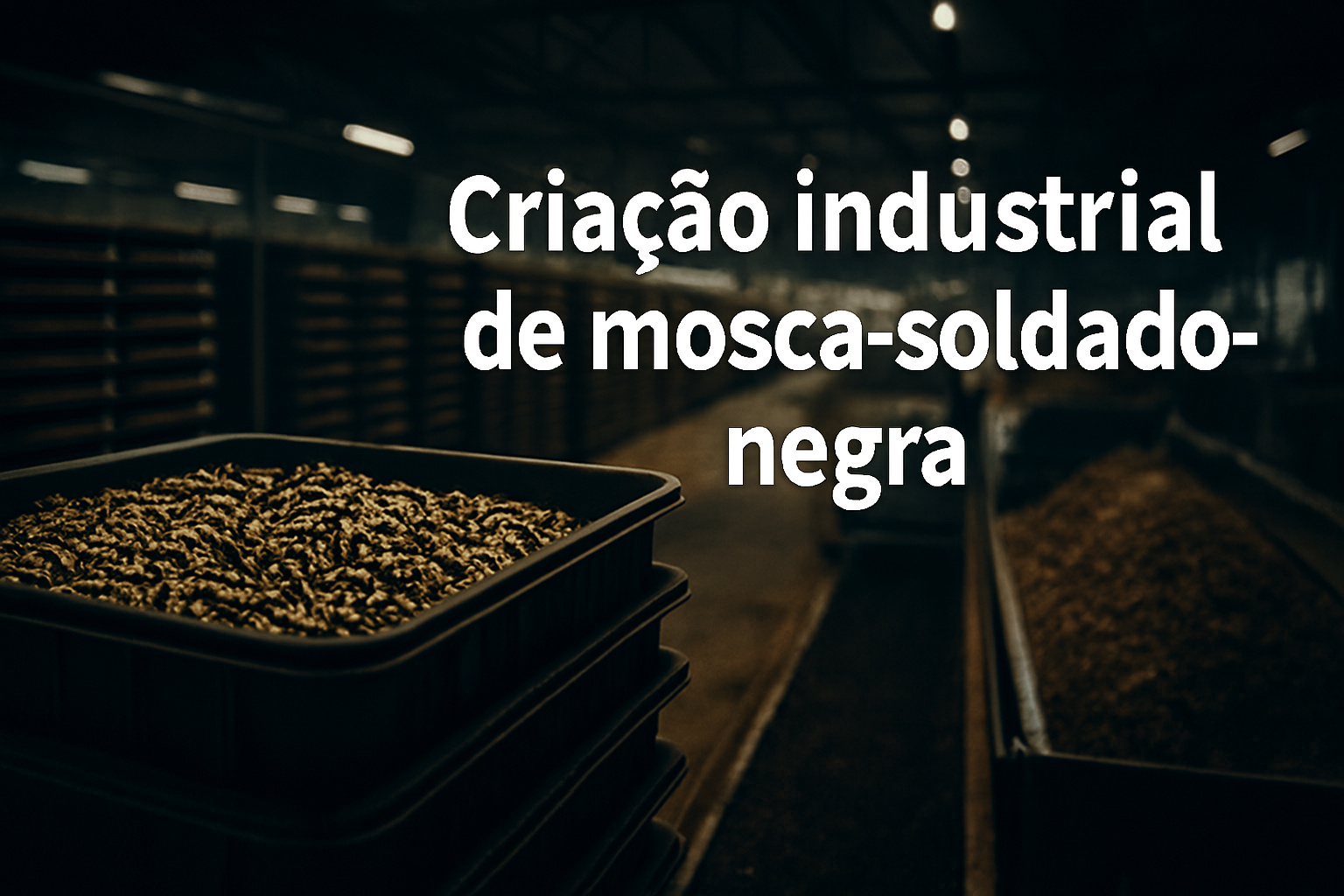


Black Soldier Fly Farming Advances in China with Plants That Process 20 Tons/Day and Transforms Larvae into One of the Most Efficient Proteins in the World.
In recent years, China has become one of the global epicenters of organic waste bioconversion through the black soldier fly (Hermetia illucens), a tropical insect that, until a few years ago, was unknown outside entomology laboratories. Starting in 2020, the country accelerated research, environmental regulations, and business models aimed at transforming larvae into animal protein, oil rich in lauric acid, and high-value biological fertilizer.
The movement gained momentum mainly after studies conducted by Chinese universities and the Ministry of Agriculture showed that the species is capable of converting organic matter into biomass with efficiency superior to any other production animal. The larvae grow up to 5,000% of their initial weight in just 12 days, feeding on food scraps, agricultural waste, and industrial byproducts.


From this set of evidence, the first industrial installations emerged, some of which are already designed to operate continuously, with daily intake of tons of waste and scheduled harvesting of larvae. A study published in 2020 detailed the operation of a plant that receives more than 20 tons of waste per day, solely with BSF — a milestone that established China as an emerging power in the sector.
-
The water crisis that could change everything this year has already begun; it’s not just about the climate, it affects technology, raises product prices, and can halt entire companies without warning.

-
A Japanese mason transforms raw granite into small cups and handcrafted utensils, collects giant stones, cuts with precision, and impresses with detailed manufacturing and finishing.

-
With 1,066 acrylic panels, the building known as the friendly alien is supported by a steel skeleton, has a façade that functions as a giant screen, and impresses the world without any internal columns.

-
Scientists warn that a comet about 1 km in size that has started to release gases may actually change direction in space. It was spotted by NASA and surprises with potential impacts near Earth.

Simple Technology, Gigantic Impact
What drives the advancement of BSF in China is not sophisticated technology, but the opposite: low-cost facilities, climate-controlled warehouses, plastic greenhouses, stacked trays, and controlled ventilation systems. The simplicity allows for rapid production scaling, replicating units in rural areas, and transforming what was previously waste into economically valuable biomass.
The black soldier fly has become strategic because its larvae do not transmit diseases, do not invade homes, do not feed in the adult stage, and have impressive conversion rates.
For every ton of waste processed, the larvae can generate about 60 to 90 kilograms of biomass, depending on the composition of the feed. The surplus becomes what is called “frass,” an organic fertilizer rich in nitrogen, potassium, and phosphorus.

The logic driving the sector is clear: waste conversion into feed, and feed into money. With global pressure for sustainability, BSF fits into Chinese policies aimed at reducing landfills and strengthening the circular economy.
Industrial Scale and Continuous Operation
In practice, these units function like integrated factories. Trucks unload food scraps, discarded fruits, supermarket waste, and byproducts from grain processing. The material is ground, sanitized, and distributed in trays where thousands of larvae wait for food.
Reproduction occurs year-round because the insectaries maintain constant temperature and humidity. Each female can lay up to 500 eggs per cycle, forming masses dense enough to supply the unit itself without relying on external collection. The larvae grow rapidly, reaching the ideal harvest point before transforming into pupae.
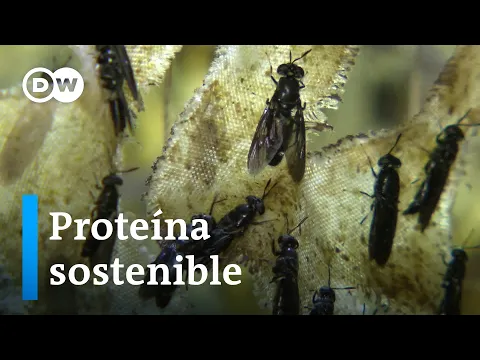
Industrial plants adopt precise schedules: daily feeding, harvesting every few days, drying the larvae, pressing for oil extraction, and grinding for protein meal production. In some units, the process generates enough inputs to supply aqua farming, poultry farming, and even pet food industries, which use BSF as an alternative to soybean meal and fish meal.
Why is China Investing Heavily in the Insect?
There are three main reasons for the Chinese expansion:
Pressure for solutions to organic waste.
Chinese cities produce millions of tons of waste per month, and BSF is one of the fastest ways to reduce volume and transform waste into valuable inputs.
Growing demand for animal protein.
With an increase in domestic consumption and challenges in traditional supply, the country is seeking alternative sources to stabilize feed prices.
Economic competitiveness.
Production with black soldier fly is cheaper than raising animals that require water, feed, and more complex infrastructure.
Additionally, environmental policies stimulate low-impact systems. The larvae eliminate the need for fertile land, reduce greenhouse gas emissions, and help mitigate issues of improper waste disposal.
What Makes the Black Soldier Fly So Efficient?
From a technical perspective, BSF has rare characteristics:
- Extremely High Feed Conversion
- Ultra-Fast Growth
- Low Infrastructure Requirements
- Continuous Reproduction in Controlled Environments
- High Density per Square Meter
The composition of the larvae is also surprising. With levels that can reach 45% protein and 30% fat, the final product is comparable to fish meal, but produced from resources that would be discarded.
The oil is rich in lauric acid, a substance used in feeds, cosmetics, and even industrial applications. The fertilizer derived from the larvae’ feces has the ability to improve degraded soils and has gained traction in the Chinese agricultural market.
The Silent Giant of the New Global Protein
Although the sector still does not disclose consolidated national estimates, the presence of BSF in Chinese industrial plants already indicates that the insect is becoming one of the pillars of the so-called new protein economy: a model that replaces traditional food with faster, more efficient, and sustainable sources.
China is not alone; countries like Vietnam, Indonesia, and Malaysia are following the same path, but its industrial pace and volume of available waste place the country in a strategic position to dominate this market.
The trend is clear: as the demand for cheap and sustainable feed increases, the black soldier fly is set to establish itself as one of the most scalable solutions in Asia to supply livestock, aquaculture, and emerging alternative food sectors.
The Future of BSF and Global Impact
Experts expect that in the coming years, BSF will stop being just a niche to become an environmental commodity.
With increasingly strict laws on organic waste and food waste reduction goals, the insect appears as a natural biotechnology tool capable of uniting economic interest and positive environmental impact.
For China, the equation is already given: waste that used to be expensive to dispose of now generates money, jobs, and strategic inputs. And as new industrial plants expand capacity and automate stages, BSF approaches a turning point that could redefine how the world produces protein.






Parabéns,pela inovação, já q se produz de forma ambiente sustentável
Impressionante