





 Portuguese
  English
  Spanish
  5 min of reading
  7 comments


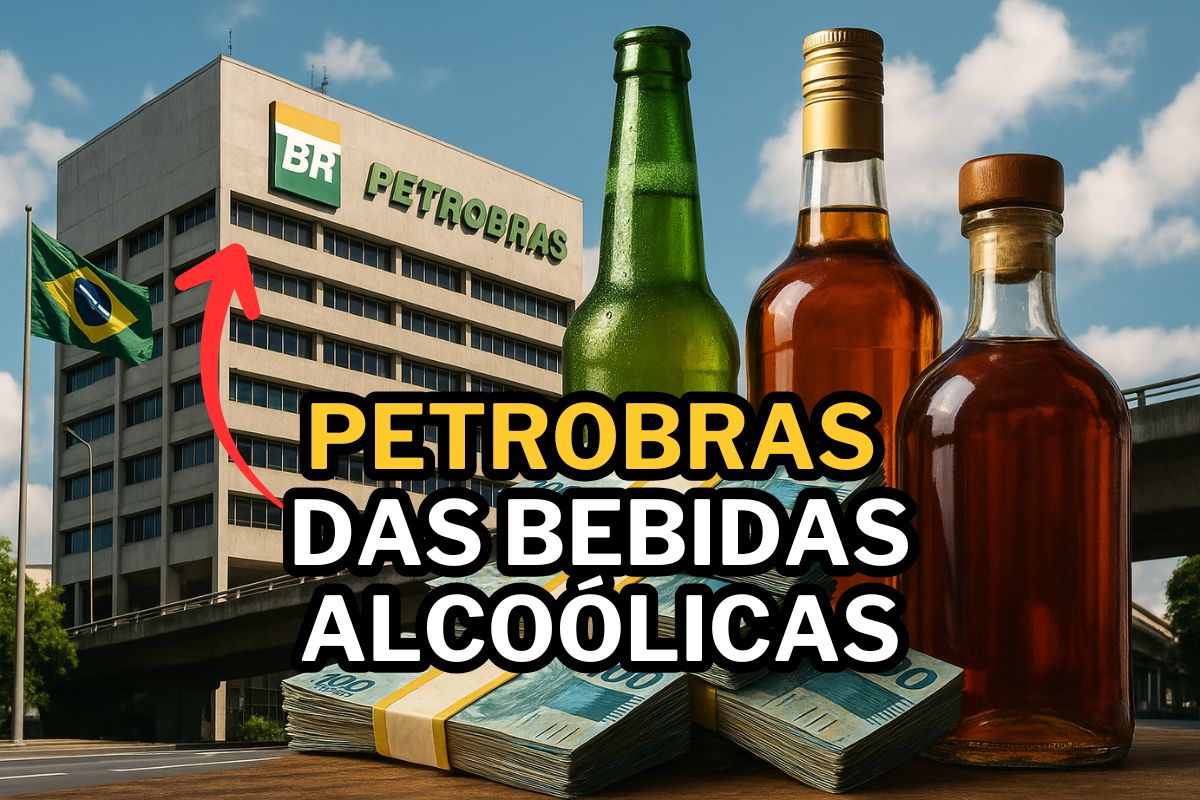


Defended as a Solution After the Methanol Crisis, the Idea of a State-Owned Company for Alcoholic Beverages Would Centralize Distribution, Enhance Sanitary Oversight, and Direct Revenue to the Budget, Changing Brazil’s Relationship with Production, Price, and Consumption
The proposal to create a state-owned company for alcoholic beverages reintroduces a control model into the public agenda that aims to reduce sanitary risks, increase traceability, and monetize a high-margin market. For the proponent, a professor at USP, in an interview with BBC, the state-owned company would operate the wholesale distribution and part of the strategic retail, channeling income directly to health and education and establishing uniform quality standards throughout the country.
At the center of the debate is the recent crisis of methanol poisonings, which exposed serious flaws in oversight and gaps in the illicit supply chain. The author’s view is that the state-owned company for alcoholic beverages would create a single regulatory funnel, with controlled purchases and sales, making adulteration more difficult and facilitating the actions of inspection agencies.
What Is the Proposed State-Owned Company and What Problem Does It Aim to Solve
The idea is based on a model similar to public alcohol monopolies already adopted in other countries.
-
Oil surged to $115 a barrel due to the war in the Middle East, and diesel in Brazil has already risen to R$ 7.45 per liter, while the United States…

-
Brazilian city bets on the business environment to generate jobs and attract investments in the energy sector — secretary reveals strategy at Macaé Energy 2026.

-
50 viaducts, 4 tunnels, 28 bridges, and 40 kilometers of bike paths: BR-262 in Espírito Santo will receive 8.6 billion reais for the largest engineering project in the state’s history, inspired by the Immigrant Highway in São Paulo.

-
Brazil produces too much clean energy and doesn’t know what to do with it: over 20% of solar and wind capacity was wasted in 2025 while investors flee and 509 renewable generation projects were abandoned in the last year.


The state-owned company for alcoholic beverages would act as a mandatory distributor, selling to bars, restaurants, and supermarkets, in addition to defining sanitary and logistical criteria.
The central argument is simple: where there is a single legal supply channel, there is more traceability.
The target problem is contamination and informality.
In crises like that of methanol, oversight gaps and parallel chains favor products with no control of origin.
By concentrating distribution, the state-owned company would allow for a complete tracking of the batch to the point of sale and real-time checks on recalls, certifications, and compliance.
How It Would Work in Practice and Who Would Be Responsible
The suggested design positions the state-owned company as a wholesale distribution monopoly, with batch control systems and a unified fiscal seal.
Bars and businesses would purchase exclusively through the official platform.
Sanitary surveillance and cargo transit agencies would oversee routes, timelines, and standards.
The governance would need a technical council with experts in public health, regulation, and the production chain.
Performance-based hiring, compliance targets, and price transparency would be essential to ensure efficiency and avoid political capture.
Fiscal Impact and Allocation of Revenue
The proponent argues that the state-owned company for alcoholic beverages would add billions to the budget.
Revenue would come from distribution margins, regulatory fees, and public brand royalties, with segregated accounts to finance health and education policies.
Budget predictability is seen as a distinguishing factor compared to the current mosaic of taxes and waivers.
For the consumer, the price effect would depend on the markup design and possible tax adjustments.
The supporting argument is that logistical efficiency and combating clandestinity would tend to reduce losses and externalities, allowing for stable prices with greater sanitary safety.
Quality, Methanol, and Traceability: What Changes in Control
The new arrangement would expand laboratory testing by sampling, automatic blocking of suspect batches, and public alerts.
Each bottle would have individual identification, integrating a national database.
Surprise inspections would be facilitated, as the legal flow is concentrated and the origin of each package is known.
In risk episodes, the state-owned company for alcoholic beverages could rapidly and coordinatedly recall products, publish compliance nonconformity dossiers, and trigger administrative and criminal accountability with a robust evidentiary chain.
Effects on the Private Market and Competition
The model does not eliminate private producers, but changes the point of contact with the market.
Manufacturers would continue to develop brands, packaging, and campaigns, selling to the state, which standardizes entry criteria.
The recurring criticism is the risk of bureaucratization; the counterbalance lies in distribution SLAs, maximum timelines, and internal penalties in case of delays or outages.
For retail, centralized purchases and a predictable logistical calendar may reduce inventory costs.
Frauds and triangulations become more difficult, increasing legal security for networks and small establishments.
International Experiences and Why the Author Mentions Them
Models of state monopoly in distribution have existed or exist in countries like Canada and Sweden, and there have been experiences in Uruguay.
These are mentioned to support technical viability: control by state stores, strict sanitary screening, and reinvestment of profits in public policies.
The local debate would need to adapt rules to cultural habits and the Brazilian federative system, with protocols for responsible consumption and use zones where applicable.
Legal, Operational, and Political Challenges
Implementation would require specific legislation, tax integration, and transition rules for existing contracts.
Federative conflicts may arise, as states and municipalities have their own laws regarding hours and permits.
Anti-corruption governance, active compliance, and independent audits are necessary conditions for credibility.
On the political front, private sector lobbying and fears of price increases are foreseeable obstacles.
The response of the regulatory design would need to ensure transparency, measure results in public health, and publish quality and seizure indicators to maintain social support.
What Changes for the Consumer and Public Health
For the consumer, the promise is lower sanitary risk, clear origin information, and report channels with feedback.
For public health, reduction in poisonings, better epidemiological tracking, and stable financing for prevention and treatment.
Educational campaigns can deter abuse, with operational restrictions by hour and age and focus on controlled environments.
The state-owned company for alcoholic beverages proposes to reorganize the supply chain through distribution, shield quality, and transform commercial margin into public policy.
Traceability, inspection, and transparency are the pillars that support the promise of less clandestinity and more safety.
The challenge lies in governance, operational efficiency, and federative coordination to deliver results without burdening the consumer beyond what is necessary.
Do you see the state-owned company for alcoholic beverages as a way to reduce poisonings and finance health and education, or do you prefer to strengthen oversight under the current model? In your city, what would be more effective first: expanding testing and recalls, limiting sales hours, or centralizing distribution? Leave your assessment in the comments; we want to hear from those who deal with this market daily.









Este antro de fabricacao de FILHOTES DO **** ja nao ensina e agora, este **** vem com uma masturbacao cerebral destas!?
Genial! Quando o Estado atua nas relações comerciais ficam muito mais disciplinadas e organizadas. Muito boa a idéia.
Com certeza esse pulha quer um cantinho na mordomia do governo…. quer colocar padrinhos, esposa, filhos e etc… e mandar o povo sustentar!